Owner’s manual
 Error Codes


What is the average lifespan of an LG dryer?
Most LG dryers, including model DLE7177RM, last 10 to 15 years with normal household use. Regular airflow maintenance (lint screen and venting) and fixing wear parts early helps you stay closer to the high end of that range.
What affects dryer lifespan the most
- Airflow and venting: Restricted exhaust makes the heater and thermostats run hotter and longer.
- Load size and cycle choice: Frequent overloading strains the motor, drum belt, and rollers.
- Cleaning habits: Lint buildup increases heat stress and drying time.
- Installation quality: Crushed or long vent runs shorten component life.
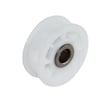
- Timely repairs: Replacing a worn belt or idler pulley early prevents bigger failures.
Typical lifespan by usage pattern
| Usage pattern | Typical lifespan | What usually wears first |
|---|---|---|
| Light (1 to 3 loads/week) | 12 to 15 years | Belt, rollers |
| Average (4 to 7 loads/week) | 10 to 13 years | Belt, idler pulley, moisture sensor |
| Heavy (8+ loads/week) | 7 to 10 years | Rollers, motor, heating system |
Signs your DLE7177RM is nearing end-of-life (or needs key parts)
- Squealing, thumping, or rumbling while the drum turns (often rollers or idler pulley)
- Drum not turning but the dryer runs (often a broken belt)
- Long dry times even with a clean lint screen (often vent restriction or blower issues)
- Overheating or shutting off mid-cycle (often airflow or thermostat-related)
If the drum stops turning, a common fix is replacing the dryer drum belt 4400EL2001F.
Why it matters
A dryer that is struggling to move air or turn the drum usually costs more to run and puts extra stress on the heating element, thermostats, and motor. Simple maintenance and early part replacement typically adds years of reliable service.
For model-specific care and maintenance intervals, follow the DLE7177RM owner’s manual.
Last updated: February 2026
What is the most common problem with LG dryers?
The most common LG dryer problem is poor drying performance: the dryer runs but doesn’t heat well or takes too long to dry. On the LG DLE7177RM, the first things we check are airflow (lint screen and venting) and the basic power supply checks listed in the DLE7177RM owner's manual.
Most common issues we see (and what they look like)
- Restricted airflow: long dry times, hot cabinet, burning smell, or airflow warnings
- Heating circuit problems: tumbles but no heat (often tied to a tripped breaker on electric dryers)
- Drum drive wear: squealing, thumping, or drum not turning (belt, idler pulley, rollers)
- Sensor-related drying issues: auto cycles end early or clothes stay damp (moisture sensor buildup)
- Start/interlock problems: won’t start or stops when the door is moved (door switch)
Quick checks before replacing parts
- Clean the lint screen; wash it with warm, soapy water, dry it fully, and reinstall.
- Confirm the exhaust duct is clear and the outside damper moves freely.
- For electric models, reset both breakers (many dryers use two).
- Avoid overloading; split large loads for better tumbling.
- If the dryer won’t start, confirm the plug is fully seated and power is present.
Common parts that match these symptoms (LG DLE7177RM)
| Symptom | Likely area | Example part for this model |
|---|---|---|
| Drum won’t tumble or slips | Drum drive | Dryer drum belt 4400EL2001F |
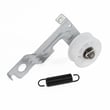
| Squeal or poor belt tension | Idler system | Dryer idler pulley 4560EL3001A |
| Auto dry inconsistent | Moisture sensing | Dryer moisture sensor 6500EL3001A |
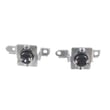
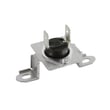
| Overheats or shuts off | Temperature safety | Dryer high-limit thermostat 6931EL3003D |
Error codes can point you to the right system fast
If your display shows an error, use an LG-specific code list to narrow the problem to airflow, heating, or sensors: LG dryer error codes.
Why it matters
Most “LG dryer problems” start as airflow or maintenance issues; fixing venting and lint buildup improves drying time, reduces overheating, and helps protect heating and thermostat components.
Last updated: February 2026
What size is the LG DLE7177RM?
The LG DLE7177RM dryer measures 27 in. wide x 29.9 in. deep x 38.7 in. high, and it has an IEC capacity of 7.3 cu. ft. For the most accurate fit (especially in a closet), we recommend confirming clearances in the DLE7177RM owner's manual.
Quick specs for planning
- Width: 27 inches
- Depth: 29.9 inches (cabinet depth)
- Height: 38.7 inches
- Capacity: IEC 7.3 cu. ft.
- Leveling requirement: dryer should not rock; keep it level for proper tumbling and sensor operation
Closet and installation clearance tips
Even when the cabinet size fits, installation space often fails because of venting, elbows, and airflow. Use these checks before you commit to the location:
- Leave room behind the dryer for the exhaust vent and elbow.
- Make sure the floor is solid and level; adjust leveling legs so all four legs sit firmly.
- Keep the dryer’s left-to-right and front-to-back slope within 1 inch.
- Plan for door swing and access to the lint screen area.
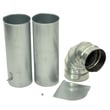
- If you use a side or bottom vent setup, consider a vent kit such as the kenmore dryer side or bottom exhaust vent kit 3911EZ9131X when it matches your installation needs.
Size vs. space needed (what to measure)
| What you’re measuring | What it means | Why it matters |
|---|---|---|
| Cabinet dimensions | 27 x 29.9 x 38.7 inches | Confirms the dryer body fits the opening |
| Installed depth | Cabinet depth plus vent connection space | Prevents the dryer from being pushed too far forward |
| Clearance/airflow | Space around dryer and closet ventilation | Helps drying performance and reduces overheating risk |
Why it matters
A dryer that is too tight in a closet can kink the vent, restrict airflow, and increase dry times. Keeping the DLE7177RM level also helps the drum tumble correctly and helps moisture-sensing cycles work as designed.
Last updated: February 2026