Owner’s manual
 Error Codes


What size is Kenmore refrigerator model 79578719800?
Kenmore Elite refrigerator model 79578719800 is a bottom-freezer design in the Kenmore 795 family. The exact exterior width, depth, and height vary by the specific 795.7871/795.7872 configuration and color code, so we recommend confirming the published dimensions in the 79578719800 owner's manual before measuring your opening.
How to confirm the correct dimensions
Use these checks so you measure the right “size” for your space:
- Look up the dimensions section in the 79578719800 owner's manual (some 795 models share one guide).
- Measure cabinet width (left to right) at the narrowest point of the opening.
- Measure height to the lowest obstruction (cabinet trim, soffit, or hinge clearance).
- Measure depth two ways: cabinet-only depth and depth including handles.
- Plan for airflow clearance behind and above the refrigerator.
Typical size range for this style (planning guidance)
Most Kenmore 795 bottom-freezer refrigerators are approximately:
| Measurement | Typical range (approx.) | What can change it |
|---|---|---|
| Width | 33 to 36 in. | door design, trim |
| Height | 67 to 70 in. | hinge style, leveling |
| Depth | 30 to 34 in. | handles, door thickness |
Why it matters
Getting the right dimensions prevents delivery problems and helps avoid issues like doors not opening fully, drawers hitting walls, or poor cooling from restricted airflow.
Related help for this model family
If you are matching by series (795) or troubleshooting after installation, use Kenmore 795 model bottom freezer refrigerator error codes to identify display codes and common causes.
Last updated: January 2026
What does DH mean on Kenmore Elite refrigerator?
On Kenmore Elite refrigerator model 79578719800, dH/DH indicates a defrost heater (defrost) problem. It typically means the refrigerator is not completing a normal defrost cycle, so frost can build up on the evaporator and restrict airflow, leading to warm temperatures.
What you’ll usually notice
- Refrigerator or freezer temperatures start rising
- Frost or ice buildup on the rear freezer panel
- Reduced airflow from vents (cooling seems weak)
- Evaporator fan noise changes (fan may get louder if airflow is blocked)
- Water leaking or puddles if defrost drainage is affected
Quick checks we recommend first
- Power reset: Unplug the refrigerator for 5 minutes, then restore power.
- Check airflow: Make sure food packages are not blocking air vents (Multi-Flow systems rely on clear vents).
- Look for heavy frost: If the freezer back wall is packed with frost, the defrost system needs attention.
- Inspect door sealing: A poor door seal can drive excess frost and trigger defrost-related issues.
- Use the troubleshooting section: Follow the steps in the 79578719800 owner's manual for model-specific guidance.
What typically causes a DH/defrost heater error
| Likely cause | What it affects | Common symptom |
|---|---|---|
| Defrost heater circuit issue | No heat during defrost | Heavy frost buildup |
| Defrost control/board issue | Defrost timing and power | Intermittent cooling problems |
| Wiring/connector problem | Power not reaching heater | Error returns after reset |
| Airflow restriction | Cooling efficiency | Warm temps, uneven cooling |
Parts that can be involved
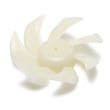
If diagnosis points to a cooling airflow problem (often caused by frost buildup), the evaporator fan area is commonly inspected. For example, a damaged fan blade can reduce airflow once ice starts accumulating; see refrigerator evaporator fan blade 5901JA1021A if you find cracks or rubbing.
Why it matters
A defrost failure can quickly turn into a no-cool situation because frost blocks airflow between the freezer and refrigerator sections. Addressing DH early helps protect food temperatures and prevents recurring ice buildup.
Last updated: January 2026
What are the common problems with Kenmore Elite refrigerators?
Common problems on the Kenmore Elite 79578719800 bottom-mount refrigerator include warm temperatures from poor airflow or dirty condenser coils, frost or ice buildup from door-seal or defrost issues, doors that will not close fully, and ice maker or water quality complaints. Use the 79578719800 owner's manual for model-specific troubleshooting steps.
Most common symptoms and likely causes
- Not cooling or weak cooling: dirty condenser coils, blocked vents, evaporator fan issue, or sealed-system trouble
- Frost or ice crystals on frozen food: door not closing properly or frequent door openings
- Doors will not close completely: unit not level, food packages blocking, bins or shelves out of position, or sticky gaskets
- Bad ice taste or odor: old ice, unwrapped foods, or mineral-heavy water
- Water leaks or puddles: restricted defrost drain path (often the drain tube)
Quick checks we recommend first (safe DIY)
- Push doors firmly shut; confirm nothing hits shelves, bins, or drawers
- Level the refrigerator so doors self-close correctly
- Clean condenser coils to restore heat transfer and reduce run time
- Clean door gaskets and the cabinet surface they touch; reduce sticking
- After a power interruption or temperature change, allow 24 hours to stabilize
Problem-to-fix map
| Problem you notice | What to check first | Typical next step |
|---|---|---|
| Refrigerator not cold enough | Coils, door closure | Clean coils; confirm vents are clear |
| Frost/ice in freezer | Door closing, door-open frequency | Correct alignment; limit openings |
| Door won’t shut | Level, bin/shelf position, gasket | Level unit; reseat bins; clean gasket |
| Ice tastes bad | Old ice, food odors | Dump old ice; rewrap foods |
Parts often involved on this model
- Refrigerator condenser coil ACG73964501 (cooling efficiency)
- Lg refrigerator defrost heater 5300JK1005D (defrost system)
- Refrigerator drain tube 5251JA3003D (drain path for defrost water)
Why it matters
On bottom-mount refrigerators, door closure, frost control, and condenser cleanliness work together. A slightly ajar door or dirty coils quickly leads to warmer temps, more frost, and longer compressor run time.
Last updated: January 2026
Why is my Kenmore Elite refrigerator leaking water out of the bottom?
On Kenmore Elite refrigerator model 79578719800, water leaking from the bottom is typically caused by a clogged defrost drain that overflows, or a leak in the water supply system (tubing, fittings, or inlet valve) for the ice maker and dispenser. Follow the safety and access steps in the 79578719800 owner's manual before inspecting.
Most common causes to check
- Defrost drain clogged: Meltwater backs up and spills into the cabinet or onto the floor.
- Drain tube issue: A split, loose, or misrouted drain tube can dump water near the base.
- Water line leak: Cracked, pinched, or rubbing tubing can drip down the back.
- Fitting seepage: Compression nuts and quick-connect fittings can leak after the unit is moved.
- Inlet valve seep: The valve can drip even when you are not dispensing water.
Quick checks that pinpoint the source
- Unplug the refrigerator; dry the floor and base area.
- Check where the water starts:
- Inside under crispers: defrost drain or drain tube.
- Back/bottom near water hookup: supply line, fittings, or valve.
- Inspect the drain path and the refrigerator drain tube 5251JA3003D for cracks or a loose connection.
- Inspect the refrigerator water tubing MJU62070602 for kinks, wear marks, or wet spots.
What you see vs. what it usually means
| Symptom | Most likely cause | Best next step |
|---|---|---|
| Water under crispers or on freezer floor | Clogged defrost drain | Clear the drain with warm water and flush it |
| Water pooling behind unit | Tubing or fitting leak | Re-seat tubing, tighten leaking connections |
| Slow drip with ice maker on | Inlet valve seep | Replace the valve if it will not seal |
Why it matters
Leaks can damage flooring and also create ice buildup that restricts airflow, leading to warm temperatures and longer run times.
Helpful DIY guidance
- Use how to get rid of refrigerator puddles to trace the leak path and prevent repeat puddles.
Last updated: January 2026