Owner’s manual
 Error Codes


How do I tell how old my KitchenAid is?
To tell how old your KitchenAid dishwasher model KDFE204KPS0 is, we use the serial number from the rating label and decode the manufacture month and year from Whirlpool-style serial formats used on many KitchenAid dishwashers. The exact decode depends on the serial pattern printed on your label.
Step 1: Find the model and serial label on KDFE204KPS0
On most KitchenAid dishwashers, the rating label is visible when you open the door and look around the tub opening.
Check these common spots:
- Left or right tub frame
- Top edge of the tub opening
- Door edge area
For general safety and access-panel handling guidance, use the KDFE204KPS0 owner's manual.
Step 2: Decode the serial number (typical KitchenAid and Whirlpool format)
Many KitchenAid dishwashers use a Whirlpool-style serial number where:
- 1st character (letter) = manufacturing month
- 2nd character (letter) = manufacturing year
- Remaining characters = factory sequence information (varies)
Because year codes repeat over time, the model series and features help confirm which decade the year letter represents.
Quick decode checklist
- Write down the serial number exactly
- Identify the first two letters
- Convert letter 1 to a month
- Convert letter 2 to a year (then confirm the decade by the dishwasher’s style and purchase timeframe)
Month and year: what you’re looking for
| Serial position | What it usually means | What you get |
|---|---|---|
| 1st character (letter) | Manufacturing month | Month built |
| 2nd character (letter) | Manufacturing year code | Year built |
Why it matters
Knowing the build date helps us narrow down the correct replacement parts when there are mid-production changes, especially for items tied to water flow and door operation.
Parts that are often version-sensitive include:
- Water inlet valve and inlet fittings
- Drain hose routing and clamps
- Door latch and door seal
If you’re troubleshooting a fault at the same time, our KitchenAid he dishwasher error codes resource can help you interpret what the dishwasher is reporting.
Last updated: January 2026
Is KDFE204KPS a product?
Yes. KDFE204KPS is a KitchenAid dishwasher model number used to identify the product, and it’s the model you’ll often see on retail listings and the rating label. KDFE204KPS0 is the full model identifier we use to match parts and documentation for your specific dishwasher.
KDFE204KPS vs. KDFE204KPS0 (what to use and when)
KitchenAid dishwashers are commonly referenced by a shorter model number (like KDFE204KPS). For parts lookup and service documentation, an added suffix (like the trailing “0”) can appear in parts databases to pinpoint the exact configuration.
- Use KDFE204KPS when you’re confirming what product you own.
- Use KDFE204KPS0 when you’re ordering parts or checking diagrams.
- If you’re unsure, the rating label on the tub frame (inside the door) is the best source.
For operating, care, and troubleshooting details, use the KDFE204KPS0 owner's manual.
Why the suffix matters for parts matching
Even when the dishwasher is marketed as KDFE204KPS, small configuration differences can affect fit. Using the full identifier helps us match the correct replacement part for your unit.
- Prevents ordering a similar-looking part with different connectors
- Helps match rack, seal, and hose routing variations
- Improves accuracy when diagnosing error codes and blinking lights
Examples of parts where exact matching helps
These are common part types that can be sensitive to model variations:
| Part type | Example part for this model | What it affects |
|---|---|---|
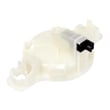
| Water fill | Water inlet W11535094 | Filling, water flow into the tub |
| Door sealing | Dishwasher door seal W11664713 | Leaks, door closure, noise |
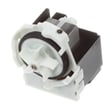
| Draining | Drain pump W11462456 | Draining performance, standing water |
Why it matters
Dishwasher model numbers are used differently across retail, service, and parts systems. Confirming the exact identifier for your KitchenAid dishwasher helps ensure the parts you buy fit correctly and the troubleshooting steps apply to your unit.
Last updated: January 2026
What are the commonly replaced parts in a dishwasher?
On the KitchenAid KDFE204KPS0 dishwasher, the parts we most often see replaced are the ones that handle sealing, water flow, washing action, and draining. Typical examples include the door seal, spray arm components, water inlet parts, drain hose, and the drain pump; these wear out, clog, or fail electrically over time.
Commonly replaced parts (and what they affect)
These are frequent “fix the symptom” parts on many dishwashers, including KDFE204KPS0:
- Door sealing parts: leaks at the corners or along the bottom often point to a worn seal such as the dishwasher door seal W11664713.
- Spray system parts: poor cleaning can come from clogged or damaged spray arms or feed/manifold parts such as the dishwasher manifold and spray arm assembly W11545334.
- Water fill parts: slow fill, no fill, or fill errors can involve the inlet valve area such as the water inlet W11535094.
- Drain parts: standing water can be caused by a kinked/clogged hose or a weak pump such as the drain pump W11462456 or a compatible drain hose.
- Door closing parts: a dishwasher that will not start can be related to the latch/switch such as the latch assembly (includes switch) W11412299.
- Detergent dispensing parts: detergent left in the cup can point to the dispenser such as the dispenser as W11412300.
Quick symptom-to-part guide
| Symptom | Common part area | Example part for KDFE204KPS0 |
|---|---|---|
| Water leaking from door | Door seal | W11664713 |
| Dishes not getting clean | Spray/manifold | W11545334 |
| Dishwasher will not drain | Drain pump or drain hose | W11462456 |
| Dishwasher will not start | Door latch/switch | W11412299 |
| No/slow fill | Water inlet system | W11535094 |
Why it matters
Replacing the right part first saves time and prevents repeat problems. For example, a “won’t drain” complaint can be a simple hose routing issue, but it can also be a failing pump; matching the symptom to the correct system helps you avoid unnecessary part swaps.
Best next step for this model
Use the troubleshooting and error-code information in the KDFE204KPS0 owner’s manual to confirm the symptom (fill, wash, drain, or leak) before ordering parts.
Last updated: January 2026
What is the average lifespan of a KitchenAid dishwasher?
A KitchenAid dishwasher like model KDFE204KPS0 typically lasts about 10 years. The owner’s manual for KDFE204KPS0 focuses on use, care, and troubleshooting rather than stating a specific life expectancy, so we use the standard dishwasher lifespan range as the best practical benchmark.
Typical lifespan range (what to expect)
Most residential dishwashers, including KitchenAid models, average 9 to 14 years with normal household use.
| Usage and care level | Typical lifespan |
|---|---|
| Light use + consistent maintenance | 12 to 14 years |
| Average household use | About 10 years |
| Heavy use + hard water + minimal maintenance | 7 to 9 years |
What most affects lifespan on KDFE204KPS0
These are the biggest drivers of long-term reliability:
- Water quality (hard water causes mineral buildup and extra wear)
- How often you run cycles (more cycles equals more mechanical wear)
- Filter and sump cleanliness (prevents restricted flow and pump strain)
- Spray arm condition (clogs reduce cleaning and can stress the wash system)
- Leak control (protects wiring, motor, and control components)
For model-specific cleaning and care routines, follow the maintenance guidance in the KDFE204KPS0 owner’s manual.
Maintenance that helps you reach the high end of the range
We recommend these habits for KitchenAid dishwashers:
- Use rinse aid and keep the dispenser filled
- Clean the filter area regularly and remove debris from the sump
- Check spray arms for blocked holes and clear buildup
- Run a monthly dishwasher cleaner cycle to reduce residue
- Wipe the door sealing surfaces so the door closes evenly
If you’re dealing with door leaks, replacing a worn gasket can prevent moisture damage; see the compatible dishwasher door seal W11664713.
Why it matters
Knowing the typical lifespan helps you decide when routine maintenance is worth it and when a major repair may not be the best investment. On KDFE204KPS0, preventing leaks and keeping water flow strong are two of the most cost-effective ways to extend service life.
Last updated: January 2026
What is the most common problem with the KitchenAid dishwasher?
For the KitchenAid KDFE204KPS0 dishwasher, the most common day-to-day complaint we see is poor cleaning (food or film left on dishes). On this model, it’s usually caused by restricted water flow from a dirty filter/sump area, clogged spray-arm holes, or a fill issue that reduces wash pressure. See the KDFE204KPS0 owner’s manual for cleaning, care, and loading guidance.
Quick checks that fix most “not cleaning” complaints
- Clean the filter area and remove debris from the sump area.
- Check spray arms for clogged holes; flush them with water.
- Confirm the hot water supply is about 120°F (49°C).
- Use automatic dishwasher detergent; add rinse aid for better results.
- Load so items don’t block spray arm rotation (especially large pans).
When it’s likely a part issue on KDFE204KPS0
If maintenance and loading changes don’t help, these model-compatible parts are common suspects:
- Dishwasher manifold and spray arm assembly W11545334 for weak or uneven spray coverage.
- Dishwasher spray arm, lower W11550888 if the lower arm is cracked, warped, or not spinning freely.
- Water inlet W11535094 if the dishwasher fills slowly or wash pressure seems consistently low.
Symptom-to-cause guide
| What you notice | Most likely cause | Best first step |
|---|---|---|
| Food left on dishes | Clogged filter/sump or spray arm ports | Clean filter; clear spray arm holes |
| Cloudy film on glassware | Detergent/rinse aid or hard water | Switch detergent; add rinse aid |
| Weak spray sound | Low fill or restricted water flow | Verify water supply; check inlet |
| Water on floor | Door seal or connection leak | Inspect door seal and hose connections |
Why it matters
Poor cleaning is often an early sign of restricted water flow. Fixing it quickly helps prevent odors, reduces redepositing soil, and avoids extra strain on the wash motor and circulation system.
Last updated: January 2026