Owner’s manual
 Error Codes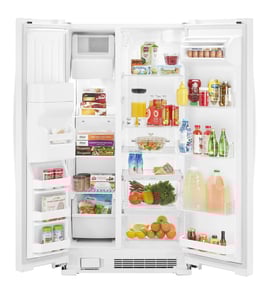


Are GE side by side refrigerators good?
Yes. GE side-by-side refrigerators like model GSS25GGHBCWW are a solid choice for everyday reliability and convenience; they typically offer strong temperature stability, easy organization with adjustable shelving, and practical features like an in-door ice and water dispenser. For model-specific features and operating details, use the owner's manual.
What “good” usually means for a side-by-side refrigerator
A good side-by-side refrigerator keeps both compartments at steady temperatures, moves air well, and makes ice and dispenses water consistently.
Common strengths many owners value:
- Wide, easy-to-reach fresh food shelves and door bins
- Separate freezer and refrigerator sections for quick access
- In-door ice and water dispenser convenience
- Bright interior lighting for visibility
- Straightforward controls and day-to-day usability
Tradeoffs to expect with side-by-side designs
Side-by-side models have a few predictable compromises compared with top-freezer or French door styles.
| Feature | Typical benefit | Typical tradeoff |
|---|---|---|
| Narrow freezer section | Easy access to frozen items | Large pizza boxes and wide trays can be tight |
| In-door dispenser | Convenient ice and water | More parts to maintain (filter, valve, dispenser components) |
| Strong airflow | Even cooling | You may hear normal fan and ice maker sounds |
Parts that most affect performance (and what they do)
If performance drops, these are common “make-or-break” components for cooling and dispensing:
- GE profile refrigerator temperature sensor WR55X10025: helps the control system regulate temperatures
- Refrigerator evaporator fan motor WR60X10307: circulates cold air through the compartments
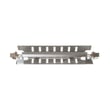
- Refrigerator defrost heater WR51X10055: prevents frost buildup that can block airflow
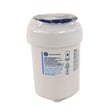
- GE refrigerator water filter MWFP: improves water quality and helps protect the dispenser system
Why it matters
A side-by-side can be “good” for you when it matches how you store food and how much you use the ice and water dispenser. Keeping the filter changed and airflow unobstructed helps maintain taste, ice production, and consistent cooling.
Last updated: February 2026
Why is my GE side by side freezer freezing up?
Freezer frost and ice buildup in your GE GSS25GGHBCWW side-by-side refrigerator usually happens when warm, moist air gets into the freezer, most often from a door left slightly open or frequent door openings. It can also happen when airflow is restricted or the defrost system is not clearing frost off the evaporator.
Quick checks we recommend first
- Make sure the freezer door closes fully and nothing is holding it open (packages, bins, ice bucket).
- Check for gaps, rips, or hardened spots on the door gasket; clean it with warm, soapy water and dry.
- Confirm shelves and bins are pushed all the way back so the door can seal properly.
- Reduce long door openings; moisture from the room air freezes quickly on cold surfaces.
- Verify the freezer temperature setting is not set warmer than normal; adjust one step colder if needed.
What to look for (symptoms and likely causes)
| What you see | Most likely cause | What to do next |
|---|---|---|
| Frost on food packages | Door left open or opened too often | Improve door sealing and limit openings |
| Heavy frost on back wall or vents | Airflow blocked or defrost issue | Clear vents; check defrost components |
| Ice buildup returns quickly after manual defrost | Door leak or defrost system not working | Inspect gasket; test defrost parts |
When it points to a defrost problem
If you see thick frost on the freezer’s back panel and cooling gets worse over time, the defrost system is a common culprit. For this model, the parts that often relate to defrost frost buildup include the refrigerator defrost heater WR51X10055 and the refrigerator defrost bi-metal thermostat WR50X10065.
Safe, practical next steps
- Unplug the refrigerator before removing panels or testing parts.
- Manually defrost (unplug and leave doors open) to restore airflow temporarily.
- After defrosting, listen for the evaporator fan; weak or no airflow can speed frost problems.
- Use the troubleshooting section in the owner's manual to match symptoms to checks.
Why it matters
Frost buildup blocks airflow across the evaporator coils, so the freezer may run longer, temperatures can swing, and the ice maker can slow down. Fixing the air leak or defrost issue prevents repeat freeze-ups and helps the refrigerator cool evenly.
Last updated: February 2026
What is the most common problem with a GE refrigerator?
The most common issue we see with GE refrigerators like model GSS25GGHBCWW is not cooling properly, usually caused by airflow problems (dirty condenser coils, a failed evaporator fan, or frost buildup from a defrost failure). Use the GSS25GGHBCWW owner's manual to confirm the exact checks and settings for your unit.
Quick symptoms and what they usually point to
- Warm fresh food and freezer: dirty condenser coils, compressor start issue, control problem
- Freezer cold but fridge warm: evaporator fan not running, blocked air duct, heavy frost on evaporator
- Clicking or buzzing: start relay/capacitor issue, fan hitting ice
- Water under the fridge: clogged defrost drain, water line leak
- No water or ice: clogged filter, frozen reservoir, dispenser lock enabled
Most common cooling-related parts to check on this model
If your GSS25GGHBCWW is not cooling, these are frequent suspects from the parts list:
- Refrigerator evaporator fan motor WR60X10307 (moves cold air through the compartments)
- Refrigerator defrost heater WR51X10055 (melts frost off the evaporator)
- Refrigerator defrost bi-metal thermostat WR50X10065 (controls defrost heating)
- GE profile refrigerator temperature sensor WR55X10025 (feeds temperature data to controls)
Fast troubleshooting steps (in order)
- Verify temperatures: set freezer near 0°F and refrigerator near 37°F.
- Listen for the evaporator fan: open the freezer door and press the door switch; you should hear the fan.
- Check for frost buildup: heavy frost on the back freezer panel often indicates a defrost problem.
- Clean condenser coils: restricted airflow makes cooling weak and can increase noise.
- Check dispenser lock and water flow: the manual notes you can press and hold LOCK for 3 seconds to unlock; a new filter can cause spurting until you flush water.
Why it matters
Cooling problems can spoil food quickly and can also strain the sealed system (compressor, condenser, evaporator). Catching airflow or defrost issues early usually prevents bigger repairs.
Common problems at a glance
| Symptom | Most likely area | Typical next step |
|---|---|---|
| Fridge warm, freezer OK | Airflow/evaporator fan | Inspect fan, clear vents |
| Frost on freezer back wall | Defrost system | Test heater/thermostat |
| No water/ice | Filter/valve/reservoir | Replace filter, check valve |
For dispenser and alarm-related issues, we also use how to reset the door alarm on a GE refrigerator as a quick reference.
Last updated: February 2026
How wide is a 25.6 cubic foot refrigerator?
A 25.6 cu. ft. refrigerator is typically about 36 inches wide. For your GE GSS25GGHBCWW side-by-side refrigerator, the installation dimensions shown in the manual list a 36-inch cabinet width, which is the key number to use when planning your opening; confirm details in the owner's manual.
What “36 inches wide” means for fit
We plan around the cabinet width first, then add clearance for airflow and door operation.
- Cabinet width: the refrigerator body width (commonly 36 inches in this size class)
- Required opening width: cabinet width plus any recommended side clearance
- Door swing space: extra room so doors and handles clear adjacent walls
- Delivery path width: the narrowest doorway or hallway on the way in
Clearances and doorway guidance (from the manual)
The GE GSS25GGHBCWW manual calls out small clearances for installation and notes a key doorway threshold.
| Planning item | What to use | Why it matters |
|---|---|---|
| Refrigerator cabinet width (GSS25GGHBCWW) | 36 in | Base number for the opening |
| Side clearance | 1/8 in | Air circulation and easier install |
| Top clearance | 1 in | Venting and positioning |
| Back clearance | 1/2 to 1 in | Space for cord, water line, airflow |
| Doorway check | 38 in | If less than this, doors must be removed |
Why the cubic feet number can be misleading
“25.6 cu. ft.” describes interior storage volume, not exterior size. Different door styles (French door vs. side-by-side), insulation thickness, and handle depth can change the outside dimensions even when capacity is similar.
Last updated: February 2026