Owner’s manual


How do I tell what model my Kenmore dryer is?
Your Kenmore dryer’s model number is printed on the appliance’s identification label; for this dryer series it will look like 110.8756_, 110.8757_, 110.8758_, 110.8856_, 110.8857_, or 110.8858_ (the last digits can vary by color). For your unit, the model is 11087571601; confirm it by matching the full number on the label.
Where to find the model number label
Most Kenmore dryers place the model and serial label in one of these spots:
- Inside the door opening on the front panel (door jamb area)
- On the back panel of the dryer cabinet
- Behind the lint screen housing area (visible when you pull the screen out)
- On the inside of the front panel near the lower left or lower right (less common)
If you have the documentation, the 11087571601 owner’s manual also lists the model family format (110.8756_ through 110.8858_) so you can compare what’s on your label.
How to read Kenmore model numbers (what matters for parts)
When ordering parts for a Kenmore dryer, we match parts to the full model number, not just “Kenmore 110” or the first few digits.
- Use every digit in 11087571601 when searching parts
- The “110” prefix identifies the model family; it is not enough by itself
- The last digits can indicate a specific configuration (often tied to features or color)
Quick examples
| What you have | Is it enough to order parts? | Why |
|---|---|---|
| “Kenmore 110” | No | Too many models share the same prefix |
| “110.8757_” | Sometimes | Still a family range, not always the exact build |
| “11087571601” | Yes | Exact match for diagrams and part compatibility |
Why it matters
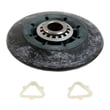
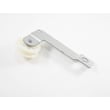
Using the exact model number prevents ordering the wrong heating, drum, or door parts. For example, common wear items like a drum support roller or idler pulley can look similar across dryers but still differ by mounting style or kit contents.
Last updated: February 2026
What is an F1 code on a Kenmore dryer?
An F1 code on a Kenmore dryer typically points to a control problem (the electronic control is detecting an internal fault). On Kenmore model 11087571601, start by resetting power and checking wiring connections; if the code returns, the control or a related circuit needs service.
Quick checks we recommend first
- Unplug the dryer (or switch off the breaker) for 5 minutes, then restore power and try a cycle.
- If the display also shows PF (power failure), restart the cycle as described in the 11087571601 owner's manual.
- Make sure the dryer is on a dedicated, stable power supply (loose outlet or weak breaker can trigger false symptoms).
- If you are comfortable opening the console, reseat the wire harness plugs on the control (take a photo first so every connector goes back correctly).
- If the code returns immediately after reset, stop running the dryer and schedule service.
What usually causes an F1 code
| Likely cause | What you may notice | Typical fix |
|---|---|---|
| Electronic control board fault | F1 appears at start or mid-cycle | Replace control (service-level repair) |
| Loose or oxidized harness connection | Intermittent F1, works sometimes | Reseat/repair wiring connections |
| Power interruption or unstable supply | Code after outage, lights flicker | Correct power issue, then reset |
Why it matters
When the control detects an internal error, the dryer can stop mid-cycle or run unpredictably. Addressing an F1 quickly helps prevent repeated shutdowns and reduces the chance of overheating or incomplete drying.
Related help for Kenmore dryers
If your dryer is showing a different code (or multiple codes), use our Kenmore 110 series electronic control model dryer error codes reference to match the code to the most likely failure.
Last updated: February 2026
What is the average lifespan of 11087571601?
The average lifespan of the Kenmore dryer model 11087571601 is about 13 years with normal household use. Regular vent cleaning, lint-screen care, and fixing wear items (belt, rollers, idler) on time are what most often determine whether it reaches that full service life.
What affects lifespan the most
- Airflow and venting: restricted exhaust causes overheating and shortens heater, motor, and fuse life.
- Lint maintenance: a clogged screen increases dry time and heat stress.
- Load habits: frequent overloading strains the drive motor and drum support system.
- Heat system cycling: repeated overheating can trip safety devices and damage the heating circuit.
- Wear parts: idler pulley, drum supports, and seals wear gradually and get noisy before failing.
Maintenance schedule we recommend (based on the manual)
The manual for this model calls out specific lint-cleaning intervals that directly protect the dryer.
| Task | How often | Why it matters |
|---|---|---|
| Clean lint screen | Every load | Prevents overheating and long dry times |
| Wash lint screen (remove residue) | Every 6 months | Removes detergent and softener buildup that blocks airflow |
| Remove lint inside cabinet | Every 2 years | Reduces heat buildup and component stress |
| Clean exhaust vent run | Every 2 years | Maintains safe airflow and drying performance |
For the exact steps and safety notes, follow the 11087571601 owner's manual.
Parts that commonly extend life when replaced
If your dryer is squealing, thumping, or taking longer to dry, these model-compatible parts are common fixes:
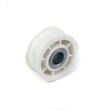
- Dryer idler pulley 279640 (belt tension and smooth drum rotation)
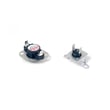
- Dryer thermal cut-off fuse kit 279973 (overheat protection components)
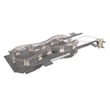
- Dryer heating element WP8544771 (restores heat when the element is open)
Why it matters
A dryer that is kept clear of lint and vent restrictions runs cooler and finishes cycles faster; that reduces stress on the heating element, thermal cut-off, and drive motor, which are the parts that most often end a dryer’s service life.
Last updated: March 2026