Owner’s manual
 Error Codes


How to hard reset kenmore washer?
To hard reset your Kenmore washer model 11020912991, unplug it (or switch the breaker off) for 3 to 5 minutes, then restore power and run a short cycle to confirm normal operation. This clears many temporary control and cycle interruptions.
Reset steps (safe and effective)
- Turn the washer OFF.
- Unplug the power cord from the outlet (or turn the laundry circuit breaker OFF).
- Wait 3 to 5 minutes.
- Plug the washer back in (or turn the breaker ON).
- Set a normal cycle and pull the timer knob out to start.
- If you need to stop and restart during testing, push the timer knob in to stop, then pull it out to restart.
For model-specific control and cycle details, follow the 11020912991 owner's manual.
What a hard reset helps with
A hard reset is most useful when the washer is stuck mid-cycle, will not advance, or behaves erratically after a power flicker.
Common symptoms it can clear:
- Cycle will not start after selecting settings
- Timer seems “stuck” or the washer pauses unexpectedly
- Washer stops and restarts inconsistently
- Controls respond slowly
Quick checks if the washer still will not run
If the reset does not restore normal operation, these are the most common next checks on a top-load Kenmore design like this:
| What to check | What you are looking for | Common fix |
|---|---|---|
| Lid closure | Lid not fully closed or switch not actuating | Inspect/replace lid switch |
| Drain path | Water not pumping out | Check hose, pump, clogs |
| Drive system | Motor runs but no agitation/spin | Inspect coupling, clutch, gear case |
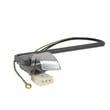
If the washer will not spin or agitate after resetting, the washer lid switch WP3949238 is a frequent cause.
Why it matters
Resetting power forces the washer’s controls to reboot, which often clears a “hung” timer state and helps you avoid unnecessary part replacement when the issue is only a temporary interruption.
Last updated: January 2026
What is the cubic feet capacity of a Kenmore washer model 11020912991?
The Kenmore washer model 11020912991 is a standard top-load, agitator-style washer; washers in this design class typically run about 2.9 to 3.5 cu. ft. capacity. For the exact cubic-feet rating for your unit, confirm it in the specifications section of the 11020912991 owner's manual.
How to find the exact capacity for model 11020912991
Use the manual first, then verify you are matching the correct unit by model and serial.
- Open the 11020912991 owner's manual and look for “Specifications”, “Features”, or “Capacity”
- Confirm the model number on the model and serial number plate on the washer cabinet
- If the manual lists basket dimensions instead of cu. ft., use those values to calculate volume
- Compare only to similar “standard top-load with agitator” washers (not HE impeller or front-load)
Typical capacity ranges (quick comparison)
| Washer type | Typical capacity (cu. ft.) | Common identifiers |
|---|---|---|
| Standard top-load with agitator | 2.9 to 3.5 | Tall center agitator, deep-fill wash action |
| HE top-load (impeller) | 4.0 to 5.5 | Low-profile impeller, wider basket |
| Front-load | 4.0 to 5.2 | Horizontal drum, higher spin speeds |
Why it matters
Capacity affects load size, cleaning turnover, and spin balance. Loading within the intended capacity helps prevent out-of-balance vibration and improves wash performance.
When “capacity” feels smaller than it should
If clothes are not circulating well, worn drive components can reduce agitation and turnover.
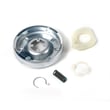
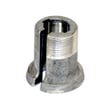
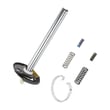
- Agitator dog 80040 (helps the agitator “grab” and move clothes)
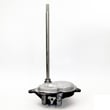
- Coupling 285753A (transfers motor power into the drive system)
- Washer lid switch WP3949238 (must sense the lid closed for proper operation)
Last updated: January 2026
What is the life expectancy of a Kenmore washer?
Most Kenmore washers last 10 to 12 years with normal household use and basic maintenance. For Kenmore model 11020912991, following the care, loading, and operating guidance in the owner's manual helps you get the longest service life from the motor, gearcase, clutch, and drain system.
What affects washer lifespan the most
- Load size and balance (frequent overloading shortens drive and suspension life)
- Detergent use (too much can cause residue and odors)
- Water quality (hard water increases buildup)
- Drain performance (slow draining strains the pump)
- Wear parts (agitator and drive components wear gradually)
Typical lifespan by usage pattern
| Usage pattern | What we typically see | What to focus on |
|---|---|---|
| Light (1 to 3 loads/week) | Often reaches or exceeds 12 years | Hoses, leaks, basic cleaning |
| Average (4 to 7 loads/week) | Commonly 10 to 12 years | Load size, leveling, drain health |
| Heavy (8+ loads/week) | Often under 10 years | Preventive maintenance, early part replacement |
Maintenance steps that extend life
- Keep the washer level to reduce vibration and tub wear.
- Avoid wrapping items around the agitator; load evenly (per the owner's manual).
- Use the correct detergent amount; reduce if you see excess suds.
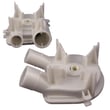
- Check for slow draining; a failing pump is a common wear item (see washer drain pump WP3363394 if you need a replacement).
- Address agitation issues early; worn agitator dog 80040 can cause poor wash action and extra strain.
Why it matters
A washer usually does not fail all at once; it loses performance first (poor agitation, slow drain, louder spin). Replacing common wear parts early can prevent secondary damage to higher-cost components like the gearcase.
Last updated: January 2026