 Installation guide
 Owner’s manual
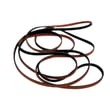


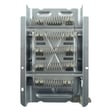
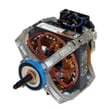
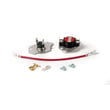
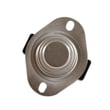
How do I tell if my dryer heating element is bad?
On Kenmore dryer model 11064202200, a bad heating element usually shows up as the dryer running but not producing heat (or taking much longer to dry). We confirm it by doing a quick heat check, then testing the element for continuity with a multimeter and ruling out airflow and power-supply issues.
- Run a timed, high-heat cycle for about 5 minutes, then open the door and feel for heat (a basic check described in the 11064202200 user manual).
- Make sure the dryer is on a heat cycle (not Air/Fluff).
- Check the lint screen and exhaust vent for restrictions; poor airflow can mimic a “bad element.”
- Verify the dryer has full power; many electric dryers need two fuses or breakers, and one can trip while the drum still turns.
- Unplug the dryer (or switch off both breakers).
- Access the heater housing (panel access varies; follow the 11064202200 installation guide for safety and setup basics).
- Remove at least one wire from the element terminal.
- Use a multimeter on continuity or ohms:
- Good element: continuity present and a finite resistance reading.
- Bad element: no continuity (open circuit) or infinite resistance.
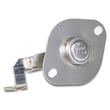
If the element tests open, replace the heater assembly for this model, such as the dryer element 279838.
| Symptom | Common cause | What to check next |
|---|---|---|
| Drum turns, no heat | Tripped breaker/fuse | Reset/replace both breakers/fuses |
| No heat, vent very hot | Restricted venting | Clean vent run and outside hood |
| No heat, element tests good | Safety thermostat/fuse opened | Thermal cut-off and high-limit thermostat |
A failed heating element stops proper drying, but restricted venting or a blown thermal cut-off can also shut heat down. Checking airflow and power first helps prevent repeat failures after a repair.
Last updated: January 2026
What size is a Kenmore Model 11064202200 dryer?
The Kenmore dryer model 11064202200 is a 29-inch wide electric dryer; the installation instructions also show a depth of about 27 3/16 inches (cabinet). For exact overall height and any door-swing clearance needs, use the dimensions section in the 11064202200 installation guide.
- Width: 29 in. (standard cabinet width shown in the installation instructions)
- Depth: about 27 3/16 in. (cabinet depth shown in the installation instructions)
- Rear clearance: plan for at least 5 1/2 in. behind the dryer for the exhaust vent with an elbow
- Side clearance: 1 in. on all sides is recommended to reduce noise transfer
- Door clearance: the location must allow the dryer door to open fully
| What you are measuring | What to use | Why |
|---|---|---|
| Cabinet width | 29 in. | Confirms fit in a standard 29-in. dryer space |
| Cabinet depth | About 27 3/16 in. | Helps confirm front-to-back fit |
| Space behind dryer | Minimum 5 1/2 in. | Allows room for venting elbow |
| Extra space around cabinet | 1 in. recommended | Reduces vibration and noise transfer |
Dryer “size” is usually about more than cabinet width; venting space and door swing are what cause most tight-fit installation problems in closets, alcoves, and laundry rooms.
Last updated: January 2026
How much does it cost to replace a heating element in a Kenmore dryer?
For Kenmore dryer model 11064202200, replacing the heating element typically costs $50 to $120 for the part, and $150 to $350+ total if you hire a technician (labor and service call included). Exact totals depend on access, venting condition, and what else is worn.
- Heating element part: commonly $50 to $120 (this model’s listed element is dryer element 279838)
- Optional related parts (often replaced together): thermostat or thermal cut-off if overheating occurred
- DIY supplies: a few dollars for terminals, screws, and cleaning the lint path
- Professional labor: commonly $100 to $250+ depending on local rates
- Service call/diagnostic: sometimes added if not bundled into labor
| Scenario | What you pay for | Typical total |
|---|---|---|
| DIY element replacement | Part only (plus small supplies) | $50 to $130 |
| Technician replaces element | Part + labor | $150 to $350+ |
| Overheating repair | Element + safety parts + vent cleaning | $200 to $450+ |
The installation instructions for this dryer recommend a quick heat check: after the dryer runs about 5 minutes, open the door and feel for heat. If there’s no heat, first check power supply because some electric dryers have two fuses or breakers feeding the unit. Use the 11064202200 installation guide for the startup and no-heat checks.
- Confirm the dryer is on a heat cycle (not air fluff)
- Verify the drum is tumbling (a broken belt can stop proper operation)
- Check both breakers/fuses for the dryer circuit
- Clean lint screen and confirm strong airflow at the vent outlet
- If power and airflow are good, then test the heating circuit components
A failed heating element is common, but restricted airflow (lint buildup, crushed vent, long vent run) can overheat the heater housing and repeatedly trip safety devices. Fixing airflow issues helps the new element last longer and improves drying time.
Last updated: January 2026
How to reset a Kenmore 11064202200 dryer?
To reset a Kenmore 11064202200 dryer, we reset power to clear a stuck control state: unplug the dryer (or switch the breaker off) for 1 minute, restore power, then try starting a cycle normally. If it still will not run, follow the start checks in the 11064202200 owner's manual.
- Turn the Cycle Selector (timer) to OFF.
- Unplug the dryer (or turn the breaker OFF) for 1 minute.
- Restore power.
- Close the door firmly.
- Select a cycle and press PUSH TO START.
The manual’s “will not start” checks usually solve the problem after a reset.
- Confirm the controls are set to an On/running position (not OFF).
- Press the PUSH TO START button firmly.
- Make sure the dryer is plugged into a grounded outlet.
- Check the home fuse/breaker (a tripped breaker can look like a “dead” dryer).
- Close the door tightly; a bad door switch can prevent starting.
| What you see | Most likely cause | What we do next |
|---|---|---|
| No lights, no response | Power supply issue | Check breaker, outlet, cord connection |
| Timer runs but drum does not | Start circuit or motor issue | Check door switch, start switch, motor |
| Clicks but will not run | Door not sensed closed | Inspect door latch and door switch |
If troubleshooting points to a failed component, these are common on this model:
- Door switch WP3406105 (dryer thinks the door is open)
- Dryer push-to-start switch WP3977456 (start command not sending)
- Motor 279827 (motor hums or will not run)
A reset clears a temporary control or timer state, but a repeated “won’t start” condition is usually caused by power supply, door-switch sensing, or a failing start or motor circuit. Fixing the root cause prevents intermittent no-start problems.
Last updated: January 2026








