 Owner’s manual
 Error Codes



What is the average lifespan of a Whirlpool dishwasher?
A Whirlpool dishwasher typically lasts 10 to 12 years. For your Whirlpool GU940SCGB2 undercounter dishwasher, lifespan depends most on water quality, how often it runs, and whether wear items like seals and spray components are kept in good shape using the care guidance in the GU940SCGB2 owner's manual.
What affects dishwasher lifespan the most
- Hard water and scale buildup (reduces wash performance and stresses the heater and pump)
- Overloading (blocks spray coverage and strains racks and door alignment)
- Poor draining (standing water accelerates odors and component wear)
- Leaking at the door (can damage surrounding cabinetry and lead to repeat service)
- Skipped maintenance (filters, spray arms, and seals need periodic attention)
Quick maintenance that helps it reach 10 to 12 years
- Clean the tub and run a cleaning cycle regularly (especially with hard water)
- Check spray holes for clogs and keep arms spinning freely
- Use the correct detergent amount; avoid excess suds
- Inspect the door perimeter for gaps, tears, or flattening
- Fix small leaks early; a worn seal is a common cause (see dishwasher door seal WPW10509257)
Common “end-of-life” symptoms vs. fixable issues
| Symptom | Often fixable? | Common next step |
|---|---|---|
| Door leaks at the corners | Yes | Inspect/replace door seal, confirm door latch closes firmly |
| Poor cleaning on one rack | Yes | Clean/replace spray arm, clear obstructions |
| Won’t fill or fills slowly | Yes | Check supply, screen, and inlet valve function |
| Repeated no-heat drying issues | Sometimes | Check heater circuit and related components |
Why it matters
If we keep wash performance strong and stop leaks early, the pump, heater, and control system avoid extra strain. That is what most often separates a dishwasher that lasts a decade from one that fails early.
Last updated: February 2026
What is the thing at the bottom of my dishwasher?
In a Whirlpool GU940SCGB2 dishwasher, the most common “thing” you’ll notice at the bottom of the tub is the heating element (a metal loop). It heats wash water and boosts drying performance, which helps remove stuck-on food and reduce leftover moisture.
What you might be seeing (quick ID)
- Heating element: metal loop or ring near the tub floor; gets hot during heating and drying.
- Lower spray arm: plastic arm that spins and sprays water upward.
- Filter or sump area: intake area where water is pulled into the pump.
- Float: small dome or cylinder that helps prevent overfilling.
- Drain inlet area: where water exits toward the drain hose.
How to confirm safely
- Turn off power to the dishwasher at the breaker before touching anything inside.
- Pull out the bottom rack and look for a metal loop; that is the heating element.
- Spin the lower spray arm by hand; it should move freely and not hit dishes.
- If you see standing water or debris, check the sump area for blockage and re-seat the rack.
Common symptoms and what they point to
| What you notice | Most likely part/area | What to check next |
|---|---|---|
| Dishes not drying well | Heating element | Use heated dry option; inspect for damage or heavy buildup |
| Poor cleaning on bottom rack | Spray arm or loading | Make sure spray arm spins freely; avoid blocking it with pans |
| Leaks near the door bottom | Door seal | Inspect the gasket for tears or gaps |
| Overfilling or water won’t stop | Float area | Make sure the float moves up and down freely |
Why it matters
The bottom components work together: the spray arm needs clear rotation for wash coverage, and the heating element helps raise water temperature and improve drying. Loading large pans in front can block spray and reduce cleaning performance (our GU940SCGB2 owner’s manual shows recommended loading patterns).
Related parts for this model (if you’re troubleshooting)
- Heater WPW10082896 (heating circuit component)
- Dishwasher spray arm 675808 (wash coverage and rotation)
- Dishwasher door seal WPW10509257 (helps prevent leaks)
Last updated: February 2026
Can I replace dishwasher parts myself?
Yes, for Whirlpool GU940SCGB2 you can replace many common dishwasher parts yourself if you shut off power and water first and follow the step-by-step procedures in the GU940SCGB2 owner's manual. Simple mechanical items like seals, spray arms, and racks are the best DIY starting points.
Good DIY repairs vs. call-a-tech repairs
Many repairs are straightforward, but anything involving wiring, leaks under pressure, or hard-to-access components takes more care.
Good DIY candidates
- Door leaks: replace the dishwasher door seal WPW10509257
- Poor spray or arm not turning: inspect/replace the dishwasher spray arm 675808
- Door won’t latch: replace the dishwasher door latch WP3380854
- Drain issues caused by a split hose: replace the dishwasher drain hose WP3374077
- Rack problems: replace a dishrack slide rail or basket (as needed)
Usually better for a technician
- Electrical diagnosis (control system, wiring, heating circuit)
- Persistent leaking after seal replacement
- Water supply problems that require plumbing changes
Safety and prep checklist
- Turn off power at the breaker (dishwashers are hard-wired on many installs)
- Shut off the water supply valve under the sink
- Protect the floor; keep towels ready for residual water
- Take photos of wire and hose routing before disconnecting anything
- Confirm the spray arms move freely after reassembly (loading can block rotation)
Quick “is this the right repair?” guide
| Symptom | Common DIY check | Likely part area |
|---|---|---|
| Water leaking at the door | Inspect gasket for tears, flattening, gaps | Door seal |
| Dishes not getting clean | Make sure spray arm(s) spin freely; clear blocked holes | Spray arm |
| Door pops open | Check latch engagement and strike alignment | Door latch |
| Not draining well | Check for kinks, splits, or clogs in drain path | Drain hose |
Why it matters
DIY replacement can restore cleaning performance and stop leaks quickly, but correct reassembly matters. For example, loading large items in front can block spray from reaching the detergent area, and items can stop spray arm rotation, which looks like a “bad part” when it is really a loading issue.
Last updated: February 2026
What are the commonly replaced parts in a dishwasher?
In a Whirlpool GU940SCGB2 dishwasher, the most commonly replaced parts are the wash and drain items that move water, the door parts that prevent leaks, and the heating and dispensing parts that affect cleaning and drying. These parts wear from heat, detergent, and normal use.
Commonly replaced dishwasher parts (and what they do)
- Spray arms and seals: Spin and distribute wash water; clogged jets or worn seals reduce cleaning.
- Door seal and latch: Keep the door closed and watertight; wear leads to leaks or a door that will not stay shut.
- Water inlet valve and float: Control filling; failures cause no-fill, overfill, or slow fill.
- Heater and heater hardware: Helps heat water and improve drying; issues can cause poor drying or cool washes.
- Racks and rack hardware: Break, rust, or stop rolling smoothly.
- Rinse aid dispenser: Improves drying and reduces spotting.
Model-relevant examples for GU940SCGB2
The GU940SCGB2 manual lists key components such as the heating element, top and lower spray arms, overfill protection float, detergent dispenser, and rinse aid dispenser. For diagrams and part identification, use the GU940SCGB2 owner's manual.
If you are troubleshooting a specific symptom, these model-matched parts are common starting points:
- Dishwasher door seal WPW10509257
- Dishwasher door latch WP3380854
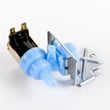
- Inlet valve W10844024
- Dishwasher float assembly WP3376397
- Dishwasher drain hose WP3374077
Quick symptom-to-part guide
| Symptom | Most likely part areas | What to check first |
|---|---|---|
| Leaking at the front | Door seal, door latch | Seal tears, latch alignment, debris on sealing surface |
| Not filling or fills slowly | Inlet valve, float | Water supply on, float moves freely |
| Poor cleaning | Spray arms, filter module area | Spray arm holes clear, proper loading |
| Not draining | Drain hose, pump/impeller area | Kinked hose, blockage at sink connection |
| Poor drying | Heater, rinse aid dispenser | Rinse aid level, heater-related symptoms |
Why it matters
Replacing the correct part restores wash pressure, proper fill level, and a tight door seal; that prevents leaks, improves cleaning, and reduces repeat breakdowns.
Last updated: February 2026







