Owner’s manual
 View engine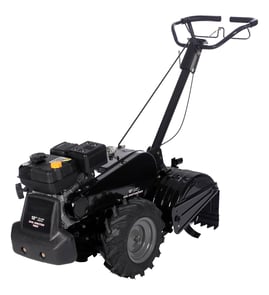



What tiller is made in the USA?
Mantis tillers are made in the USA; for your Craftsman rear-tine tiller model 917293470, the best way to confirm manufacturing details for your exact unit is to check the identification information and specifications listed in the 917293470 owner's manual.
How to check where a tiller was made
We recommend verifying the country of origin using the tiller’s ID plate and documentation, since “Craftsman” can be produced by different manufacturers over time.
- Look for the model and serial tag on the frame near the engine or handle area
- Check the engine label (this model uses a Briggs & Stratton engine family in the manual)
- Review the specifications section for identifying details (fuel, oil type, spark plug)
- Compare the model number on the tag to 917293470
- Keep the serial number handy when ordering parts or requesting service
Quick comparison: “Made in USA” vs “Assembled in USA”
| Label wording | What it usually means | What to do next |
|---|---|---|
| Made in USA | Major components and manufacturing are domestic | Confirm on the product tag and manual |
| Assembled in USA | Final assembly is domestic; parts may be global | Check the ID plate for origin details |
| Designed/engineered in USA | Design work is domestic; manufacturing may vary | Use the ID plate for the actual build origin |
Why it matters
Country of origin can affect parts sourcing, engine identification, and which diagrams match your exact configuration. For repairs on a rear-tine tiller like 917293470, matching the correct model and engine information helps ensure you get the right belt, clutch cable, chain, and hardware.
Last updated: January 2026
Where is the model number on a Craftsman rear tine tiller?
On the Craftsman rear-tine tiller model 917293470, the model number is printed on the tiller’s ID label (data plate). On this style of tiller, you’ll commonly find that label on the tine shield/tine guard area or on the main frame near the engine and controls; confirm the exact location using the 917293470 owner's manual.
Common places to check first
- Tine shield (tine guard) near the rotating tines
- Mainframe side rail (right or left side of the frame)
- Front of the tiller frame near the counterweight area
- Near the engine mounting area (frame close to the engine)
- Control panel/handle support area (uprights)
What the label looks like (and what to write down)
The ID label typically includes the model number and may also list an engine model, serial number, and emissions information. Record these items before ordering parts:
| Item on label | Example for this tiller | Why it matters |
|---|---|---|
| Tiller model number | 917293470 | Ensures diagrams and parts match your exact Craftsman tiller |
| Engine model (if shown) | Engine model may be listed separately | Helps when ordering engine-specific parts |
| Serial number | Varies by unit | Useful for confirming production variations |
Why it matters
Craftsman tillers can look similar across model families, but parts like the drive belt, clutch cable, and tine hardware can vary by model number. Using the correct model number helps us match the right diagrams and avoid ordering the wrong part.
Quick tip if the label is dirty or worn
- Wipe the area with a damp rag and mild detergent
- Use a flashlight at a low angle to make faint printing easier to read
- Take a close-up photo and zoom in to capture the full number
Last updated: January 2026
How much does a Craftsman rear tine tiller weigh?
The Craftsman rear-tine tiller model 917293470 weight is listed in the product specifications section of the 917293470 owner's manual. Use that spec when planning transport, loading ramps, or storage shelving because rear-tine tillers are heavy enough to require safe lifting and tie-downs.
Where to find the exact weight
In the manual, go to “Product Specifications” (shown in the table of contents) and look for the weight line item.
- Check the Product Specifications section first
- If your manual is a scanned PDF, use search for: “Specifications” or “weight”
- Confirm you are reading Model No. 917.293470 on the cover page
- Use the manual spec instead of “similar model” listings, since weight varies by engine and transmission setup
Typical weight range (helpful for planning)
Most Craftsman rear-tine, counter-rotating tillers in this size class typically weigh about 180 to 230 lb depending on engine, gearcase, and wheel/tine configuration.
| What you’re doing | What to plan for | Why |
|---|---|---|
| Loading into a truck | 2-person lift or ramps | Prevent back injury and tip-over |
| Moving in a garage | Solid dolly or wheel kit | Reduces strain and damage |
| Storing on a platform | Rated shelf and anchors | Avoids collapse and vibration |
Why it matters
Weight affects stability and traction while tilling, but it also determines what you need for safe transport and storage. Using the manual’s specification helps you choose the right ramps, straps, and lifting method.
Last updated: January 2026
What kind of tiller is best for heavy duty work?
For heavy-duty work, we recommend a rear-tine tiller like the Craftsman 917293470 because it’s built to bite into hard ground and maintain traction while breaking up packed soil, roots, and rocky areas. It’s also designed to run deeper and more consistently than most front-tine models.
Why a rear-tine tiller is the heavy-duty choice
Rear-tine tillers are typically the best fit when you need to break new ground or work challenging soil conditions.
- Better traction and control in hard soil because the drive wheels help push the machine forward
- More stable when tilling deeper, especially in packed or previously unworked ground
- Handles rough conditions better (rocks, roots, dense sod)
- Often supports wider tilling paths than smaller, lighter-duty tillers
- Designed for sustained use with less “bouncing” when soil is properly conditioned
How to get heavy-duty results (without overloading the machine)
Our Craftsman tiller manual emphasizes not trying to till too deep at too fast a rate, and to adjust technique based on soil conditions. Use these practices for the best performance:
- Aim for a typical tilling depth of about 4 to 6 inches for most garden prep
- Moisten very dry, hard soil before tilling; avoid tilling when soil is extremely wet and clumps
- Make multiple passes, increasing depth gradually instead of forcing full depth in one pass
- Leave an untilled row between passes, then come back through the middle to reduce fighting the machine
- Use the depth stake to control bite; lower it for more aggressive digging
Quick comparison: which tiller type fits the job?
| Job type | Best tiller style | Why |
|---|---|---|
| Breaking new ground, rocky/rooted soil | Rear-tine tiller | Stronger drive and steadier deep tilling |
| Small garden beds, already-loose soil | Front-tine tiller | Lighter, easier to maneuver |
| Weed control between rows | Cultivator or shallow tilling | Works best at about 1 to 3 inches |
Why it matters
Choosing a heavy-duty rear-tine tiller helps you avoid excessive bouncing, shallow digging, and loss of control in hard ground. It also reduces strain on wear items like tines, belts, and the drive system when you use proper depth and speed.
For operating tips, depth guidance, and safety practices specific to this model, use the Craftsman 917293470 owner’s manual.
Last updated: January 2026