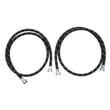
Installation guide
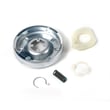


How to clean a Crosley washer?
To clean your Crosley CAWS9234VQ0 washer, we recommend running an empty hot-water cycle with a washer cleaner, then wiping the lid and tub ring and checking the drain area for residue. Regular cleaning helps prevent odors, soap buildup, and poor wash performance.
- Empty the washer completely.
- Set the water level to the highest setting (if available) and select the longest wash cycle.
- Choose hot water.
- Add a washer cleaning tablet or liquid washer cleaner (follow the cleaner label).
- Let the cycle complete, then run an extra rinse if you still see suds.
- Wipe the underside of the lid, top rim, and tub opening with a soft cloth.
- Clean the bleach and fabric softener dispensers (if equipped) with warm water.
- Check the drain hose setup to help prevent dirty water from flowing back into the tub; the formed drain hose should not be shoved too far down into the standpipe.
- Inspect the pump area for lint, coins, or small socks if draining has been slow.
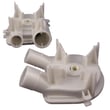
- If the washer will not drain well, the drain pump is a common wear item on top-load washers.
| Item | Use it for | Notes |
|---|---|---|
| Washer cleaning tablet | Routine tub cleaning | Use as directed on the package |
| White vinegar (small amount) | Light deodorizing | Avoid mixing with bleach |
| Chlorine bleach (measured) | Sanitizing | Use sparingly; rinse well |
| Abrasive cleaners | Cleaning the tub | Avoid; can scratch surfaces |
Buildup from detergent, fabric softener, and hard water can trap odors and reduce cleaning power. Keeping the tub and drain path clean helps your CAWS9234VQ0 fill, wash, drain, and spin more consistently.
- Follow the water hose and drain hose connection guidance in the CAWS9234VQ0 installation guide to reduce siphoning and help prevent drain water from backing up into the washer.
- If you are troubleshooting draining issues along with cleaning, see troubleshooting a top load washer that wont drain or spin video.
Last updated: February 2026
How to get crosley washer to drain?
If your Crosley CAWS9234VQ0 washer will not drain, start by correcting the drain hose setup (to prevent siphoning), then check for a clog or failed drain pump. A bad lid switch can also stop the washer from draining or spinning.
- Unplug the washer for 1 minute, then plug it back in to reset the cycle.
- Verify the standpipe height is 39 to 96 inches from the bottom of the washer.
- Make sure no more than 8 inches of the drain hose is inserted into the standpipe.
- Do not force extra drain hose down into the standpipe; keep an air gap.
- If draining into a laundry tub, use a tub with at least 20 gallons capacity.
For the exact drain-hose routing and measurements, follow the CAWS9234VQ0 installation guide.
If the hose setup is correct, the next likely causes are a blockage or a failed component.
- Look for coins, socks, or lint blocking the drain hose or pump inlet.
- Listen during “Drain/Spin”; a humming sound with no water movement often points to a jammed pump.
- If the washer will not drain and also will not spin, test the lid switch.
| What you notice | Most likely cause | What to do next |
|---|---|---|
| Water stays in tub, pump hums | Pump jam or failing | Inspect pump and hoses; replace pump if needed |
| No drain sound at all | Lid switch or timer/control issue | Check lid switch first; then wiring/timer |
| Drains slowly | Partial clog or kinked hose | Clear restriction; straighten hose |
If you need the drain pump for this model, use the washer drain pump WP3363394. If the washer will not drain or spin with the lid closed, check the washer lid switch assembly WP8318084.
A correct drain-hose installation prevents siphoning (water draining out too early or flowing back in), and a clear pump path protects the motor and helps the washer reach full spin speed.
Last updated: February 2026
Is 4.8 cubic feet a large capacity washer?
Yes. A 4.8 cubic feet washer is considered large to extra-large capacity, which is a strong fit for families and bulky items (like comforters) because it reduces the number of loads you need to run compared with standard-capacity machines.
Most top-load washers fall into these practical capacity groupings:
- Standard: about 3.5 to 4.4 cu. ft.
- Large: about 4.5 to 5.0 cu. ft.
- Extra-large: about 5.0 cu. ft. and up
At 4.8 cu. ft., you are solidly in the large range and close to extra-large.
| Capacity | Typical best for | What you’ll notice |
|---|---|---|
| 3.5 to 4.4 cu. ft. | Couples, smaller loads | More loads per week |
| 4.5 to 5.0 cu. ft. | Families, mixed loads | Fewer loads, easier bulky items |
| 5.0+ cu. ft. | Large households, big bedding | Biggest single-load flexibility |
Large capacity helps most when you load and select cycles correctly.
- Load loosely; don’t pack items down.
- Keep bulky items balanced (spread around the basket).
- Use the right water level or load size setting when available.
- Use HE detergent if your washer calls for it; too much detergent can cause oversudsing.
- If the washer shakes during spin, re-distribute the load and make sure the washer is level.
A larger tub can save time and energy by cutting down weekly loads, but overloading can still reduce cleaning performance and increase vibration. Proper installation and leveling also help minimize noise and “walking”; our installation guide covers location and leveling basics.
Last updated: February 2026
Where is the model number on a Crosley washer?
On a Crosley washer like model CAWS9234VQ0, the model number is printed on a rating label that’s typically on the back of the control panel, on the top area, or on the cabinet near the bottom. Check the most visible spots first before moving the washer.
Look for a sticker or metal tag with letters and numbers (often starting with the brand and model).
- Back of the control panel (rear of the console)
- Top edge of the cabinet under the lid opening
- Side of the main cabinet near the bottom front corner
- Rear panel of the washer cabinet
- Under the lid, around the tub opening (less common)
- Unplug the washer for safety.
- Lift the lid and scan the rim around the opening.
- Check the back of the console with a flashlight.
- If needed, gently pull the washer forward and check the lower side panels.
| Label item | What it’s used for |
|---|---|
| Model number (example: CAWS9234VQ0) | Matching parts and diagrams |
| Serial number | Age and production run identification |
| Electrical ratings | Confirming power requirements |
We use the exact model number to match the correct Crosley washer parts (like a lid switch, drain pump, or motor coupling) and to pull the right procedures from the CAWS9234VQ0 installation guide. One character off can lead to the wrong part.
Last updated: February 2026
Why is my Crosley autosensing washer not spinning?
If your Crosley CAWS9234VQ0 autosensing washer won’t spin, the most common causes are a lid switch problem, a drain issue, or a drive system failure that prevents the basket from reaching spin speed. Start with simple checks, then test the lid switch and drain pump.
- Make sure the lid is fully closed; a weak lid strike or misaligned lid can stop spin.
- Reduce the load size; heavy or unbalanced loads can cancel or limit spin.
- Check for standing water in the tub; if it won’t drain, it typically won’t spin.
- Verify the washer is level; out-of-level cabinets can trigger severe vibration and spin interruption.
- Confirm the outlet is a grounded 3-prong outlet and the washer is on a proper 120V circuit (power issues can cause cycle interruptions).
On the CAWS9234VQ0, these parts are frequent spin-stoppers when they fail:
- Washer lid switch assembly WP8318084: if the switch doesn’t prove “lid closed,” the washer won’t spin.
- Washer drain pump WP3363394: if the pump is jammed or weak, the tub may not drain fast enough to enter spin.
- Coupling 285753A: a worn coupling can let the motor run but not transfer power to the transmission.
- Clutch and drive block wear: slipping can prevent full-speed spin or cause intermittent spin.
| What you notice | Most likely direction | Common related parts |
|---|---|---|
| Motor runs, tub stays full | Drain problem | Drain pump, pump hose |
| No spin, no drain, lid must be slammed | Lid safety not proving | Lid switch assembly |
| Spins sometimes, smells hot or slips | Drive system slipping | Clutch, drive block, coupling |
| Loud grinding during spin | Mechanical drive issue | Gear case components, drive tube |
If the washer isn’t level or shipping materials weren’t removed during setup, it can vibrate excessively and interrupt spin. We follow the steps in the CAWS9234VQ0 installation guide to confirm the unit is level and the feet locknuts are tightened to reduce vibration.
- You see burning smell, repeated breaker trips, or sparking.
- The basket won’t turn by hand (with power off) or you hear severe grinding.
Last updated: February 2026