Owner’s manual
 View engine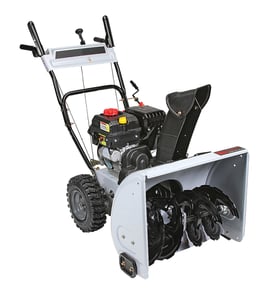



How do I tell what year my snowblower is?
For your Craftsman snow thrower model 536886141, the most reliable way to estimate the year is to use the engine’s manufacture date code (stamped on the engine shroud or valve cover). That code tells you when the engine was built, which is usually close to the snowblower’s build timeframe; confirm labeling and ID locations in the 536886141 owner's manual.
Where to find the date information
Check these common spots on a 5-hp snow thrower:
- Engine code/serial label on the blower housing, recoil starter shroud, or valve cover
- Model and serial tag on the snowblower frame (often near the handle base or rear frame)
- Owner documentation that came with the unit (purchase date is still the best “in-service” date)
How to read a typical engine date code
Many small engines use a numeric code where the first two digits indicate the year.
Example code: 99011556
99= year (1999)01= month (January)15= day of month (15th)- Remaining digits = internal production sequence
Quick reference table
| Code segment | Meaning | Example (99011556) |
|---|---|---|
| First 2 digits | Year | 99 = 1999 |
| Next 2 digits | Month | 01 = January |
| Next 2 digits | Day | 15 = 15th |
| Remaining digits | Build/sequence | 56 |
Why it matters
Knowing the approximate year helps us match the correct Craftsman parts and diagrams for your 536886141, especially wear items like belts and shear pins.
If you are already servicing the drive system, these model-matched parts are common maintenance items:
Last updated: January 2026
How many years should a snowblower last?
A gas snowblower like the Craftsman 536886141 typically lasts 15 to 20 years with normal residential use and consistent maintenance; many units reach 20+ years when they are stored correctly and wear items (belts, shear bolts, spark plug) are replaced on schedule. See the 536886141 owner's manual for the maintenance and storage routines that extend service life.
What determines lifespan most
- Maintenance consistency: lubrication, tune-ups, and fastener checks each season
- Off-season storage: clean, protect bare metal, and manage fuel before storage
- Wear-item replacement: belts, shear bolts, and spark plug are normal consumables
- Operating conditions: heavy, wet snow and gravel driveways increase wear
- Usage pattern: frequent long runs shorten belt and friction-drive life
Typical lifespan ranges (what to expect)
| Snowblower type | Typical lifespan | Notes |
|---|---|---|
| Gas, mid-to-heavy duty | 15 to 20 years | Best longevity with annual service and proper storage |
| Gas, light duty | 10 to 15 years | More sensitive to neglect and heavy snow loads |
| Electric (corded/battery) | 8 to 12 years | Fewer engine issues; electronics and batteries drive replacement |
Maintenance that adds years (high impact)
- End-of-season storage routine: clean the machine, lubricate points, inspect for worn/damaged moving parts, and protect bare metal from rust
- Fuel management: run the engine dry or treat fuel with stabilizer before storage to reduce carburetor and fuel-system problems
- Spark plug service: keep the plug gapped correctly and tightened properly during tune-ups
Common parts that wear out first
Replacing these on time prevents bigger failures and keeps performance strong:
- Snowblower drive belt 1733324SM (ground drive)
- Auger belt 37X120MA (auger/impeller drive)
- Shr bolt kit 1501216MA (shear bolts for auger protection)
Why it matters
Most “snowblower lifespan” problems are really storage and wear-item problems. A well-maintained Craftsman 536886141 can keep throwing snow reliably for decades because the core housing, auger system, and engine last much longer than belts, shear bolts, and tune-up parts.
Last updated: January 2026
Is it cheaper to repair or replace a snowblower?
For the Craftsman 536886141 5-hp snow thrower, it’s cheaper to repair when the problem is a normal wear item (like belts or shear pins) or a simple adjustment; replacement makes more sense when the repair total approaches about half the cost of a comparable new snowblower, or when major drivetrain or engine work is needed repeatedly. See the 536886141 owner’s manual for maintenance and adjustment guidance that can keep repair costs low.
Quick decision checklist
- Repair when the issue is a wear item: belts, shear pins, cable adjustments, chute hardware
- Repair when the machine still starts easily and runs smoothly under load
- Repair when the frame and auger housing are solid (no severe rust-through or cracks)
- Replace when the engine has persistent compression, smoking, or fuel-system problems that keep returning
- Replace when the drive system needs multiple major parts (friction wheel, bearings, shafts) and labor adds up
- Replace when you need a wider clearing path, easier starting, or better traction than this 5-hp class typically provides
Common “repair-first” fixes for this model
These are the types of repairs that usually cost far less than replacing the whole unit:
| Symptom | Likely repair type | Example part (if needed) |
|---|---|---|
| Won’t move or slips in drive | Drive belt or drive adjustment | Snowblower drive belt 1733324SM |
| Auger won’t spin or won’t throw snow well | Auger belt or belt guide adjustment | Auger belt 37X120MA |
| Chute won’t stay seated or feels loose | Chute retainer hardware | Snowblower chute retainer ring, inner 337227MA |
Why it matters
A well-maintained snowblower is designed to have wear items replaced over time. Your manual even treats items like drive belts and shear pins as normal-wear components, so fixing those is typically the most cost-effective path versus replacing the entire machine.
Cost comparison tip (simple and practical)
Add up:
- Parts total (belts, shear bolts, pulleys, etc.)
- Any tools you need
- Labor (if you are not doing it yourself)
If that total is near 50% of a comparable new snowblower, replacement is usually the better value; if it’s well under that, repair is usually the better value.
Last updated: January 2026
What is the most common problem with snow blowers?
The most common problem we see with gas snow blowers like the Craftsman 536886141 is hard starting or poor running, usually tied to fuel issues (old gas, water in fuel) or ignition wear (spark plug). Next most common are clogs and drive/auger problems caused by belt wear or shear pin damage.
Quick checks that fix most “won’t start” complaints
- Drain old fuel and refill with fresh gasoline; if fuel is contaminated, use the carburetor bowl drain to flush it.
- Inspect the spark plug; set the gap to 0.030 in and tighten firmly (18 to 23 ft-lb if you have a torque wrench).
- Make sure you are not running on CHOKE after warm-up; that can cause rough running and stalling.
- Check the fuel line for blockage and confirm the tank has enough fuel.
- If the unit vibrates abnormally, stop and inspect for loose parts or impeller damage before restarting.
Most common “it runs but won’t move or won’t throw snow” causes
Snow blowers typically fail in one of two drive systems: ground drive (wheels) or auger/impeller (snow throwing).
| Symptom | Most likely cause | Common fix |
|---|---|---|
| Won’t propel itself | Drive belt loose or damaged | Replace/adjust belt; inspect idler and pulleys |
| Auger won’t turn or won’t throw snow | Auger drive belt loose/damaged or shear pins broken | Replace belt or shear pins; adjust auger control cable |
| Clogs or poor discharge | Wet/heavy snow, chute packed, running too slow | Clear safely; run at full throttle; overlap passes |
Model-matched parts we commonly use for these repairs include the snowblower drive belt 1733324SM, the auger belt 37X120MA, and the shr bolt kit 1501216MA.
Why it matters
Starting issues and belt or shear pin failures are usually quick, low-cost fixes. Catching them early also helps prevent bigger damage (like running with a loose belt, or continuing to operate after abnormal vibration).
Safety note before troubleshooting
Before unclogging or inspecting moving parts, stop the engine and disconnect the spark plug wire so the auger/impeller cannot start unexpectedly. For model-specific operating and maintenance steps, use the 536886141 owner's manual.
Last updated: January 2026