Error Codes



What is the most common problem with a Maytag washer?
The most common Maytag washer complaint is the washer not spinning or draining well enough, so clothes come out too wet at the end of the cycle. On the Maytag LAT8234AAE, this often traces back to a lid switch issue, a drive system problem, or a fill and drain condition that prevents a full-speed spin.
- Make sure the lid closes firmly and the lid strike lines up with the switch.
- Try a spin cycle with an empty tub; listen for the motor running and the basket ramping up.
- Confirm the washer is not overfilled or overloaded (heavy loads can stall spin).
- Verify hot and cold water supply valves are fully open and hoses are not kinked.
- Check for unusual squealing or burning rubber smell (common with a slipping belt).
If the washer agitates but will not spin, or it stops when the lid is opened and never resumes properly, the lid safety circuit is a top suspect. If the motor runs but the basket does not reach speed, the drive belt is a common wear item.
| Symptom you see | Most likely area | Part to consider (if applicable) |
|---|---|---|
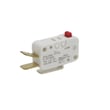
| Won’t spin with lid closed | Lid safety circuit | Lid switch W10820036 |
| Spins weakly, squeals, or slips | Drive system | Washer drive belt 12112425 |
| Fills slowly or won’t fill correctly | Water supply and valve | Washer water inlet valve WP22002360 or washer water inlet valve WP22001274 |
A washer that cannot complete a proper spin leaves excess water in clothing, which increases dry time, can cause musty odors, and puts extra strain on the motor, belt, and tub components.
- You smell electrical burning, see sparks, or the cord is damaged.
- The tub will not spin at all and the motor hums loudly.
- Water is leaking heavily during fill or spin.
Last updated: February 2026
What's the average lifespan of a Maytag washer?
A Maytag washer like model LAT8234AAE typically lasts 10 to 13 years with normal household use. Consistent maintenance, correct loading, and fixing small issues early (like a no-start lid switch problem) help you reach the high end of that range.
Most washer lifespan comes down to usage and wear on drive and water-handling parts.
- Loads per week: more cycles equals faster wear
- Overloading: strains the drive system and tub support
- Water quality: sediment can shorten valve life
- Leveling: reduces vibration-related wear
- Fast repairs: prevents secondary damage (for example, a slipping belt can stress the motor)
Use these habits to extend the life of your Maytag washer.
- Keep loads balanced; avoid packing the tub tight
- Use the right amount of HE detergent (too much can cause residue and odors)
- Check fill hoses periodically for bulges or cracking; replace as needed
- If the washer will not start or stops mid-cycle, test the lid switch circuit
- Address squealing or burning-rubber smells quickly (often drive belt related)
These are some frequently replaced parts we see on Maytag LAT8234AAE washers:
| Symptom | Likely area | Example part on this model |
|---|---|---|
| Will not start, no agitation/spin | Safety interlock | Lid switch W10820036 |
| Squeal, weak spin, burning smell | Drive system | Washer drive belt 12112425 |
| Slow fill, no fill, wrong temp | Water inlet | Washer water inlet valve WP22002360 or washer water inlet valve WP22001274 |
A washer that is maintained and repaired promptly usually costs less to own over time because it avoids bigger failures (motor strain, leaks, tub damage) that can shorten overall service life.
Last updated: February 2026
How do I reset the lid lock on a Maytag washer?
On the Maytag LAT8234AAE, a “lid lock reset” is usually restoring power and correcting the safety switch circuit so the washer can sense the lid closed. Start with a simple power reset; if the washer still will not lock or start, the lid switch is the most common fix.
- Unplug the washer (or switch the breaker off) for 2 minutes.
- Plug back in (or turn breaker on).
- Close the lid firmly; press the cycle knob in (or press Start, if equipped).
- Select a normal cycle and try to start.
- If the lid still will not lock, lift and close the lid 6 times within 12 seconds (common Maytag top-load reset behavior).
On this model, the “lock” function is typically handled by the lid switch and its actuator. If the washer fills but will not agitate/spin, stops when the lid is moved, or never senses “lid closed,” replace the lid switch W10820036.
- No click when closing the lid
- Washer will not start or stops mid-cycle
- Intermittent operation when you press down on the lid
- Visible damage to the switch or lid strike area
- Confirm the lid is closing squarely (no laundry caught between lid and top).
- Check that the washer is level; a twisted cabinet can prevent proper lid alignment.
- Inspect wiring at the lid switch for loose or damaged connectors.
- If you smell burning rubber or the tub will not spin, inspect the washer drive belt 12112425 (a separate issue that can look like a “won’t run” problem).
| Symptom | Most likely cause | What we recommend |
|---|---|---|
| Won’t start, no lid sense | Failed lid switch | Replace lid switch |
| Starts sometimes, lid must be pressed | Misaligned lid or weak switch | Check alignment; replace switch if needed |
| Fills but won’t agitate/spin | Lid switch not closing circuit | Replace lid switch |
The lid lock or lid switch is a safety device; if it does not signal “lid closed,” the washer prevents agitation and spin to reduce injury risk and water splash.
Last updated: February 2026
How big is a 3.8 cu ft washer?
A 3.8 cu. ft. washer describes the wash basket volume, not the cabinet size. For Maytag model LAT8234AAE, use typical top-load planning dimensions (about 27 inches wide, 42 to 44 inches tall, 26 to 28 inches deep), then confirm by measuring your washer and the installation space.
3.8 cubic feet is the internal tub capacity; it helps estimate load size, but it does not define the washer’s footprint.
- Capacity is the basket volume, not the outside width or depth
- Cabinet size varies by console style, lid design, and base frame
- Hoses and the drain standpipe need extra space behind the washer
- Clearance matters as much as the cabinet measurements
Use these ranges to plan space for a 3.8 cu. ft. top-load washer like the Maytag LAT8234AAE.
| Measurement | Typical range | What to plan for |
|---|---|---|
| Width | ~27 in. | Side clearance for vibration |
| Height | ~42 to 44 in. | Lid opening clearance above |
| Depth | ~26 to 28 in. | Extra room for hoses behind |
Measure the washer cabinet and your laundry area so you know it will slide in, hook up, and service easily.
- Measure width at the widest point (often the cabinet top)
- Measure height to the top of the console (not just the lid)
- Measure depth including the rear connections area
- Add at least 4 inches behind for hoses and the drain hose bend
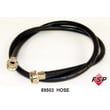
- If you’re replacing hoses during install, use a new set like the washer cold/hot water fill hose, 5-ft WP89503
Correct sizing prevents kinked fill hoses, crushed drain hoses, excessive vibration, and hard-to-reach shutoff valves. It also makes future repairs (inlet valve, belt, lid switch) easier.
Last updated: February 2026