Owner’s manual
 Error Codes




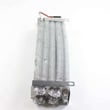
How to remove bottom grille on GE refrigerator?
On the GE GFE28GBLETS bottom-mount refrigerator, the bottom grille (base grille) typically comes off by releasing its retaining tabs or removing a couple of screws, then pulling the grille straight out from the front. Use gentle, even pressure so the plastic clips do not crack.
- Unplug the refrigerator or switch off power at the breaker (safer when working near wiring).
- Look along the top edge and corners of the bottom grille for screws.
- If screws are present, remove them with a Phillips screwdriver.
- Grip the grille near both ends and pull straight outward to release the clips.
- If it feels stuck, press in on the grille near the clip locations while pulling outward.
- Set the grille aside flat so it does not warp.
In most cases, reinstalling is the reverse of removal: align the grille with the openings, push it in until the clips snap into place, then reinstall any screws.
| What you see | What to do |
|---|---|
| Phillips screws at the corners/edge | Remove screws first, then pull grille forward |
| No screws, only a tight fit | Pull forward to release clips (work left to right) |
| Grille won’t release | Check for hidden screws and pull straight out, not upward |
We remove the bottom grille to access and clean the condenser area, check for debris that can restrict airflow, and reach components near the lower front of the cabinet. Keeping that area clear helps cooling performance and can reduce compressor run time.
For diagrams, fastener locations, and any handling cautions specific to GE GFE28GBLETS, follow the steps in the owner's manual.
Last updated: February 2026
Are bottom mount fridges better?
Bottom-mount refrigerators like the GE GFE28GBLETS are better for many kitchens because the fresh-food section sits at eye and waist level, so you reach everyday items (milk, produce, leftovers) without bending as much. The tradeoff is that freezer access is lower and often drawer-based.
A bottom-mount (bottom freezer) design usually wins when you use the refrigerator compartment more than the freezer.
Common advantages
- Easier access to fresh food; less bending for daily items
- Better organization for refrigerated foods (shelves and bins at eye level)
- Freezer drawer can hold bulky items (pizza boxes, bags of frozen food)
- Often pairs well with in-door water and ice features
Common drawbacks
- You bend more to reach freezer items
- Freezer drawers can feel “deep”; small items may get buried
- If you open the freezer frequently, the lower drawer layout can be less convenient
| Feature | Bottom-mount (bottom freezer) | Top-freezer |
|---|---|---|
| Fresh-food access | Best (most-used items higher) | Good, but lower shelves require more bending |
| Freezer access | Lower drawer; more bending | Easiest (freezer at chest/eye level) |
| Organization | Strong for fresh food | Strong for freezer-first users |
| Best for | Cook-at-home, fresh-food heavy | Frozen-food heavy, simple storage |
Ergonomics and habits drive satisfaction more than the layout itself. If your household grabs fresh food many times a day, a bottom-mount refrigerator reduces bending and makes it easier to see what you have, which can cut down on wasted food.
- Use bins or baskets to separate categories (meat, veggies, snacks)
- Keep “daily” freezer items near the top of the drawer
- Avoid overpacking so the drawer closes fully and seals well
- If the door alarm sounds often, follow how to reset the door alarm on a GE refrigerator
For model-specific features and storage setup details, use the GFE28GBLETS owner's manual.
Last updated: February 2026
What is the most common problem with a GE refrigerator?
The most common problem we see with GE refrigerators (including model GFE28GBLETS) is cooling complaints: the fresh food section gets warm, the freezer temperature drifts, or the unit runs longer than normal. In many cases, the cause is restricted airflow or heat not being released efficiently.
Start with the most common, highest-impact checks:
- Dirty condenser coils: dust buildup makes it harder to shed heat, so temperatures rise.
- Airflow blocked inside: overpacked shelves or blocked vents prevent cold air circulation.
- Evaporator fan issue: weak or failed fan reduces cold air movement to the refrigerator section.
- Defrost system problem: frost buildup on the evaporator restricts airflow.
- Door sealing problems: warm air leaks in through a torn or warped gasket.
- Temperature control or sensor issues: can cause inconsistent cycling and temperature swings.
These steps solve a large share of “warm fridge” calls without parts replacement:
- Confirm settings: verify the refrigerator and freezer set points in the control panel.
- Check door closure: make sure doors fully close and nothing is holding them open.
- Look for blocked vents: move food away from air towers and return vents.
- Clean condenser coils: unplug the refrigerator first; vacuum and brush coils and the grille area.
- Listen for fans: you should typically hear a fan running when the compressor is running.
| Symptom | Most likely cause | What to do next |
|---|---|---|
| Fridge warm, freezer OK | Airflow restriction, evaporator fan, frost buildup | Check vents, listen for fan, inspect for heavy frost |
| Both sections warm | Dirty coils, compressor not running, control issue | Clean coils, verify compressor/fan operation |
| Runs constantly | Dirty coils, door leak, warm room, blocked vents | Clean coils, check gasket, improve airflow |
| Frost on back wall inside freezer | Defrost problem | Defrost and monitor; inspect defrost components |
Cooling problems force the compressor and fans to work harder, which can shorten component life and lead to food spoilage. Keeping airflow clear and coils clean is the fastest way to stabilize temperatures.
- Use GE refrigerator error codes to interpret any displayed fault codes.
- If a door is being left ajar or the alarm keeps sounding, follow how to reset the door alarm on a GE refrigerator.
For model-specific operating details (controls, alarms, airflow locations, and care steps), use the GFE28GBLETS owner's manual.
Last updated: February 2026