Installation guide
 Owner’s manual
 Error Codes



How wide is a Kenmore side-by-side refrigerator?
Most Kenmore side-by-side refrigerators are about 33 inches to 36 inches wide; your Kenmore 10655642500 falls in that common size range. For the exact cabinet width and required clearance for door swing, use the dimensions and spacing guidance in the 10655642500 owner's manual.
Typical width and what to measure
When you need a “width” number for a kitchen opening, we recommend measuring the refrigerator itself and the space it needs to breathe.
- Measure cabinet width (main box), not just the doors
- Measure at the widest point (often the hinge side)
- Confirm if you need counter-depth or standard-depth fit
- Plan for side clearance so doors open fully
- Allow top clearance for ventilation
Quick reference: common side-by-side widths
| Refrigerator type | Typical width | Notes |
|---|---|---|
| Compact side-by-side | 32 to 33 in. | Less common; smaller capacity |
| Full-size side-by-side | 33 to 36 in. | Most Kenmore models fall here |
| Oversize side-by-side | 36+ in. | Larger capacity; needs more clearance |
Clearance guidance that affects “fit”
Even if the cabinet width fits, clearance can be the difference between doors that open normally and doors that bind.
Based on the installation guidance for this style of Kenmore refrigerator, plan for:
- About 1/2 inch space on each side and at the top for ventilation
- About 2 inches minimum on the hinge side when next to a fixed wall (varies by setup) so the door can swing open
- Extra space behind the unit if you have an ice maker and water line connections
For the most accurate placement and leveling steps, follow the 10655642500 installation guide.
Why it matters
Correct width and clearance prevent door alignment issues, reduce gasket wear, and help the refrigerator cool efficiently by maintaining proper airflow around the cabinet.
Last updated: February 2026
Why is the ice maker not working on my Kenmore side by side refrigerator?
If the ice maker on your Kenmore 10655642500 side-by-side refrigerator is not making ice, the most common causes are the ice maker being turned off (wire shutoff arm up), the freezer not being cold enough yet, or the water supply shutoff valve being closed. Use the checks below to restore ice production.
Quick checks we recommend first
- Make sure the wire shutoff arm is down (ON); do not force it. See the 10655642500 owner's manual.
- If the ice maker was just installed or reconnected, wait 24 hours for ice production to begin.
- Confirm the freezer temperature is cold enough; if ice is slow, adjust the freezer control slightly colder.
- Verify the household water shutoff valve to the refrigerator is fully open.
- Look for a cube jam in the ejector area; clear it with a plastic utensil (not metal).
Water supply and valve problems (very common)
If the ice mold is dry (no water entering), focus on the water supply path.
| What you observe | Likely cause | What to do next |
|---|---|---|
| No water in ice mold | Water shutoff closed or restricted supply | Open shutoff; check for kinked line |
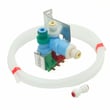
| No water in ice mold, dispenser also weak | Inlet valve not opening fully | Test/replace the refrigerator inlet valve W10408179 |
| Ice maker cycles but cubes are small/hollow | Low water flow | Replace filter, check pressure, inspect valve |
A failing inlet valve can prevent the ice maker from filling even when everything else looks normal.
Ice production is slow (but not completely dead)
Your ice maker should typically produce about 7 to 9 batches in 24 hours under normal conditions. If it is making some ice but not enough:
- Turn the freezer control slightly colder (small adjustments, then wait a full day).
- Avoid frequent door openings; warm air slows ice production.
- Allow 24 hours after a large ice draw for the bin to recover.
Why it matters
Ice makers depend on two things working together: a cold freezer and steady water flow. A simple ON/OFF issue (wire shutoff arm) or a restricted water inlet valve can stop ice production completely.
Last updated: February 2026
How to tell cubic feet of Kenmore refrigerator by model number?
For Kenmore model 10655642500, the most reliable way to get cubic feet is to look up the capacity in the specifications section of the 10655642500 owner's manual. Model numbers sometimes hint at size, but they are not a consistent, accurate way to calculate capacity.
Best ways to find cubic feet (in order)
- Check the specifications/capacity listing in the 10655642500 owner's manual.
- Read the model and serial label inside the fresh food compartment; it confirms the exact model number so you match the right spec sheet.
- Use the full model number 10655642500 when searching parts and documentation; small digit changes can mean a different cabinet size.
- If you are measuring for a replacement refrigerator, compare outside dimensions and door swing clearance, not just cubic feet.
What the model number can and cannot tell you
Kenmore model numbers identify a product line and configuration, but they do not provide a dependable “cubic feet = X” formula.
| Method | Accuracy | What you get |
|---|---|---|
| Manual/spec sheet lookup | High | Official capacity for your exact model |
| Rating plate confirmation | High | Correct model to match the right specs |
| Guessing from model number patterns | Low | Often wrong across series/years |
Why it matters
Cubic feet affects how much food you can store, but it does not guarantee fit in your kitchen. For a side-by-side refrigerator like 10655642500, installation clearances and door swing space are just as important.
Related installation tip
When planning space, allow typical ventilation clearances (often about 1/2 inch on the sides/top and extra room behind for a water line if you have an ice maker). Confirm the exact clearances for your unit in the 10655642500 installation guide.
Last updated: February 2026
What's the average lifespan of a Kenmore refrigerator?
Most Kenmore refrigerators average 10 to 15 years of service life; a well-maintained Kenmore 10655642500 side-by-side refrigerator often reaches the upper end of that range when the condenser stays clean, doors seal tightly, and cooling issues are repaired early. For model-specific care steps, use the 10655642500 owner's manual.
Typical lifespan and what affects it
A refrigerator’s lifespan is mainly driven by heat management, airflow, and how hard the sealed system has to work.
- Condenser coil cleanliness (dirty coils raise compressor run time)
- Door gasket condition (air leaks cause frost and temperature swings)
- Stable temperatures (fresh food about 37°F, freezer about 0°F)
- Ice maker and water system health (leaks and low flow can create repeat problems)
- Vent clearance and loading (blocked vents reduce cooling efficiency)
Maintenance checklist to help it last longer
We recommend these routine steps for Kenmore side-by-side units like model 10655642500:
- Vacuum and brush condenser coils every 6 to 12 months
- Clean sticky door gaskets with mild soap and water; dry fully
- Keep interior air vents clear of food packages
- Replace clogged water filters on schedule; flush the dispenser after changes
- Address water leaks quickly (under the unit or at the dispenser)
Quick guide: symptoms that shorten lifespan
| Symptom | Common cause | What to do first |
|---|---|---|
| Warm refrigerator section | Poor airflow, dirty coils | Clean coils; confirm vents are open |
| Heavy frost in freezer | Door not sealing, defrost issue | Check gasket seal; inspect defrost components |
| No ice or slow water | Filter restriction, valve issue | Replace filter; test inlet valve |
| Clicking or hard starting | Start components stressed | Check electrical supply; consider run capacitor |
Why it matters
When a refrigerator runs hot or leaks air, the compressor and sealed system work longer and harder. That extra runtime is the biggest reason units fail earlier than the 10 to 15 year average.
Parts that commonly come up in longevity-related repairs
If you are troubleshooting cooling or water/ice performance on this model, these parts are frequently involved:
- Refrigerator inlet valve W10408179 (water supply to ice maker and dispenser)
- Door gaskets (reduce air leaks and frost)
- Defrost components (heater and bi-metal)
- Evaporator fan components (move cold air through compartments)
Last updated: February 2026
Who made Kenmore 10655642500?
Kenmore model 10655642500 was manufactured for Sears under the 106 source prefix, which identifies Whirlpool as the maker for this side-by-side refrigerator line. For model-specific identification details and service information, use the 10655642500 owner's manual.
How to confirm the manufacturer on your refrigerator
We recommend verifying the source prefix and data plate details on the appliance itself.
- Check the model tag inside the fresh food compartment (often on a side wall or ceiling)
- Confirm the full model number reads 10655642500 (the 106 prefix is the key)
- Record the serial number as well (helpful for parts lookups and service)
- Compare the model tag information with the documentation in the 10655642500 owner's manual
What the “106” prefix means
Kenmore used a prefix system in many model numbers. For refrigerators, the first three digits commonly indicate the original manufacturer.
| What you see | What it indicates | Why it matters |
|---|---|---|
| 106 (as in 10655642500) | Whirlpool-built Kenmore refrigerator | Helps match the correct parts diagrams and compatible replacement parts |
Why it matters
Knowing Whirlpool built Kenmore 106 refrigerators helps you troubleshoot and order the right components (for example, ice maker, water inlet valve, thermostat, and defrost parts) without mismatches caused by similar-looking Kenmore models from other manufacturers.
Last updated: February 2026
What are the most common problems with Kenmore refrigerators?
The most common problems we see on Kenmore refrigerators like model 10655642500 are cooling issues (warm fridge or freezer), ice maker and water dispenser troubles, door sealing problems, and moisture or leaks. Many of these come down to airflow, control settings, and a few high-wear parts.
Most common symptoms and what usually causes them
- Not cooling or not cold enough: blocked air vents, doors opened often, warm room conditions, or a defrost/airflow problem.
- Fridge too warm after loading groceries: large food load can take hours to pull back down to temperature.
- Moisture buildup inside: high humidity, frequent door openings, or food not wrapped well.
- Doors hard to open or not sealing: dirty or sticky door gaskets, cabinet not level, or door alignment issues.
- Ice maker not making ice: water supply issue, inlet valve problem, or ice maker failure.
- Water dispenser weak or no water: restricted supply, filter housing issue, or inlet valve problem.
Quick checks we recommend first (fast, no parts)
- Check control settings and adjust one step at a time; rotary controls turn clockwise for colder, slide controls move right for colder (see the 10655642500 owner's manual).
- Confirm air vents are not blocked by food packages.
- Limit door openings and allow several hours after adding a large amount of food.
- Clean sticky gaskets with mild soap and water; sticky gaskets can make doors difficult to open.
- Look for moisture sources: uncovered liquids, unwrapped foods, or a humid kitchen.
Common problem-to-part match (when a repair is needed)
| Symptom | Common culprit | Example part for 10655642500 |
|---|---|---|
| No ice or slow ice production | Water supply not filling ice maker | Refrigerator inlet valve W10408179 |
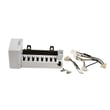
| Ice maker dead or inconsistent | Ice maker module/assembly failure | Ice maker assembly - refrigerator ice maker by whirlpool 4317943 |
| Warm temps, frost pattern issues | Defrost control components | Refrigerator defrost bi-metal WPW10225581 |
Why it matters
Cooling and ice maker complaints often start as simple airflow or settings issues; fixing those early helps prevent food spoilage, excess frost, and strain on sealed-system components like the compressor.
Last updated: February 2026