Owner’s manual
 View engine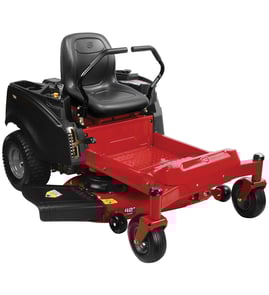


What year is a Craftsman 247204180 riding mower?
The Craftsman riding mower model 247204180 does not map to one single “model year”; Craftsman and MTD commonly sold the same model number across multiple production runs. The exact build date is identified from the mower’s product label and date/serial coding shown in the owner's manual.
How to find the exact year on model 247204180
Use the mower’s ID label (typically under the seat, on the frame near the seat pan, or on the rear fender area). Record all numbers exactly as shown.
- Look for a manufacture date printed directly on the label (month and year is common)
- If you see a date code, write it down exactly (letters and numbers)
- If you see a serial number, record the full serial (do not drop leading zeros)
- Confirm the label matches 247204180 (not a close variant)
- If the label is damaged, gently clean it; avoid solvents that can erase printing
What the numbers usually mean (quick guide)
Different production runs use different formats, so the goal is to locate a clear date indicator.
| What you find on the label | What it tells you | What to do next |
|---|---|---|
| “MFG DATE” or “DATE” field | Direct build date | Use that as the mower’s year |
| Serial number only | Indirect build info | Match the serial format to the manual’s identification section |
| Engine model/type/code | Engine build date (not always mower date) | Use as a cross-check, not the primary year |
Why it matters
The correct year or production run affects parts fitment for common repairs like a ground drive belt replacement, blade service, or starting system troubleshooting. Even small changes in pulleys, brackets, or wiring can change which parts list applies.
Parts that commonly vary by production run
When you are confirming the year, these are the items that most often differ between runs:
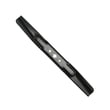
- Deck and blade setup (for example, blade length and mounting style)
- Ground drive belt routing and belt length
- Electrical components in the starting circuit
- Deck lift linkage and brackets
- Shields and hardware used around idlers and pulleys
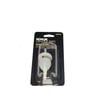
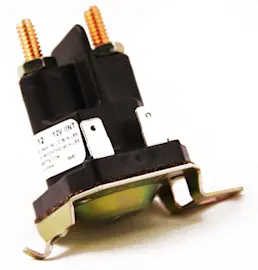
If you are troubleshooting a no-crank issue while you’re identifying the year, the lawn tractor starter solenoid 725-06153 is one of the common starting-circuit parts used on this model family.
Last updated: February 2026
How to read Craftsman model number?
For your Craftsman riding mower model 247204180, the model number is the key identifier we use to match the correct diagrams, belts, blades, electrical parts, and hardware. Read it exactly as printed on the mower’s ID label, including all digits, so you get parts that fit.
Where to find the model number on a riding mower
Most Craftsman riding mowers have a product identification label in one of these common spots:
- Under the seat on the seat pan or frame
- On the rear fender area near the seat
- On the frame rail near the engine
- Near the footrest or running board area
- On the mower’s main chassis close to the transaxle
For model-specific label locations and diagrams, use the owner's manual.
How to read it correctly (so parts match)
When you copy the model number, use these rules:
- Write all digits with no missing characters (example: 247204180)
- Keep the order exactly as shown on the label
- Do not add spaces or extra dashes unless they appear on the label
- If the label also shows a serial number, keep it separate (serial helps with production changes)
- Use the model number when selecting parts like a ground drive belt, starter solenoid, or mulching blade
Model number vs. part number: what’s the difference?
| Item | What it identifies | Example from this mower’s parts |
|---|---|---|
| Model number | The mower version | 247204180 |
| Part number | The replacement part itself | 954-04317A (belt), 942-04268 (blade) |
Why it matters
Craftsman riding mowers often have multiple configurations that look similar. Using the exact model number ensures the correct fit for high-impact items like the ground drive belt, deck blade, and starter solenoid, and avoids ordering the wrong hardware (nuts, bolts, cotter pins).
Last updated: February 2026
What brand engine does Craftsman use?
Craftsman riding mowers can use engines from several manufacturers, but Briggs & Stratton is the most common across many Craftsman mower lines. For your Craftsman model 247204180, the exact engine brand and spec details are listed in the owner's manual.
Common engine brands used on Craftsman mowers
Across Craftsman lawn and garden equipment, we most often see these engine makers:
- Briggs & Stratton (most common on many Craftsman models)
- Kohler (common on some higher-horsepower models)
- Kawasaki (used on select models)
- MTD-branded engines on certain platforms (varies by series and year)
How to confirm the engine brand on model 247204180
Use these quick checks to match the engine to the correct parts and service specs:
- Look for the engine ID label on the blower housing or valve cover area
- Record the engine model, type, and code (or serial number)
- Compare that information to the engine section in the owner's manual
- Match tune-up parts by engine ID, not just by mower model number
Why it matters (parts and troubleshooting)
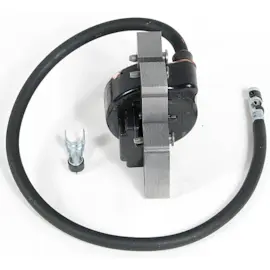
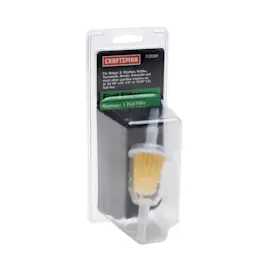
Engine brand affects the correct maintenance parts and settings, such as the air filter style, spark plug type and gap, fuel filter routing, and charging system output. Using the engine ID prevents ordering the wrong ignition or fuel parts.
| What you’re doing | What to use | Why it helps |
|---|---|---|
| Ordering engine tune-up parts | Engine model/type/code | Ensures exact fit |
| Diagnosing a no-crank issue | Wiring diagram and starting circuit | Avoids replacing good parts |
| Replacing drive components | Mower model 247204180 parts list | Matches belt and chassis parts |
Related parts you might see during diagnosis
If the mower won’t crank or has intermittent starting, these model-listed parts are commonly involved in the starting and drive system:
Last updated: February 2026
What are common problems with Craftsman riding mowers?
Common problems on a Craftsman riding mower like model 247204180 fall into three buckets: no-start or intermittent starting, poor engine performance, and drive or cutting-deck issues (belt slip, weak engagement, uneven cut). Our best fixes come from checking fuel, spark, safety switches, and belts in a simple order using the 247204180 owner's manual.
Most common symptoms and what usually causes them
- Won’t crank / clicks only: weak battery, corroded terminals, bad solenoid, or a safety switch not made
- Cranks but won’t start: stale fuel, clogged fuel path, fouled spark plug, or ignition issue
- Runs rough / surges: dirty carburetor, restricted air flow, partially clogged fuel delivery
- Mower won’t move or slips under load: worn or stretched ground drive belt, idler/pulley issues
- Blades won’t engage or cut is poor: deck belt or clutch issues, dull or damaged blades
Quick checks we recommend (in order)
- Fuel first: drain old fuel, refill with fresh fuel; confirm the fuel shutoff (if equipped) is open.
- Battery and cables: clean and tighten terminals; confirm the ground cable is solid at the frame.
- Safety interlocks: verify brake pedal is fully depressed, PTO is off, and seat switch is working.
- Starter circuit: if you hear a click but no crank, test the solenoid; a common replacement is the lawn tractor starter solenoid 725-06153.
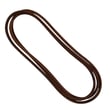
- Drive system: if it starts but won’t move, inspect the belt for glazing, cracking, or slack; a common wear item is the lawn tractor ground drive belt, 9/16 x 67-1/2-in 954-04317A.
Symptom-to-part focus guide
| Symptom | What to inspect first | Parts often involved |
|---|---|---|
| No crank | Battery, cables, safety switches | Solenoid, wiring harness |
| Crank no start | Fuel quality, spark plug, air filter | Fuel system parts |
| Slips or won’t move | Belt condition, idler action | Ground drive belt, pulleys |
| Poor cut | Blade sharpness, deck level | Blades, deck hardware |
Why it matters
Catching a weak battery connection, failing solenoid, or worn drive belt early prevents repeated no-starts, reduces belt and pulley damage, and keeps the transaxle from being overstressed during operation.
Last updated: February 2026
What is the advantage of a rear engine mower?
A rear-engine riding mower’s main advantage is maneuverability in tight spaces; the compact layout and rear weight bias help it turn easily around trees and beds and maintain steady traction on typical lawns. For your Craftsman model 247204180, confirm the exact drive and deck layout in the 247204180 owner's manual.
Key advantages of a rear-engine riding mower
- Compact size makes it easier to store and transport.
- Good maneuverability for smaller yards with obstacles.
- Rear weight bias helps traction during starts and on mild slopes.
- Typically simpler controls than many larger lawn tractors.
- Often provides a clear view of the cutting area from the seat.
Rear-engine vs. other mower layouts (quick comparison)
| Layout | Best for | Turning feel | Typical tradeoffs |
|---|---|---|---|
| Rear-engine riding mower | Small to mid-size lawns | Good | Less ideal for heavy towing and very rough terrain |
| Front-engine lawn tractor | Larger lawns, towing carts | Fair | Larger footprint, wider turns |
| Zero-turn mower | Fast mowing, tight turns | Excellent | More drive system complexity, higher parts wear if used on rough ground |
Why it matters
Choosing the right layout affects how quickly you can mow, how close you can cut around landscaping, and how much storage space you need. If you are shopping parts or planning maintenance, the manual’s diagrams help you match the correct deck, belt routing, and service points for model 247204180.
Last updated: February 2026