 Owner’s manual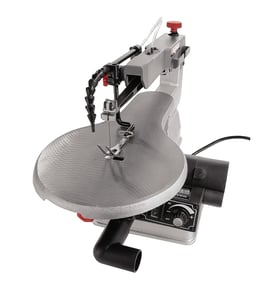

How do I know which scroll saw blade to use?
For your Craftsman model 113207600 scroll saw, pick a blade by matching blade type (plain-end or pin-type), blade width and thickness, and teeth-per-inch to the material, its thickness, and the smallest radius (tightest curve) you need to cut. The 113207600 owner's manual also specifies compatible blade styles and setup basics.
What blades this model uses
The 113207600 accepts both common scroll saw blade attachment styles:
- Plain-end (pinless) blades
- Pin-type blades
- Choose blade width and thickness based on the tightest curve you need to cut
- Choose teeth-per-inch (TPI) based on material type and thickness
- Install the blade so the teeth point down for normal cutting
Quick selection rules (width, TPI, and cut quality)
Use these rules to get clean cuts and reduce twisting or breakage:
- Tight curves and fine detail: use a narrower, thinner blade
- Straighter cuts: use a wider blade (wider blades track straighter)
- Thicker stock: use a blade with lower TPI so it clears sawdust better
- Thin stock and smoother edges: use a blade with higher TPI
- If the blade twists or breaks: increase blade tension, replace a dull blade, and reduce feed pressure
Inside cuts (piercing): best practice
For inside cutting, the manual recommends pin-type blades for maximum performance.
- Drill an oversized starter hole in a scrap area of the workpiece
- Release tension, thread the blade through the hole
- Reinstall the blade in the holders, then re-tension before cutting
Blade choice cheat sheet
| Task | Blade width | TPI direction | Blade style |
|---|---|---|---|
| Intricate patterns, tight radius | Narrow | Higher | Plain-end or pin-type |
| General curves in wood | Medium | Medium | Plain-end or pin-type |
| Straighter cuts | Wide | Medium | Plain-end or pin-type |
| Inside cuts | Narrow to medium | Medium | Pin-type preferred |
Why it matters
Matching blade width, thickness, and TPI to the material and smallest radius helps you follow pattern lines, improves accuracy, and reduces blade breakage. Proper tension and steady feed pressure matter as much as blade choice.
To shop blades and other replacement items by model number, start with the parts list for Craftsman 113207600 or search on Sears PartsDirect.
Last updated: February 2026
How thick of wood can a scroll saw cut through?
On the Craftsman 113207600 18-inch motorized scroll saw, we get the cleanest, most controllable cuts in wood up to about 1-3/4 inches thick when you match the blade to the material and use a slow, steady feed. Thicker stock is possible, but accuracy drops and blades break more often.
What sets the real limit
The saw is built for detailed curve cutting, so thickness is limited by blade control, heat, and sawdust clearing more than “will it fit.” The 113207600 owner's manual explains that blade width, thickness, and teeth-per-inch should match the material and thickness being cut, and it warns not to force the work.
Key factors:
- Wood density (softwood cuts thicker than hardwood)
- Blade style (plain-end vs. pin-type) and blade width
- Teeth per inch (TPI) and how well it clears sawdust
- Feed rate (forcing the cut twists and snaps blades)
- Blade tension and sharpness
Practical thickness guidelines
Use these as starting points, then adjust based on cut quality.
| Material | “Easy” thickness range | What to watch for |
|---|---|---|
| Softwood (pine, cedar) | 3/4 in. to 1-1/2 in. | Fast feed can chatter and wander |
| Hardwood (oak, maple) | 1/2 in. to 1-1/4 in. | Burning and drift if you push too hard |
| Plywood | 1/4 in. to 3/4 in. | Tear-out; choose a blade that cuts cleanly |
Tips for thicker cuts (cleaner and safer)
- Let the blade do the work; use steady, even pressure
- Use a wider blade when you need straighter cuts
- Slow down if the blade starts to wander or heat up
- For inside cuts, drill a starter hole and follow the inside-cutting method in the manual
- Mount the saw securely to reduce vibration (bench or mounting board)
Why it matters
Staying within a realistic cutting thickness gives smoother edges, tighter pattern control, and fewer broken blades, especially on hardwoods.
For replacement parts and accessories for model 113207600, check the model diagrams first, then search by model number on Sears PartsDirect.
Last updated: February 2026
Should I get pinless or pinned scroll saw blades?
For the Craftsman 113207600 18-inch motorized scroll saw, choose pinless (plain-end) blades for most detailed scrolling because they give you the widest blade selection and best control. Use pinned (pin type) blades when you want simpler setup and sturdy general cutting.
What this model accepts
Our manual for Craftsman 113207600 lists compatibility for both blade styles:
- Plain-end (pinless) blades: 5 to 6 inch length
- Pin type (pinned) blades: 5 inch length
- Install blades with the teeth pointing down
For the exact install and tensioning procedure (including set screws, blade clips, and blade holder pockets), follow the 113207600 owner's manual.
| Blade style | Also called | Compatible length on 113207600 | Best use |
|---|---|---|---|
| Pinless | Plain-end | 5 to 6 inch | Fine detail, tight curves, widest blade options |
| Pinned | Pin type | 5 inch | General cutting, quick changes, thicker stock |
How we choose between pinless and pinned
Use these quick rules to match the blade to your project:
- Choose pinless for fretwork, puzzles, ornaments, and tight-radius curves.
- Choose pinned for thicker wood and basic patterns where speed matters more than tiny detail.
- Use a wider blade when you want the straightest cuts.
- Match teeth per inch (TPI) to material thickness; thicker material uses fewer TPI.
- Keep blade holders tight; check set screws before each use.
Inside cuts (piercing) on this saw
This scroll saw supports inside cutting by drilling a starter hole, threading the blade through, then reinstalling and retensioning.
- Pinned blades are recommended for inside cutting for maximum performance.
- Plain-end blades also work for inside cuts; you secure them in the holders using the set screws.
Why it matters
Blade style affects cut accuracy, breakage, and how easily you can follow a pattern line. Using the correct blade type, length, and tension reduces twisting and snapping and produces cleaner scroll saw cuts.
Buying tip
When shopping by model number or looking up accessories beyond the parts list, search by 113207600 on Sears PartsDirect.
Last updated: February 2026
Where can I buy Craftsman replacement parts?
You can buy replacement parts for your Craftsman 113207600 18-inch motorized scroll saw by using the model number to match the exact part you need, then ordering from the parts list for this model or searching by part number on Sears PartsDirect. For part identification, we recommend checking the owner's manual.
How to make sure you order the right part
Use the saw’s identification info first, then match the part.
- Confirm the model number is 113207600 (it’s typically found on the right-hand side of the base)
- Record the model and serial number for future reference
- Use the parts list diagrams to find the correct part number (order by part number, not key number)
- If your saw is on a stand, note that 113207650 is the “saw with legs” version, and some leg-set parts differ
- If you are replacing electrical items (cord, strain relief, wire connector), unplug the saw before inspecting
What you can order for model 113207600
The Craftsman 113207600 manual includes a detailed parts list covering common service items such as blades, blade holders, miter gauge components, and electrical parts like the cord and strain relief.
| What you have | Best way to find the part | What to search with |
|---|---|---|
| Broken or missing component | Use the exploded parts diagram | Part number from the list |
| Worn consumable (blade, hardware) | Check the parts list description | Part number and description |
| Unsure what the part is called | Match by location in the diagram | Key number, then part number |
Why it matters
Scroll saw parts are highly model-specific. Using the correct Craftsman 113207600 part number helps ensure proper fit, safe operation, and smooth blade tracking and tensioning.
Last updated: February 2026