Owner’s manual
 Error Codes


What is the advantage of a bottom mount fridge?
A bottom-mount refrigerator like the KitchenAid KBFS22EWMS7 puts the fresh-food compartment at a more convenient height, so you reach everyday items with less bending. The freezer stays below, which works well if you access refrigerated foods more often than frozen foods.
Key advantages in daily use
- Fresh food at eye and waist level for faster viewing and grabbing items
- Less bending for produce, drinks, and leftovers (the most-used section)
- Wider refrigerator shelves are often easier to organize than a top-freezer layout
- Freezer drawer storage can make it simpler to group frozen foods by type
- Better workflow for cooking since ingredients are typically in the upper compartment
What to consider before choosing bottom-mount
Bottom-mount designs are convenient, but the best fit depends on how you shop and cook.
| If you mostly use... | Bottom-mount tends to feel... | Why |
|---|---|---|
| Fresh foods | More convenient | Less bending and easier visibility |
| Frozen foods | Less convenient | Freezer is lower, so you bend more |
| Meal prep and cooking | More efficient | Ingredients are easier to access |
Why it matters
Ergonomics and visibility affect how well you keep food organized and how often items get forgotten in the back of shelves. A layout that matches your habits can reduce wasted food and make everyday kitchen tasks quicker.
Helpful model-specific resources
- Use the owner's manual for KBFS22EWMS7 to confirm storage features, shelf adjustments, and recommended temperature settings.
Last updated: February 2026
What is the most common problem with KitchenAid refrigerators?
The most common KitchenAid refrigerator problems are cooling issues (fresh food too warm or freezer too warm), ice maker and water dispenser troubles, and water leaks. On the KitchenAid KBFS22EWMS7, these symptoms often trace back to airflow, defrost, or water-supply components.
Most common symptoms we see (and what usually causes them)
- Fridge not cooling evenly: restricted airflow, evaporator fan issue, or a damper that is stuck
- Freezer cold but fridge warm: damper control problem or evaporator fan not moving air
- No ice or slow ice production: clogged water filter, low water pressure, or inlet valve problem
- Water leaking or puddles: defrost drain issues, door not sealing, or water line/valve seepage
- Noisy operation: evaporator fan blade rubbing ice, worn fan motor, or vibration from panels
Parts that commonly fix these problems on model KBFS22EWMS7
If troubleshooting points to a failed component, these are common matches for the symptoms above:
| Symptom | Common part to check | What it affects |
|---|---|---|
| Warm fridge section | Refrigerator damper control assembly WPW10594329 | Controls cold-air flow into fresh food section |
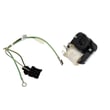
| Warm temps, noise, poor airflow | Refrigerator evaporator motor W11024089 | Circulates air across the evaporator |
| Frost buildup, warming, long run times | Refrigerator defrost heater WP12729128 | Melts frost so air can move freely |
| No water, weak dispense, poor ice fill | Refrigerator water inlet valve assembly WPW10420083 | Opens to supply water to dispenser and ice maker |
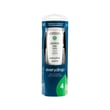
| Bad taste, slow flow, dispenser issues | Refrigerator water filter EDR4RXD1 | Filters water before dispensing/ice making |
Quick checks before replacing parts
- Confirm temperature settings and give the unit 24 hours to stabilize after changes.
- Make sure vents inside the refrigerator are not blocked by food containers.
- Clean condenser coils (dirty coils commonly cause warm temps and long run times).
- If the dispenser is sputtering after a filter change, purge air from the water line.
- Inspect door gaskets for gaps, tears, or areas not sealing flat.
Why it matters
Cooling, ice, and leak complaints usually share the same root causes: restricted airflow, frost from a defrost problem, or inconsistent water supply. Fixing the underlying cause protects food temperatures, reduces compressor run time, and prevents repeat failures.
For model-specific operating guidance and care steps, use the owner's manual.
Last updated: February 2026
What's the average lifespan of a KitchenAid refrigerator?
KitchenAid refrigerators typically last 14 years on average. For your KitchenAid KBFS22EWMS7 bottom-mount refrigerator, good maintenance (cleaning coils, keeping door gaskets sealing, and fixing cooling or water issues early) helps you reach that lifespan.
Typical lifespan range (what to expect)
Most KitchenAid refrigerators run 10 to 17 years, with 14 years being a solid average for normal household use.
- 10 to 12 years: more likely with heavy use, poor airflow, or neglected cleaning
- 13 to 15 years: common with routine care and stable temperatures
- 16 to 17 years: achievable when seals, airflow, and defrost performance stay strong
| Lifespan range | What it usually indicates | What to do now |
|---|---|---|
| 10 to 12 years | Higher wear or inconsistent maintenance | Clean coils, check door seal, verify temps |
| 13 to 15 years | Typical ownership experience | Keep up with filter changes and airflow |
| 16 to 17 years | Well-maintained unit | Address small issues quickly to prevent major failures |
Maintenance that extends life (high impact)
These steps reduce compressor run time, prevent frost buildup, and protect food temperatures.
- Keep condenser area clean and maintain airflow around the cabinet
- Make sure doors close fully and the gasket seals all the way around
- Replace the water filter on schedule to protect the water system
- Avoid overpacking; blocked vents cause warm spots and longer run times
- Fix unusual noises early (often tied to the evaporator fan area)
Parts that commonly affect longevity on KBFS22EWMS7
When these parts wear out, you often see warmer temps, frost issues, leaks, or poor water flow.
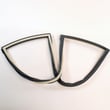
- Refrigerator door gasket W10830283 (air leaks make the compressor work harder)
- Refrigerator water filter EDR4RXD1 (helps maintain water flow and taste)
- Refrigerator evaporator motor W11024089 (keeps cold air moving through the compartments)
Why it matters
A refrigerator that runs warmer than normal or runs constantly ages faster. Keeping seals tight, airflow clear, and temperatures stable reduces strain on the sealed system and helps your KitchenAid KBFS22EWMS7 reach its expected service life.
For model-specific care and use recommendations, follow the KBFS22EWMS7 owner's manual.
Last updated: February 2026
Which is better, top mount or bottom mount refrigerator?
A bottom-mount refrigerator (like your KitchenAid KBFS22EWMS7) is better when you want fresh-food items at eye level and easier day-to-day access; a top-mount is better when you want a simpler layout and typically lower upfront cost. The “best” choice depends on how you use your refrigerator.
Quick comparison
| Feature | Top-mount (freezer on top) | Bottom-mount (freezer on bottom) |
|---|---|---|
| Fresh-food access | You bend more often | Most-used items are higher up |
| Freezer access | Easier to reach | Often a pull-out drawer |
| Organization | Basic shelves and bins | Drawer-style freezer storage is common |
| Typical price | Usually lower | Usually higher |
| Best for | Budget, simple storage | Convenience, frequent fresh-food use |
When a bottom-mount is the better pick
- You use the refrigerator section more than the freezer
- You want less bending for milk, produce, leftovers, and drinks
- You like freezer drawers and baskets for sorting frozen foods
- You want a layout that supports better day-to-day organization
When a top-mount is the better pick
- You want a straightforward design with fewer moving drawer parts
- You prefer a more traditional freezer shelf layout
- You are prioritizing lower purchase cost over convenience
- You do not mind bending to reach fresh-food shelves and crisper drawers
Why it matters
The mount style changes how often you bend, how you organize groceries, and how quickly you can spot what you have. For many households, bottom-mount designs reduce “search time” in the fresh-food section, which is where most daily openings happen.
Keeping either style running efficiently
- Keep door gaskets clean and sealing well to prevent warm air leaks
- Replace the water filter on schedule if your model has a dispenser or ice maker
- Avoid overpacking; airflow helps maintain stable temperatures
- Set temperatures to typical targets: 37°F for fresh food, 0°F for freezer
For model-specific features and care tips for KitchenAid KBFS22EWMS7, use the owner's manual.
Last updated: February 2026