Error Codes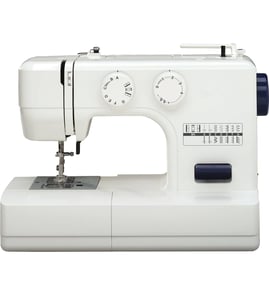

Are older sewing machines worth anything?
Yes. Older sewing machines can be worth money, but most common household models sell for modest amounts unless they are rare, complete, and sew well. A Kenmore 15814100 is usually valued more for dependable everyday sewing and serviceable parts than for “antique” collector pricing.
What drives the value most
- Working condition: smooth motor, consistent stitch, and no seized handwheel
- Completeness: foot pedal, power cord, bobbin case, presser feet, and accessories
- Cosmetic condition: minimal rust, clean paint, intact decals, no cracks in the case
- Service history: recently cleaned and oiled, timing and tension set correctly
- Local demand: vintage sewing communities can raise prices in some areas
Typical price ranges you will see
These are practical ranges we see for older mechanical machines in today’s resale market; rarity and condition move the number quickly.
| Condition | What it usually includes | Typical value range |
|---|---|---|
| Parts or “as-is” | Missing pedal/cord, stuck, noisy, or inconsistent stitching | $0 to $50 |
| Working, basic setup | Sews, includes pedal and a few accessories | $50 to $150 |
| Clean, serviced, complete | Tuned, smooth, includes case and multiple feet | $150 to $300 |
| Collector-grade/rare | Sought-after model, exceptional condition, documented | $300+ |
How to estimate your Kenmore 15814100 value quickly
- Test sew on cotton with a new needle and quality thread; check straight stitch and zigzag.
- Listen for strain: a struggling motor or burning smell lowers value immediately.
- Inspect wear items: belt condition, wiring insulation, and the condition of the foot control.
- Confirm key accessories: bobbin case and presser feet matter more than decorative extras.
Why it matters
If you plan to keep the machine, a basic clean-and-lube and replacing common wear items often delivers more real-world value than selling. If you plan to sell, proving it stitches cleanly and includes the essentials is what raises the price fastest.
For help identifying the exact model number before you price or shop parts, use how to find your appliance model number (and what it means for parts).
Last updated: February 2026
How do you adjust tension on a Kenmore?
On the Kenmore 15814100, you adjust stitch tension by balancing the upper thread tension dial first, then fine-tuning the bobbin-case tension only if needed. A correct setting gives even stitches with the thread “knot” locked inside the fabric layers.
Quick tension setup (works for most issues)
- Rethread the machine with the presser foot up (this opens the tension discs).
- Set the upper tension dial to a middle setting (most machines sew best near mid-range).
- Install a new, correct-size needle and insert it fully.
- Use quality thread and match thread type top and bobbin.
- Test-stitch on a scrap of the same fabric with the same number of layers.
How to tell which tension to change
| What you see on the fabric | Most likely cause | What to adjust |
|---|---|---|
| Loops on the underside | Upper tension too loose or not threaded into discs | Increase upper tension; rethread |
| Loops on the top | Upper tension too tight or bobbin tension too loose | Decrease upper tension first |
| Puckering | Tension too tight, needle too large, or stitch length too short | Lower upper tension; check needle and stitch length |
If you must adjust bobbin tension (small changes only)
We treat bobbin tension as a last step because it is easy to over-adjust.
- Remove the bobbin case and locate the small tension screw.
- Turn the screw 1/8 turn at a time.
- Re-test after each change.
- Return to upper tension adjustments for final balancing.
Why it matters
Balanced tension prevents skipped stitches, thread nests, and seam puckering; it also reduces strain on the tension discs, take-up lever, and bobbin case.
For more help finding the exact model number details you need when ordering parts, use how to find your appliance model number (and what it means for parts).
Last updated: February 2026
Are Kenmore sewing machines still made?
Kenmore is not currently producing new sewing machines. Kenmore sewing machines like model 15814100 are best supported today through maintenance, compatible replacement parts, and careful model-number matching when you shop.
What this means for your Kenmore 15814100
Even though new Kenmore sewing machines are not being made, your Kenmore 15814100 sewing machine head can still be a practical, repairable machine.
- You can keep it running with routine cleaning, oiling (where applicable), and correct needle and bobbin setup.
- Many issues are wear-related (belt, motor brushes, wiring, foot control, tension parts) and can be repaired.
- Parts availability varies by component; matching by model number is the most reliable approach.
- If you are comparing machines, focus on condition and service history rather than “new vs. old.”
Common parts people look for on older Kenmore sewing machines
These are the most common repair and maintenance items customers search for when servicing a mechanical sewing machine:
- Needles and bobbins (correct system and size for your fabric)
- Bobbin case and shuttle/hook area components
- Presser feet and presser foot holder/ankle
- Drive belt (if belt-driven)
- Foot control/pedal and power cord
- Motor components (brushes on some motors)
Quick buying checklist (to avoid mismatches)
Use this checklist before ordering anything for a Kenmore sewing machine head:
| What to match | Why it matters | Example for this page |
|---|---|---|
| Model number | Ensures correct fit and compatibility | 15814100 |
| Part description | Confirms you are replacing the right assembly | “Foot control” vs. “power cord” |
| Symptoms | Helps avoid replacing the wrong part | No power vs. poor stitch quality |
Why it matters
Kenmore sewing machines have a strong reputation for durability, but age-related wear and incorrect accessories (needle type, bobbin style, threading path) cause most performance problems. Correct identification keeps repairs straightforward and prevents repeat issues.
For help locating the correct model number format and where to find it on the machine, use how to find your appliance model number (and what it means for parts).
Last updated: February 2026
When was the Kenmore 15814100 sewing machine made?
Kenmore model 15814100 was produced during the broader Kenmore 158-series era, which spans the mid-1900s into the late 1900s. To pinpoint the year for your specific machine, use the model tag and the serial or date code stamped on the machine.
How to date a Kenmore 15814100
Use the identification plate first, then record any serial number or code exactly as shown.
- Unplug the machine before inspecting around the motor, wiring, and foot control connection
- Locate the model tag (commonly on the back, underside, or near the handwheel)
- Confirm the model number reads 15814100 exactly
- Write down the full serial number and any letter-number code
- Keep that information with your machine for future parts matching and service
What “158” means (and why it matters)
The 158 prefix identifies a Kenmore sewing machine family that typically uses an electric motor and foot pedal for power, with mechanical controls for stitch selection and adjustments. That matters because parts and adjustments vary by the full model suffix.
| Identifier you find | What it indicates | Why it matters |
|---|---|---|
| 158 prefix | Kenmore 158 family | Many designs are similar, but parts are not universally interchangeable |
| 15814100 (full model) | Exact variant | Determines correct fit for hook/bobbin area, needle system, belts, and drive parts |
| Serial/date code | Production window | Helps narrow the build period and match service info |
Practical next steps before ordering parts
Even when you are mainly trying to date the machine, the same tag details prevent ordering the wrong item.
- Match parts by the full model number 15814100, not just “158”
- Identify the symptom first (no power, noisy drive, thread nesting, skipped stitches)
- Inspect the power cord, foot pedal, and wiring for wear before deeper troubleshooting
- Use how to find your appliance model number (and what it means for parts) to confirm you are reading the tag correctly
Why it matters
The production year is useful for history and resale, but correct parts matching depends on the exact model and the specific assembly (motor/drive, hook and bobbin, needle bar, tension system).
Last updated: February 2026
What is the most sought after vintage sewing machine?
There is no single “most sought-after” vintage sewing machine; demand depends on what you value most (portability, straight-stitch quality, zigzag features, or collectibility). The Singer Featherweight 221/222 and Singer 201 are consistently among the most in-demand, and many sewists also seek certain Bernina and Pfaff all-metal models.
Vintage models that are consistently in high demand
Collectors and everyday sewists most often look for these because they are durable, serviceable, and sew well:
- Singer Featherweight 221/222 (portable, strong collector interest)
- Singer 201 (excellent straight-stitch performance, heavy-duty build)
- Singer 401/403 (all-metal, more stitch options than straight-stitch-only models)
- Bernina 830 Record (high-quality vintage engineering, strong reputation)
- Pfaff vintage all-metal machines (known for consistent performance and longevity)
What actually drives “sought-after” status
The same model can be highly desirable or a headache depending on condition and completeness.
| What buyers want | Why it matters | What to look for |
|---|---|---|
| Smooth mechanical operation | Prevents skipped stitches and jams | Handwheel turns freely, no grinding |
| Stable tension and feeding | Produces consistent seams | Even stitches on scrap fabric |
| Complete accessories | Easier setup and higher value | Bobbins, feet, pedal, case |
| Safe electrics | Reduces downtime and repair risk | No cracked cords, no overheating smell |
How this relates to your Kenmore 15814100
Your Kenmore 15814100 mechanical sewing machine head is typically valued as a practical, durable machine to sew on, not just a display collectible. When comparing vintage machines, prioritize stitch consistency, smooth controls, and accessory completeness over “rarity.”
Quick evaluation checklist
- Handwheel turns smoothly by hand
- Presser foot lifts and holds pressure
- Feed dogs move fabric evenly (forward and reverse)
- Power cord and foot control show no cracking or heat damage
Why it matters
“Most sought after” usually translates to fewer repairs, easier maintenance, and better stitch results, which protects your fabric and saves time.
For help confirming you are shopping parts for the correct Kenmore model, use how to find your appliance model number (and what it means for parts).
Last updated: February 2026