Owner’s manual
 View engine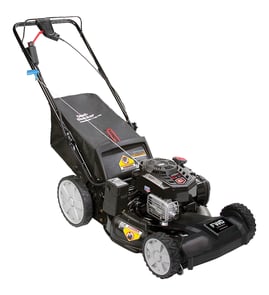


What is the life expectancy of a gas-powered lawn mower?
Most gas-powered walk-behind lawn mowers typically last 8 to 10 years with normal residential use and routine maintenance. For your Craftsman 917378521, consistent tune-ups, cleaning, and timely replacement of wear items (blade, belt, filters, spark plug) are what most directly extend service life.
What affects mower lifespan the most
- Maintenance frequency (oil changes, air filter service, blade care)
- Cleaning habits (grass buildup makes the engine run hotter)
- Storage (dry storage and proper off-season prep reduce corrosion and fuel issues)
- Operating conditions (dusty lawns, steep slopes, heavy weekly mowing)
- Wear parts replaced on time (blade adapter, belts, blade hardware)
Maintenance actions that add years
The owner’s manual for this mower emphasizes keeping the deck and engine clean and doing seasonal service. Use the schedule and specs in the owner's manual to stay on track.
- Scrape and clean the underside of the deck after each use (once the engine is off and cooled)
- Keep the engine area clear of debris so it runs cooler
- Replace the blade when it is bent, cracked, or too worn to sharpen safely
- Clean under the drive cover at least twice per season on self-propelled setups
- Replace worn drive components if the mower starts slipping or losing drive
Common “end of life” signs vs. fixable issues
| Symptom | Often fixable with maintenance/parts | Often points to replacement time |
|---|---|---|
| Hard starting after storage | Yes (fuel system tune-up, spark plug, filter) | Not usually by itself |
| Poor cut quality | Yes (blade, blade adapter, deck cleaning) | Only if deck is severely damaged |
| Won’t self-propel | Yes (belt, pulleys, drive parts) | If multiple drive components are worn repeatedly |
| Excessive vibration | Sometimes (blade, adapter) | If crankshaft is bent |
Parts that commonly wear out first
These are normal wear items that help keep performance up as the mower ages:
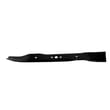
- Premium blade 532406706 (cut quality and engine load)
- Lawn mower blade adapter 581547901 (blade mounting and alignment)
- Lawn mower ground drive belt, 3/8 x 33-9/16-in 532169778 (self-propel drive)
Why it matters
A mower that is cleaned regularly and kept tuned runs cooler, cuts cleaner, and puts less strain on the engine and drive system. That directly reduces premature wear and helps you reach (and often exceed) the typical 8 to 10 year lifespan.
Last updated: February 2026
Should I use 87 or 89 gas for lawn mower?
Use 87-octane regular unleaded in your Craftsman 917378521 gas walk-behind mower; higher octane (like 89) does not improve performance for this engine. For best starting and to protect the fuel system, use fresh fuel and follow the fuel guidance in the owner's manual.
What the manual recommends
Our guidance for model 917378521 matches the product specifications and fueling instructions:
- Use regular unleaded gasoline, minimum 87 octane
- Fill the tank only to the bottom of the filler neck (do not overfill)
- Use fresh fuel; buy only what you can use in about 30 days
- Do not mix oil with gasoline
- For storage of 30 days or longer, run the engine until the fuel system is empty (per the manual’s storage guidance)
87 vs 89: what changes and what does not
Higher octane is mainly for engines designed for it (high compression). Most walk-behind mower engines are built for regular fuel.
| Fuel choice | Works in 917378521? | What to expect |
|---|---|---|
| 87 octane (regular) | Yes (recommended) | Normal power, normal starting, correct combustion |
| 89 octane (mid-grade) | Yes (not needed) | No meaningful benefit; costs more |
Why it matters
Using the correct fuel helps prevent hard starting, rough running, and fuel-system issues during storage. Fresh 87-octane fuel plus proper storage habits typically makes a bigger difference than stepping up to 89.
Last updated: February 2026
Is it cheaper to repair or replace a lawnmower?
For a Craftsman gas walk-behind mower like model 917378521, repairing is usually cheaper when the fix is a normal wear item (blade, belt, adapter, springs) and you do the work yourself. Replacing the mower is usually cheaper when labor costs are high or the engine/drive system has major damage.
Quick way to decide
- Repair if the mower starts reliably and the problem is cutting quality, self-propel issues, or routine maintenance.
- Replace if the engine has internal damage, the deck is badly rusted/cracked, or multiple major systems need work at once.
- Use the maintenance and troubleshooting steps in the owner's manual to confirm what is actually failing before buying parts.
Common repairs that are typically cost-effective
These are the kinds of fixes that usually make sense on the 917378521 because they are straightforward and parts are relatively affordable:
- Replace a worn or bent blade (cutting gets ragged or the mower vibrates)
- Replace a stripped blade adapter (blade won’t stay tight or won’t spin true)
- Fix self-propel problems by replacing a worn drive belt
- Clean and service drive wheels when they stop turning freely (grass and debris buildup)
Helpful model-matched parts to check:
- Premium blade 532406706
- Lawn mower blade adapter 581547901
- Lawn mower ground drive belt, 3/8 x 33-9/16-in 532169778
Cost comparison (typical)
| Situation | Usually cheaper | Why |
|---|---|---|
| Blade is dull/bent, mower vibrates | Repair | Wear item; quick swap and the manual lists blade care steps |
| Self-propel won’t move but engine runs fine | Repair | Often belt or wheel-drive cleaning |
| Engine won’t run and has low compression/knocking | Replace | Major internal repair time and cost add up |
| Multiple big issues at once (engine + drive + deck) | Replace | Parts plus labor often exceed mower value |
Why it matters
A mower that is maintained to the schedule in the manual generally costs less over time. For this model, the manual also calls out key specs that affect safe, correct repairs, such as blade bolt torque (35 to 40 ft-lbs) and basic fuel and oil requirements. Following those specs prevents repeat failures and vibration.
Last updated: February 2026
How much is the Craftsman 917378521?
The Craftsman model 917378521 is a gas walk-behind lawn mower; pricing varies by condition (new vs. used), included accessories (bag, mulch plug), and local availability. For the most accurate total cost, price the mower plus any needed replacement parts using the diagrams in the owner's manual.
What you can price on this model page right now
If you already own the mower, the fastest way to estimate what it will cost to get it mowing again is to total up the common wear parts you need.
- Blade and blade-mounting hardware (inspect for bends, cracks, stripped threads)
- Drive system wear items (belt, pulleys, springs) if the mower is self-propelled
- Wheel and height adjuster parts if the deck sits unevenly
- Discharge chute and deflector parts if the side discharge will not stay closed
Example parts that affect your “all-in” cost
| What you’re fixing | Common symptom | Example part for 917378521 |
|---|---|---|
| Cutting performance | Ragged cut, vibration | Premium blade 532406706 |
| Self-propel drive | Mower will not move or slips | Lawn mower ground drive belt, 3/8 x 33-9/16-in 532169778 |
| Blade mounting | Blade wobbles, adapter stripped | Lawn mower blade adapter 581547901 |
| Height adjustment | One side will not hold height | Selector knob 532701037 |
How to estimate the mower’s value (new or used)
Use these checkpoints to compare listings and avoid underestimating what you will spend:
- Deck condition: rust-through, cracks, or bent deck lowers value sharply
- Engine behavior: starts easily hot and cold, no surging, no smoke
- Drive function: self-propel pulls consistently under load
- Safety controls: operator presence control stops the blade quickly
- Maintenance history: recent blade, oil change, clean air filter
Why it matters
A mower that looks inexpensive can cost more after you add a blade, belt, and drive components. Pricing the mower together with the parts it needs gives you a realistic “ready-to-mow” number.
Last updated: February 2026
What are the common lawn mower problems?
Common problems on the Craftsman 917378521 gas walk-behind mower include no-start conditions (stale fuel, dirty air filter, disconnected spark plug wire, bad spark plug), loss of power from heavy grass or deck buildup, and excessive vibration from a loose or damaged blade or blade adapter. See the owner's manual for the model-specific troubleshooting chart and safety steps.
Most common symptoms and likely causes
- Won’t start: out of fuel, stale fuel, water in fuel, dirty air filter, spark plug wire disconnected, bad spark plug, control bar not held to the handle
- Loss of power: cutting too much grass, heavy grass dragging, dirty air filter, grass and debris buildup under the deck, oil level too high, walking speed too fast
- Poor cut or uneven cut: worn, bent, or loose blade; wheel heights set uneven; deck packed with clippings
- Excessive vibration: worn/bent/loose blade; loose blade bolt; damaged blade adapter
- Starter rope hard to pull: control bar not depressed (brake engaged), blade dragging in grass, broken blade adapter
Quick checks we recommend first (safe and fast)
- Shut the engine off and wait for the blade to stop completely.
- Disconnect the spark plug wire before cleaning under the deck or working near the blade.
- Confirm the control bar is held against the handle when starting.
- Check fuel quality (fresh, clean unleaded) and oil level.
- Inspect the underside of the mower deck for grass buildup.
Parts that commonly solve these problems
If you find damage or wear, these model-matched parts are commonly involved:
| Symptom | Part to inspect/replace | Example part on this model page |
|---|---|---|
| Vibration, poor cut | Blade and blade mounting | Premium blade 532406706, lawn mower blade adapter 581547901 |
| Mower won’t move (self-propel) | Drive system belt/cover | Lawn mower ground drive belt, 3/8 x 33-9/16-in 532169778, drive cover 532437165 |
| Uneven cut height | Height adjust components | Selector knob 532701037, lawn mower height adjuster, right 532180914 |
Why it matters
Catching issues early prevents bigger failures. For example, a loose blade or damaged blade adapter can cause vibration that leads to more wear, and a deck packed with wet clippings can make the engine bog down and cut poorly.
Last updated: February 2026