Installation guide
 Owner’s manual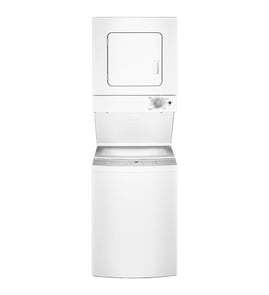



What is the average lifespan of a Kenmore washer?
A Kenmore washer typically lasts 10 to 15 years with normal household use. For the Kenmore stacked laundry center 41761712510, consistent maintenance and avoiding chronic overloading help you reach the longer end of that range; wear items and heat or drain issues can shorten it (see the 41761712510 owner's manual).
What affects washer lifespan the most
- Load size and balance: frequent overloading or unbalanced loads increase stress on the tub, bearings, and suspension.
- Drain performance: slow draining makes the motor work harder and can leave water behind.
- Water quality: hard water and sediment accelerate valve and pump wear.
- Detergent habits: too much detergent can cause residue buildup and odors.
- Routine care: cleaning and correct cycle selection reduce long-term wear.
Typical lifespan ranges (what to expect)
| Usage pattern | Typical lifespan | What usually shortens it |
|---|---|---|
| Light (few loads/week) | 12 to 15 years | Long periods of non-use, corrosion, stuck pumps |
| Average (most households) | 10 to 13 years | Overloading, poor draining, detergent residue |
| Heavy (daily loads) | 7 to 10 years | Motor strain, tub wear, frequent vibration |
Maintenance that adds years (high impact)
- Keep loads below the top of the basket and distribute items evenly.
- Use the right amount of HE detergent (if your detergent is HE) and avoid oversudsing.
- Check hoses for bulges or leaks and replace aging hoses proactively.
- If you notice slow draining, inspect the pump area and consider replacing the laundry center washer drain pump 5304524452 when it becomes noisy, leaks, or stops moving water.
- Follow the cycle and temperature guidance in the 41761712510 owner's manual to reduce fabric and machine stress.
Why it matters
A washer that is nearing end-of-life often shows early warning signs (longer cycle times, vibration, slow drain, or intermittent spinning). Catching those symptoms early can prevent secondary damage and keep your Kenmore 41761712510 running reliably.
Last updated: February 2026
Is it worth repairing an old Kenmore dryer?
Yes, repairing an older Kenmore dryer in your Kenmore stacked laundry center model 41761712510 is usually worth it when the fix is a common wear item or airflow-related issue; it is less worth it when the repair involves major assemblies or repeated overheating failures. Use the 41761712510 owner’s manual to match symptoms to the most likely parts.
Quick decision checklist (what we use)
- Repair if the dryer tumbles but has long dry times due to lint or venting restrictions.
- Repair if the issue points to a single, common part such as a thermal limiter, thermostat, or heating element.
- Repair if the dryer is otherwise quiet, stable, and has not had multiple recent breakdowns.
- Replace if the drum, motor, or cabinet has major damage, or repairs keep repeating.
- Replace if the total repair estimate approaches about half the cost of a comparable new unit.
Common “worth it” repairs on model 41761712510
Many older Kenmore 417-series laundry centers are very serviceable because the dryer side uses straightforward components.
| Symptom | Most likely cause | Typical fix type |
|---|---|---|
| Runs but won’t heat | Blown house fuse, failed limiter/thermostat, failed heater | Electrical check, part replacement |
| Takes too long to dry | Clogged lint filter, restricted exhaust duct | Cleaning and vent correction |
| Loud squeal or rumble | Worn drum support parts | Bearing/glide service |
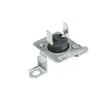
Model-relevant parts we commonly see used for these repairs include the dryer thermal limiter 134120900, kelvinator dryer high-limit thermostat 3204267, and crosley dryer heating element 137392700.
Why it matters
A dryer that “runs but won’t heat” or “takes too long” often wastes energy and can over-stress safety devices. The manual also calls out regular lint filter cleaning and periodic exhaust duct cleaning to keep drying efficient and reduce lint buildup risk.
What to do first (fast, low-cost steps)
- Clean the lint screen and confirm it seats correctly (replace if damaged).
- Check the exhaust duct for kinks, crushing, or heavy lint buildup.
- Verify power supply: many electric dryers can tumble with a partial power issue.
- If heat is still missing, follow the troubleshooting in the 41761712510 owner’s manual and test the limiter/thermostat circuit.
Last updated: February 2026
What are common problems with Kenmore dryers?
Common Kenmore dryer problems include no heat, long dry times, the drum not tumbling, and loud squealing or thumping. On the Kenmore 41761712510 stacked laundry center, most of these issues trace back to restricted airflow (lint buildup or venting) or normal wear of heating and drum-support parts.
Most common symptoms and what usually causes them
- Dryer will not heat: failed heater circuit safety parts (thermal limiter, high-limit thermostat) or a bad heating element
- Clothes still damp or cycles take too long: clogged lint screen, restricted exhaust duct, crushed vent, or too many bends in the vent run
- Drum will not turn: worn drum bearing or drive motor issue
- Loud noise (squeal, scrape, rumble): worn drum bearing, front glides, or felt seal
- Overheating or hot smell: restricted venting; the manual calls for a 4-inch rigid or semi-rigid metal duct with limited bends and length
Quick checks we recommend first (before replacing parts)
- Clean the lint screen every load and confirm it is seated correctly (running without it can cause damage).
- Inspect the exhaust duct for kinks, lint blockage, and a stuck exterior hood.
- Verify the vent is 4 inches in diameter and made of rigid or semi-rigid metal, with no more than four 90° bends.
- Avoid overloading; it increases wrinkling, noise, and dry time.
- Check pockets for coins, pins, and clips; they can scratch the drum and create noise.
Parts that commonly fix these problems on model 41761712510
| Symptom | Likely part to check | Example part for this model |
|---|---|---|
| No heat or shuts off on heat | High-limit thermostat or thermal limiter | Kelvinator dryer high-limit thermostat 3204267 |
| No heat (safety open) | Inlet thermal limiter | Dryer inlet thermal limiter 137032600 |
| Loud squeal or rumble | Drum bearing | Dryer drum bearing 131825900 |
| Scraping at front of drum | Front glide or felt seal | Dryer drum front glide 137513300 |
Why it matters
Airflow problems are the number one driver of long dry times and overheating. Fixing venting first protects the heating system and helps the dryer run at the correct temperature for better performance and fabric care.
For model-specific operating and venting requirements, use the 41761712510 owner’s manual.
Last updated: February 2026
How to do a hard reset on a Kenmore washer?
For the Kenmore 41761712510 stacked laundry center washer, the most reliable “hard reset” is a power reset: disconnect power for 1 minute, restore power, then start a new cycle. This clears many temporary control glitches without changing any mechanical settings.
Hard reset (power reset) steps
- Turn the cycle selector to an off position if it is running.
- Unplug the laundry center from the outlet, or switch the washer circuit breaker off.
- Wait 60 seconds.
- Restore power.
- Close the washer lid.
- Select a cycle and start the washer.
If you need to stop a cycle that is running
This model uses a cycle selector knob; the manual describes using the knob to pause and cancel a cycle.
- Pause: push in the cycle selector knob.
- Cancel: push in and hold the cycle selector knob until the washer stops.
- If water remains in the tub after canceling, run a drain cycle to remove the water.
If a reset does not fix the problem
A reset will not correct conditions that prevent operation. Check these common causes first:
- Lid not fully closed (the washer will not operate with the lid open)
- Loose plug, tripped breaker, or blown fuse
- Motor overheated; wait for the motor to cool down before restarting
- Washer will not spin; recheck lid closure and restart the cycle
Quick reference
| Situation | What we recommend | What it does |
|---|---|---|
| Control acting “stuck” | Power reset (1 minute) | Clears temporary electronic glitches |
| Need to stop mid-cycle | Pause or cancel with the selector knob | Stops the current cycle |
| No power | Check outlet, breaker, fuse | Restores electrical supply |
| Stops after heavy use | Let motor cool | Allows overheat protection to reset |
Why it matters
Resetting is the fastest first step for cycle interruptions and control glitches; checking lid closure and power supply prevents repeat no-start and no-spin symptoms. For the exact control steps and cycle details, use the 41761712510 owner's manual.
Last updated: February 2026