Owner’s manual
 View engine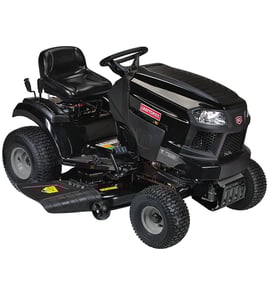



What year is my Craftsman mower serial number lookup?
On Craftsman model 917254630, the most reliable way to identify the build year is to use the model plate under the seat and match the serial number format shown in the owner's manual. Many Craftsman tractors use a date-coded serial number, but the exact pattern varies by production run.
Where to find the serial number
We use the same location every time for this tractor: the model plate is under the seat.
- Park on a level surface, set the parking brake, and shut the engine off
- Lift the seat to access the model plate
- Write down the model number (917254630) and the serial number exactly
- Keep the numbers with your maintenance records for parts matching
How serial number date codes typically work
A common Craftsman date-code style is a 6-digit date embedded in the serial number:
- First 2 digits: month
- Next 2 digits: day
- Last 2 digits: year (two-digit year)
Example
| Serial date code | Interprets as | Build date |
|---|---|---|
| 072811 | 07 / 28 / 11 | July 28, 2011 |
If your serial number contains a similar 6-digit sequence, you can decode it using the table above.
If your serial number does not match that pattern
Some serial numbers use a different structure (letters, longer strings, or a different date position). In that case, we use the model number 917254630 to select parts and diagrams, and we use the manual to confirm identification details.
- Use the model number to browse the correct parts list
- Compare your tractor’s configuration (deck size, drive system, controls) to the manual
- When replacing wear items, match by application (for example, belts and pulleys) rather than guessing by year
Why it matters
The build year can help with compatibility for running changes, but the model number and the exact part ID are what ensure you get the right belt, switch, pulley, or solenoid for your tractor.
Last updated: February 2026
What model number is the Craftsman 917254630?
The model number for this Craftsman front-engine lawn tractor is 917.254630 (often written without the dot as 917254630). You can confirm it on the model plate under the seat and in the owner's manual.
Where to find the model number on the tractor
You will typically see the model number on the model plate under the seat. Check these spots:
- Under the seat on the frame (model plate location)
- Near the seat hinge area or rear fender pan
- In the first pages of the manual (model number is printed near the front)
Why the dot matters (917.254630 vs 917254630)
Both formats refer to the same tractor; the dot is just a formatting style used in some manuals and labels.
| You might see it written as | What it means |
|---|---|
| 917.254630 | Manual and label formatting |
| 917254630 | Website and parts lookup formatting |
Why it matters
Using the exact model number ensures you get the correct Craftsman parts for your 38-inch, 12-hp riding lawn tractor, especially for fit-critical items like belts, pulleys, and electrical switches.
Last updated: February 2026
What are the common problems with Craftsman lawn mowers?
Common problems on Craftsman mowers like model 917254630 are no-start conditions, rough running, poor cut quality (uneven cut, windrowing, scalping), blades that will not rotate, and excessive vibration. We start by checking fuel, ignition, airflow, belts, and the safety interlock system; then we correct deck setup and blade condition per the owner's manual.
Quick symptom checklist (most common)
- Won’t start or won’t crank: weak battery, corroded cables, bad ignition switch, failed starter solenoid, or an open safety switch.
- Starts but runs poorly: stale fuel, dirty air filter, carburetor issues, or incorrect engine RPM.
- Blades won’t engage/rotate: worn or misadjusted mower drive belt, frozen idler pulley, or frozen mandrel.
- Uneven cut or scalping: deck not level front-to-rear or side-to-side, tire pressure mismatch, ground speed too fast.
- Excessive vibration: bent/unbalanced blade, damaged mandrel, debris packed under the deck.
What to check first (fast, high-impact)
- Safety and controls: Make sure the operator presence system is satisfied (seat switch, PTO/attachment clutch position, brake/clutch position).
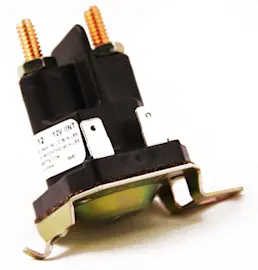
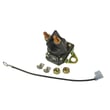
- Battery and starting circuit: Inspect terminals for corrosion and tightness; a failing solenoid is a common culprit (see solenoid 532146154).
- Belts and pulleys: Look for glazing, cracking, or slack; a worn ground drive belt can cause poor movement (see v-belt 532125907).
- Deck and blades: Clean the underside of the deck; keep blades sharp and balanced.
Blade and deck issues that cause poor cut quality
The manual calls out several performance problems tied to setup and blade condition.
| Symptom | Most likely cause | Typical fix |
|---|---|---|
| Uneven cut/scalping | Deck out of level, tire pressure off | Level deck; set tire pressure evenly |
| Windrowing/stripping | Wet grass, deck buildup, speed too fast | Let grass dry; clean deck; slow down |
| Vibration | Bent or unbalanced blade | Replace blade; check balance |
Why it matters
Catching belt wear, blade damage, and interlock problems early prevents bigger failures like damaged pulleys/mandrels, poor mowing results, and hard-start situations.
Last updated: February 2026
Is it worth replacing a lawn mower engine?
Replacing the engine on your Craftsman 917254630 38-inch 12-hp riding lawn tractor is worth it when the tractor’s deck, steering, and drive system are still solid and the total engine-swap cost stays well below the cost of replacing the whole tractor. If the tractor also needs major drive, electrical, or deck repairs, replacement is the better value.
Quick decision checklist
- The mower deck is not rusted through and the spindles and blade mounts are solid.
- The tractor drives normally (no slipping, grinding, or loss of motion).
- The frame and steering are tight (no severe play in the front axle or drag link).
- You can complete basic maintenance safely (oil, fuel, belts) and follow the setup steps in the owner's manual.
- The engine failure is truly internal (low compression, thrown rod) and not a fuel, spark, or safety-switch issue.
Cost and effort: what to compare
Use this simple comparison to decide:
| Item to compare | Engine replacement makes sense when | It’s usually not worth it when |
|---|---|---|
| Total repair cost | Clearly under about 50% of a comparable replacement tractor | Near or above about 50% |
| Tractor condition | Deck, transaxle, and wiring are in good shape | Multiple systems are worn out |
| Your time | You can handle a swap and setup | You would pay full labor for everything |
| Parts availability | Common wear parts are still available | Key parts are hard to source |
Check these common “not the engine” causes first
Before committing to an engine swap, rule out issues that often mimic a bad engine:
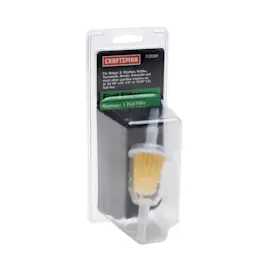
- Clogged fuel flow; the manual calls out replacing a clogged in-line fuel filter and checking for fuel line leaks.
- Ignition or starting circuit problems; a weak solenoid can prevent cranking (see solenoid 532146154).
- Safety interlock faults; the manual troubleshooting references checking the seat switch and PTO switch (see lawn tractor seat switch 532421062).
- Drive belt problems; a worn ground drive belt can make the tractor feel “dead” even with a good engine.
Why it matters
An engine swap only pays off if the rest of the tractor can reliably use that new power. The manual also warns against overspeeding or changing governor settings, since that can cause severe engine damage; keeping the tractor set up correctly protects your investment.
Last updated: February 2026
What engine is in a Craftsman lawn mower?
For Craftsman model 917254630, we’re looking at a 38-inch, 12-hp front-engine riding lawn tractor, so the engine is a 12-horsepower class lawn tractor engine (not a 140cc walk-behind mower engine). For the exact engine make and specification details used on your tractor, match the engine identification information shown in the owner's manual.
How to identify the exact engine on your 917254630
Use these quick checks on the tractor; they’re the most reliable way to confirm the engine family and service parts.
- Look for the engine model/type/code label on the engine shroud, valve cover, or blower housing
- Record the tractor model number (917254630) and the engine model/type numbers
- Compare those numbers to the engine section and tune-up specs in the owner's manual
- If the label is dirty, wipe it clean; do not scrape off printed numbers
- Use the engine model/type to select correct items like spark plug, air filter, and fuel filter
What “12-hp” means (and why it matters)
Your tractor’s “12-hp” rating is the power class used for matching belts, blades, and mowing performance expectations. It also helps you choose correct maintenance intervals and tune-up parts.
Common maintenance specs referenced for this tractor
The manual calls out service intervals that apply to the engine used on this model.
| Item | Typical interval noted for this tractor | Why you care |
|---|---|---|
| Spark plug | Beginning of each mowing season or every 100 hours | Helps prevent hard starting and misfire |
| Valve adjustment | About every 200 hours | Restores power and smooth running |
| In-line fuel filter | Replace when clogged/restricting fuel flow | Prevents stalling and lean running |
Related parts that often come up with engine or starting issues
If your question is really about “what part fixes my no-start,” these are common tractor-side parts that affect cranking and safety interlocks.
- Starter solenoid: solenoid 532146154
- Key switch: lawn tractor ignition switch 532365402
- Operator presence interlock: lawn tractor seat switch 532421062
Why it matters
Using the correct engine identification (engine model/type/code) prevents ordering the wrong tune-up parts and helps you follow the correct safety and adjustment guidance, including carburetor and governor warnings.
Last updated: February 2026