Installation guide
 Owner’s manual
 Error Codes



Where can I order Maytag washing machine parts?
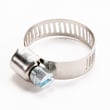
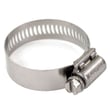
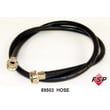
You can order replacement parts for your Maytag MAH3000AWW washer by looking up the model number and matching the part to the correct diagram and description, then purchasing the exact replacement. The fastest way to avoid wrong-part returns is to confirm the part ID and where it installs using the MAH3000AWW installation guide.
Best way to find the right part for MAH3000AWW
- Start with the symptom (won’t drain, won’t spin, leaking, door won’t lock).
- Use the model number MAH3000AWW to match parts to your exact washer.
- Confirm the part’s name and ID before ordering (example: washer motor control board WP22004046).
- Compare your original part to the listing: connectors, mounting points, and hose sizes.
- Keep common wear items in mind for older washers: belts, pumps, door lock switches, and hoses.
Common parts customers order for this washer
| Problem you see | Common part type | Example part for MAH3000AWW |
|---|---|---|
| Won’t spin or tumbles poorly | Drive belt | 12001788 |
| Won’t drain or drains slowly | Drain pump or drain hose | WP22003059 or 12001807 |
| Door won’t lock, won’t start spin | Door lock switch | WP22003067 |
| Intermittent operation | Control board | WP22002988R |
Why it matters
Ordering by model number and verifying the part ID prevents fit issues and repeat repairs. The MAH3000AWW uses model-specific components (for example, door lock and control parts) that can look similar to other Maytag washer parts but connect differently.
Last updated: February 2026
What's the average lifespan of a Maytag washer?
Most Maytag washers last 10 to 13 years on average with normal household use. For your Maytag MAH3000AWW washer, correct setup (water pressure, drain height, solid flooring) and routine care do the most to prevent early failures; see the MAH3000AWW installation guide for the key requirements.
Typical lifespan by washer type
| Washer type | Typical lifespan |
|---|---|
| Top-load (belt or direct drive) | 10 to 13 years |
| Front-load | 10 to 13 years |
| Compact/stackable | 8 to 12 years |
What extends the life of a MAH3000AWW
- Install on a solid, level floor to reduce vibration and stress on bearings and suspension.
- Keep water pressure in the recommended range (too low can cause long fills; too high can stress valves).
- Use the correct standpipe height so the washer does not siphon and run the pump excessively.
- Avoid chronic overloading; it accelerates wear on the drive system and tub components.
- Leave the door ajar between loads to reduce odor and moisture-related issues.
- Turn off the water faucets when the washer is not in use to reduce the risk of hose wear and seepage.
Quick setup specs that matter most
These installation items have a direct impact on longevity:
- Water pressure: 30 to 120 psi
- Hot water temperature: 120 to 140°F
- Standpipe height: recommended 36 inches (minimum 24 inches)
- Operating environment: above 60°F; avoid freezing locations
Why it matters
A washer usually reaches end-of-life because of repeated stress on a few systems: the drive belt and motor controls, the drain pump, and water-handling parts (hoses, clamps, valves). Good installation and balanced loads reduce vibration, overheating, and premature leaks, which are the most common life-shorteners.
Last updated: February 2026
What is the most common problem with a Maytag washer?
On the Maytag MAH3000AWW washer, the most common “won’t run” complaints usually trace back to the door lock not engaging, a failed control board, or a timer problem. We confirm the basics first (power, water supply, and proper installation) before replacing parts; see the MAH3000AWW installation guide.
Quick checks we do first (no parts needed)
- Make sure the door closes firmly; pull gently to confirm it is latched.
- Verify both hot and cold faucets are fully open.
- Confirm home water pressure is 30 to 120 PSI (low pressure can cause long fills or valve issues).
- Check inlet hoses for kinks and confirm screens are installed at the faucet connections.
- Confirm the washer is plugged into a grounded 120V, 60 Hz outlet on a 15A circuit.
- Verify the drain hose is not kinked and the washer is level on all 4 edges.
Most common failure points and what they look like
| Symptom | Most likely area | What you’ll notice |
|---|---|---|
| Won’t start or won’t spin | Door lock system | Door won’t lock, cycle won’t advance |
| Dead panel or erratic operation | Main control board | Random stopping, no response to buttons |
| Cycle won’t advance correctly | Timer | Stalls at one step, inconsistent timing |
| Won’t drain | Drain pump or drain path | Water left in tub, slow drain |
Parts that commonly solve “won’t run” symptoms on MAH3000AWW
If your symptoms match, these model-specific parts are common fixes:
- Washer door lock spin enable switch WP22002162 (won’t spin or start when lock does not enable)
- Machine board WP22002988R (intermittent operation, no-start conditions)
- Washer timer WP22002441 (cycle not advancing)
- Pump WP22003059 (won’t drain)
Why it matters
On MAH3000AWW, installation conditions directly affect “no start” and “won’t fill” complaints. Correct water pressure, accessible shutoff faucets, proper grounding, and an unkinked drain hose prevent false symptoms that look like a bad door lock, timer, or control board.
Last updated: February 2026
Is it worth fixing a Maytag washer?
Yes, it’s usually worth fixing a Maytag washer when the repair is straightforward and the machine is otherwise in good shape; for the Maytag MAH3000AWW, we see many common issues tied to wear parts (belt, door lock, pump) that can restore normal washing without replacing the whole washer. Use the MAH3000AWW installation guide to confirm the washer is installed correctly first, because vibration, freezing conditions, and poor leveling can mimic “major” failures.
Quick way to decide (repair vs. replace)
We use these practical checkpoints:
- Safety and setup first: Verify solid flooring, proper clearances, and that the washer is level on all 4 edges.
- Symptom type: No-drain, no-spin, or door-won’t-lock problems are often repairable.
- Part cost vs. value: If a single part is a small fraction of replacement cost, repair wins.
- Repeat breakdowns: Multiple recent failures point toward replacement.
- Condition of tub and bearings: Loud roaring, heavy leaks, or severe corrosion usually means bigger work.
Common MAH3000AWW repairs that are often “worth it”
These are frequent, targeted fixes that can bring the washer back quickly:
- Drain problems: check the drain path and consider the pump WP22003059 if the pump is seized or leaking.
- No spin or weak agitation: inspect the drive belt 12001788 for glazing, cracking, or slipping.
- Won’t start or won’t spin with door shut: test the door lock system; the washer door lock switch WP22003067 is a common culprit.
- Leaks at hoses or sump connections: clamps such as drain hose clamp WP285655 can solve small leaks.
Cost and effort comparison
| Situation | Typical effort | Typical outcome |
|---|---|---|
| Single wear-part failure (belt, clamp, door lock) | Low to medium | Good candidate to repair |
| Pump failure with no-drain | Medium | Good candidate to repair |
| Multiple major components failing (controls plus mechanical) | High | Replacement often makes more sense |
Why it matters
A washer that is not level, installed on soft flooring, or kept where water can freeze can vibrate, walk, or suffer component damage. Correcting installation issues first prevents replacing good parts and helps any repair last longer.
Last updated: February 2026