Installation guide
 Owner’s manual



What model Whirlpool duet dryer do I have?
Your Whirlpool Duet dryer’s model number is printed on the model and serial tag inside the door opening. For Whirlpool model WGD94HEXW0, the tag is typically on the cabinet frame near the door switch area; use that exact model number to match parts and documentation.
Where to find the model and serial tag
Check these common locations on Whirlpool Duet-style dryers:
- Open the dryer door and look along the door opening on the cabinet frame
- Look near the top right area by the door switch (common on this style)
- Check the inside edge of the front panel around the door opening
- If needed, use a flashlight to read the full model and serial number
For diagrams and model-specific details, use the WGD94HEXW0 owner’s manual.
What to write down (and why)
Record the information exactly as shown on the tag:
- Model number (example: WGD94HEXW0)
- Serial number (unique to your dryer)
- Purchase date (helpful for service and warranty conversations)
Quick ID checklist
| Item on tag | What it does | Example |
|---|---|---|
| Model number | Ensures correct parts fit | WGD94HEXW0 |
| Serial number | Identifies production details | Varies |
Why it matters
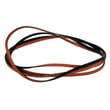
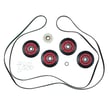
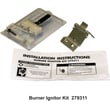
Whirlpool often makes small design changes within a product line. Using the exact model number from the tag helps us match the correct Whirlpool dryer parts (like a drum support roller, idler pulley, thermistor, or igniter) and prevents ordering the wrong replacement.
Last updated: January 2026
What is the life expectancy of a whirlpool duet dryer?
A Whirlpool Duet dryer like model WGD94HEXW0 typically lasts about 10 years with normal household use. With consistent lint and vent maintenance and avoiding chronic overheating, it commonly reaches 12 to 15 years before major repairs become more likely.
What affects how long a WGD94HEXW0 dryer lasts
- Vent restriction and heat buildup (long dry times, higher operating temperatures)
- Lint management (lint screen every load; periodic internal and vent cleaning)
- Load size and cycle choices (overloading and high-heat timed cycles add wear)
- Wear parts condition (rollers, idler pulley, seals)
- Moisture sensing performance (auto cycles ending early or running too long)
Maintenance that extends dryer life
The manual calls out several habits that directly reduce wear and overheating risk. See the WGD94HEXW0 owner’s manual.
- Clean the lint screen before or after each load
- Keep the area around the exhaust opening free of lint and dust
- Have the interior of the dryer and exhaust vent cleaned periodically (especially if dry times increase)
- Avoid overloading; bulky loads strain the drive system and airflow
- Use the correct temperature and cycle for the fabric type
Common “wear items” to watch (and why)
If you hear squealing, thumping, or the drum feels rough, these parts are frequent causes:
| Symptom | Likely wear area | Example part for this model |
|---|---|---|
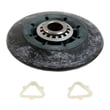
| Thumping or rumbling | Drum support rollers | Dryer drum support roller WPW10314173 |
| Squealing or belt slip | Idler pulley and belt path | Dryer idler pulley W10837240 |
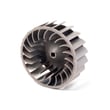
| Poor airflow noise | Blower wheel | Dryer blower wheel WP697772 |
Why it matters
A dryer usually does not “wear out” all at once; restricted venting and worn drum support parts increase heat and friction, which shortens the life of the motor, controls, and gas heating components over time.
Last updated: January 2026
What is the capacity of Whirlpool WGD94HEXW0?
The Whirlpool WGD94HEXW0 dryer is a full-size 27-inch class dryer; most Whirlpool dryers in this class are about 7.0 cu. ft. capacity. For the exact capacity rating for your specific WGD94HEXW0, we recommend confirming it in the WGD94HEXW0 owner's manual.
How to confirm the exact capacity for WGD94HEXW0
Capacity is usually listed in the specifications section of the manual or on the model and serial tag.
- Check the specifications section in the manual
- Look for a model and serial label on the dryer (commonly inside the door opening)
- Match the model number exactly: WGD94HEXW0
- If you are comparing dryers, use cu. ft. (drum volume) rather than exterior dimensions
Typical capacity ranges (for context)
Most 27-inch Whirlpool dryers fall into these common capacity bands:
| Dryer size class | Typical capacity (cu. ft.) | Best for |
|---|---|---|
| Compact | 3.4 to 4.0 | Small spaces, light loads |
| Full-size (most common) | 6.5 to 7.4 | Everyday family laundry |
| Extra-large | 7.5+ | Bulky items, large households |
Why capacity matters
Capacity affects how well loads tumble and dry evenly. Overloading a dryer can increase dry time, reduce airflow, and contribute to overheating conditions that can trip safety devices.
Related care tip that protects performance
We recommend keeping lint and exhaust venting clean; the manual notes the interior and exhaust vent should be cleaned periodically by qualified service personnel. For venting and airflow issues that can mimic “low capacity” performance (long dry times), follow the guidance in the WGD94HEXW0 installation guide.
Last updated: January 2026
What are common problems with Whirlpool Duet steam dryers?
Common problems on the Whirlpool WGD94HEXW0 Duet steam dryer include no-start issues (door not fully closed or Start not held long enough), long dry times from restricted airflow or a clogged lint screen, and steam-cycle concerns caused by the water supply being off or not connected correctly. See the WGD94HEXW0 owner's manual for model-specific cycle and troubleshooting details.
Most common symptoms and what they usually point to
- Dryer will not run: door not closed completely; START/PAUSE not pressed and held 2 to 5 seconds; power supply or house breaker issue.
- Clothes not drying or drying takes too long: lint screen clogged; exhaust vent or outside hood clogged; load too large; room temperature below about 45°F (7°C).
- Steam cycle leaves damp spots or steam results are inconsistent: steam water supply not connected or turned on; using fabric softener sheets with steam cycles.
- Thumping or rattling noises: dryer not level; small object caught at the drum edge; dryer not used in a while.
- Over-drying, wrinkles, static: using Timed Dry too often instead of Auto cycles.
Quick checks we recommend before replacing parts
- Clean the lint screen completely and confirm strong airflow at the outside vent hood.
- Avoid crushed, kinked, or excessively long vent runs; restricted venting is the top cause of long dry times.
- Use Auto cycles for best fabric care and energy savings; Timed Dry can over-dry and increase wrinkles.
- For steam cycles, confirm the faucet is on and the inlet hose is connected to the faucet and the dryer.
- If Auto cycles end too soon, make sure items are tumbling freely and contacting the moisture sensor strips.
Parts that commonly relate to these problems (when symptoms match)
| Symptom | Commonly involved system | Example part for WGD94HEXW0 |
|---|---|---|
| Squealing, rumbling, or thumping while drum turns | Drum support and belt path | Dryer drum support roller WPW10314173 |
| Dryer heats inconsistently or shuts down from overheating | Temperature sensing and safety cutoffs | Dryer thermistor WP8577274 |
| Dryer runs but airflow is weak or noisy | Blower housing and wheel | Dryer blower wheel WP697772 |
Why it matters
Most “steam dryer problems” are actually airflow, load-size, or cycle-selection issues. Fixing vent restriction and using Auto cycles helps the WGD94HEXW0 dry faster, reduce wrinkles, and prevent overheating that can damage components.
Last updated: January 2026