Owner’s manual
 Error Codes




How to force a Kenmore Elite washer to drain?
To force-drain a Kenmore Elite washer model 79641583410, use the built-in Drain & Spin function: turn the washer on, select Drain & Spin, choose NO SPIN for drain-only, then press Start/Pause. If it still will not drain, check the drain hose routing and the pump filter area.
Fast steps to drain it now
- Press POWER to turn the washer on.
- Select Drain & Spin.
- Press SPIN SPEED until NO SPIN is selected (drain-only).
- Press START/PAUSE; the washer will drain and may tumble briefly first.
- If the door stays locked, wait for the water to drain and the lock indicator to turn off.
For the exact button sequence and cycle behavior, follow the 79641583410 owner's manual.
If it will not drain: what to check
- Drain hose: make sure it is not stretched, pinched, crushed, or kinked.
- Standpipe or sink setup: keep the hose end height at 96 inches max from the washer base.
- Insertion depth: insert the drain hose 8 to 12 inches into the standpipe (deeper can cause problems).
- Extension limits: do not extend the drain hose more than 6 feet total; overextending can cause poor draining.
- Pump/filter area: if your washer has a front lower access area, drain any trapped water and clear lint or debris.
Common causes and likely fixes
| Symptom | Most common cause | What we do first |
|---|---|---|
| Hums but no drain | Clogged pump/filter or blocked hose | Clear filter area; check hose for blockage |
| Drains slowly | Hose too high or extended too far | Correct hose height; remove extra extension |
| Stops mid-cycle with water in tub | Pump not moving water | Inspect pump and wiring; replace if needed |
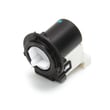
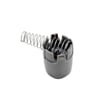
If the pump is not running or is noisy, the drain system is a prime suspect on this model; a common replacement is the drain pump motor (4681EA2001T) - washer part by lg electronics 4681EA2001T.
Why it matters
A proper force-drain protects the door lock, prevents overflow when servicing hoses, and helps avoid repeat drain errors caused by incorrect drain hose height, kinks, or pump restrictions.
Last updated: February 2026
How to hard reset a Kenmore Elite washer?
To hard reset your Kenmore Elite washer model 79641583410, unplug it (or turn off the breaker) for 1 minute, restore power, then press and hold POWER for about 5 to 10 seconds to clear a stuck control. If the washer still will not respond, run a drain-only step.
Quick reset steps (safe, no tools)
- Press POWER to turn the washer off.
- Unplug the washer (or switch the laundry circuit breaker off).
- Wait 60 seconds.
- Restore power.
- Press and hold POWER for 5 to 10 seconds.
- Select a cycle and press START/PAUSE.
If the washer is stuck full of water
If the control is acting “frozen” because the tub is full, drain the water first:
- Press POWER.
- Press the SPIN SPEED button without selecting a cycle to start a drain/spin action.
- Wait for the DOOR LOCK indicator to turn off before opening the door.
For the exact button sequence and indicator behavior on this model, use the 79641583410 owner's manual.
What a reset fixes (and what it does not)
| Symptom | Reset helps? | What to check next |
|---|---|---|
| Buttons unresponsive or cycle won’t start | Yes | Power supply, door lock engagement |
| Washer won’t drain | Sometimes | Drain pump, drain hose, clogs |
| Door stays locked after a hot cycle | No (normal safety) | Let the drum cool; wait for DOOR LOCK light |
Why it matters
A hard reset clears a control “hang” after a power glitch and gets the washer back to normal operation. If the issue returns, the problem is usually in a system the control is monitoring (door lock, draining, or incoming power).
Last updated: February 2026
Is Kenmore Elite high end?
Yes. Kenmore Elite is Kenmore’s higher-end line, and the Kenmore Elite washer model 79641583410 is built to deliver upgraded performance and features compared with standard Kenmore washers, with a stronger focus on convenience, cycle options, and long-term dependability.
What “high end” means for this washer
Kenmore Elite typically sits in the mid-to-premium tier for home laundry. In practical terms, that usually means more specialized cycles, more refined controls, and more serviceable component design than entry-level models.
Common “Elite” expectations include:
- More cycle and temperature options for fabric care
- Higher spin performance for better water extraction
- More built-in maintenance guidance (filters, cleaning routines)
- More advanced troubleshooting support in the documentation
- Better overall fit and finish than basic models
How to judge “high end” for your 79641583410
We recommend using the feature list and specifications in the 79641583410 owner’s manual to compare your washer against other front-load models you are considering.
| What to compare | Entry-level washers | Kenmore Elite (typical) |
|---|---|---|
| Cycle selection | Basic | Expanded, more specialized |
| Controls | Simple knobs/buttons | More options and functions |
| Maintenance access | Limited guidance | Clear filter and cleaning steps |
| Repairability | Varies | Often better parts support |
Why it matters
“High end” is most valuable when you want better fabric care, stronger spin-out (shorter dry times), and clearer maintenance routines. For example, the manual for this model includes maintenance items like cleaning inlet filters and the drain pump filter, which helps prevent fill and drain problems over time.
Parts that commonly support “premium” performance
If performance drops, these are common service items we see tied to filling, draining, and door operation:
- Drain pump motor (4681EA2001T) - washer part by lg electronics 4681EA2001T
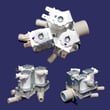
- Lg washer single-solenoid water inlet valve 5220FR2006H
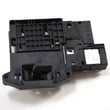
- Lg washer door lock EBF61315802
Last updated: February 2026
Is it worth repairing a Kenmore washing machine?
Yes, it’s usually worth repairing a Kenmore Elite washer like model 79641583410 when the fix is a common wear part and the machine is otherwise in good condition. Repairs that restore draining, filling, or door locking often extend usable life for years at a fraction of replacement cost; confirm maintenance and troubleshooting steps in the 79641583410 owner’s manual.
Quick way to decide (repair vs. replace)
We use these practical checkpoints:
- Age and condition: If the tub, cabinet, and controls are in good shape, repair makes sense.
- Type of failure: Drain, fill, and door-lock issues are typically straightforward.
- Repeat problems: Frequent leaks, repeated error codes, or multiple failing systems push toward replacement.
- Cost of repair: If parts plus labor approach the cost of a comparable new washer, replacement is the better value.
- Downtime: If you need a fast fix, common parts are often available quickly.
Common repairs that are often “worth it” on this model
Many service calls on front-load Kenmore Elite washers come down to a few parts and maintenance items:
- Drain problems: clean the pump filter; if the pump is failing, consider the drain pump motor (4681EA2001T) - washer part by lg electronics 4681EA2001T.
- No fill or slow fill: check supply valves and inlet screens; a valve such as the lg washer single-solenoid water inlet valve 5220FR2006H may be needed.
- Door won’t lock or won’t start: inspect the strike and lock; the lg washer door lock EBF61315802 is a common fix.
Cost and impact comparison
| Situation | Typical outcome | Usually worth repairing? |
|---|---|---|
| Won’t drain, filter clogged | Cleaning restores operation | Yes |
| Won’t drain, pump motor noisy/hums | Replace drain pump motor | Yes |
| Won’t fill, screens clogged/valve failing | Clean screens or replace valve | Yes |
| Multiple major issues at once | Higher total cost and downtime | No |
Why it matters
A targeted repair on the 79641583410 can restore core functions (fill, tumble, drain, spin) and prevent secondary damage like standing water, odors, and repeated cycle interruptions. The manual also notes routine care such as removing lint and foreign objects from the pump filter, which can prevent “no drain” symptoms.
Last updated: February 2026
What is the life expectancy of a Kenmore washing machine?
A Kenmore washer typically lasts 10 to 15 years. For the Kenmore Elite 79641583410, lifespan depends most on load size, detergent use, and routine maintenance (especially keeping the drain system and door area clean); consistent care helps you reach the upper end of that range.
What affects washer lifespan the most
- Overloading (stresses the drive system and suspension)
- Too much detergent (causes residue, odors, and extra strain during rinsing)
- Poor leveling (increases vibration and wear)
- Drain restrictions (coins, lint, and debris make the pump work harder)
- Moisture left in the door area (can lead to odors and boot wear)
Maintenance that extends life (high impact)
We recommend building these habits into normal use; they reduce common failures in front-load washers.
- Clean the pump filter regularly (the manual describes removing lint and foreign objects) using the 79641583410 owner's manual.
- Leave the door slightly open between loads to dry the door boot.
- Use HE detergent and measure carefully.
- Run a monthly tub-clean cycle (or a hot cycle with a washer cleaner) to reduce buildup.
- Keep the washer level and stable; re-check after moving or flooring changes.
Common wear items vs. major repairs
| Category | Examples | What you usually notice |
|---|---|---|
| Routine wear/maintenance | Pump filter cleaning, hoses, door boot care | Odors, slow draining, small leaks |
| Higher-cost repairs | Drive motor, tub/bearing-related issues, control problems | Loud noise, no spin, repeated error codes |
Why it matters
Most “early failures” come from preventable stress: heavy loads, excess suds, and restricted draining. Simple upkeep, especially drain system cleaning and proper loading, protects expensive components and keeps cycles running normally.
Last updated: February 2026
What model is my Kenmore Elite washer?
Your Kenmore Elite washer’s model number is printed on an identification plate; on the Kenmore Elite 79641583410, that plate is located inside the washer door. Once you have the model number, you can match parts and troubleshooting steps to your exact washer.
Where to find the model number label
Check these common locations on Kenmore washers (front-load and top-load):
- Inside the washer door opening (door jamb area); this is the primary location for 79641583410
- Along the inner rim of the door opening
- On the back of the control panel
- On a side panel of the cabinet, often near the bottom
- Behind the door, near the hinge side on some designs
What to write down (and why)
We recommend recording both the model and serial number exactly as shown on the label.
| Item on the label | What it’s used for | Example format |
|---|---|---|
| Model number | Ensures you get the correct parts diagrams and replacement parts | 796.4158## / 79641583410 |
| Serial number | Helps confirm production details when ordering certain parts | Letters and numbers |
| Purchase date | Useful for maintenance tracking and service history | Month/day/year |
Why it matters
Kenmore model numbers can look similar, but small differences can change the correct fit for parts like a door lock, drain pump, or water inlet valve. Using the exact model number helps us match the right part the first time.
For the exact label location and how the model number is formatted for this washer, use the 79641583410 owner's manual.
Last updated: February 2026
When was Kenmore Elite made?
Kenmore Elite is a premium Kenmore product line that has been produced across multiple years and generations, not a single one-time model release. For your Kenmore Elite washer model 79641583410, the most accurate “made when” date comes from the unit’s serial number and purchase records listed in the 79641583410 owner's manual.
How to find the manufacture date for model 79641583410
We use the washer’s identification plate information to determine when it was built.
- Open the washer door and look for the identification plate inside the door opening.
- Write down the model number (79641583410) and the serial number.
- Compare the serial number format to the date-coding guidance in the 79641583410 owner's manual.
- If you still have it, use your sales receipt to confirm the purchase date.
- Keep the model and serial number handy any time you order parts or schedule service.
What “Kenmore Elite” means (and why dates vary)
Kenmore Elite is a label used on higher-feature Kenmore appliances (including washers), so the name spans many production years. That’s why the correct answer depends on the specific model and serial number, not the Elite name alone.
Quick comparison
| Term | What it identifies | Best place to find it |
|---|---|---|
| Kenmore Elite | Product line | Control panel and marketing materials |
| 79641583410 | Exact washer model | Identification plate inside the door |
| Serial number | Build date code | Identification plate inside the door |
Why it matters
The manufacture date helps us match the right replacement parts and revisions for your washer, especially for items like the door lock, drain pump, and water inlet valve.
Last updated: February 2026
Where is the drain pump filter on a Kenmore Elite washer?
On the Kenmore Elite 79641583410 washer, the drain pump filter sits behind the filter access panel at the lower front of the washer. Open that small panel to reach the drain hose (for draining water) and the twist-out pump filter.
How to access and clean the drain pump filter
- Unplug the washer and let the water cool if you recently ran a hot cycle.
- Open the lower front filter access panel.
- Pull out the small drain hose, remove the cap, and drain water into a shallow pan.
- Twist the pump filter counterclockwise to remove it.
- Remove lint and foreign objects (coins, buttons, hair pins), then reinstall the filter.
- Twist the filter clockwise until it seats fully, then close the access panel.
For the exact panel location and the step-by-step procedure, follow the maintenance section in the 79641583410 owner's manual.
What to expect when you open the panel
| What you see | What it is | What to do |
|---|---|---|
| Small hose with a cap | Emergency drain hose | Drain into a pan before removing the filter |
| Round twist-out piece | Drain pump filter | Clean debris, reinstall snugly |
| Water in the pan | Normal during service | Repeat draining until flow stops |
Why it matters
A clogged drain pump filter is a common reason a front-load washer drains slowly or not at all. Keeping the filter clear helps protect the drain pump and can prevent drain-related errors and standing water in the drum.
Last updated: February 2026