

How to identify a Kenmore washer model?
To identify your Kenmore washer model, find the model number tag on the machine and match it exactly, character for character. For Kenmore model 11026822692, the tag is typically under the lid on a top-load washer or on the back panel near the power cord.
Where to look on the washer
Check these common model tag locations first:
- Under the lid, around the tub opening (top-load washers)
- On the back panel near the power cord entry
- Along the rear edge of the control console
- Inside the cabinet opening (lift the lid and look under the rim)
What the model number looks like (and why it matters)
Kenmore model numbers are often 10 to 12 characters and commonly start with 110 on many Kenmore-built-by-Whirlpool style washers. Using the full model number helps us match the correct parts list, diagrams, and replacements.
Model vs. serial number
| Label item | What it tells you | Used for |
|---|---|---|
| Model number | The exact washer design and parts fit | Ordering parts and looking up diagrams |
| Serial number | When and where it was built | Service history and manufacturing info |
Quick tips to avoid ordering the wrong part
When you write down the model number, use these checks:
- Copy every digit in order (no spaces)
- Watch for look-alikes (0 vs O, 1 vs I)
- Confirm the full number, not just the first 3 digits
- Match the model number on the washer, not a manual cover or sales receipt
Why it matters
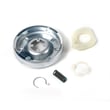
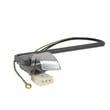
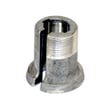
Kenmore washers can look similar across many series, but internal components like the lid switch, drain pump, and motor coupling can differ by model. Once you confirm the model number, you can confidently choose parts such as the washer lid switch WP3949238 or coupling 285753A that fit 11026822692.
Last updated: February 2026
Is it worth repairing a Kenmore washing machine?
Yes; repairing a Kenmore washer is worth it when one clear failure is keeping it from washing or spinning and the repair cost stays well below the price of a comparable replacement. For Kenmore model 11026822692, many common fixes are straightforward and restore reliable operation.
A practical repair vs. replace checklist
- Repair it if the washer has one main symptom (won’t start, won’t drain, won’t spin).
- Repair it if the cabinet and tub area are solid (no major rust-through or structural damage).
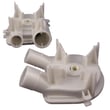
- Repair it when the issue points to a common wear part such as the washer lid switch WP3949238 or washer drain pump WP3363394.
- Replace it if you have repeated major failures in a short time (multiple leaks plus drive problems).
- Replace it if a major drivetrain rebuild is needed and the total cost approaches a new washer.
Common “worth it” repairs on this Kenmore top-load style
| Symptom | Likely cause area | Example part for model 11026822692 |
|---|---|---|
| Won’t start or won’t spin with lid closed | Lid safety circuit | WP3949238 |
| Won’t drain or drains slowly | Pump or blockage | WP3363394 |
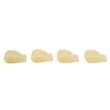
| Agitator “ratchets” or won’t move clothes well | Agitator wear parts | 80040, 285748 |
Why it matters
A targeted repair (lid switch, drain pump, agitator wear parts) typically restores performance without the added cost and hassle of replacing the entire washer, hoses, and hookups.
Last updated: February 2026
What is the average lifespan of a Kenmore washer?
A Kenmore washer typically lasts 10 to 15 years with normal household use. For Kenmore model 11026822692, consistent care (balanced loads, correct detergent, and prompt repairs) helps you reach the upper end of that range.
What affects washer lifespan most
- Overloading or washing heavy items too often (stresses the drive system)
- Unbalanced loads (increases vibration and wear on suspension components)
- Hard water and detergent buildup (can affect valves and draining)
- Running with a known fault (small issues become major failures)
- Drain and spin strain from clogs or slow draining
Parts that commonly shorten lifespan when they wear
On many Kenmore top-load washers like model 11026822692, these parts are frequent wear items:
| Symptom | Common wear area | Example part for this model |
|---|---|---|
| Won’t spin or stops mid-cycle | Lid safety circuit | Washer lid switch WP3949238 |
| Won’t drain or drains slowly | Pump or blockage | Washer drain pump WP3363394 |
| Agitator slips or won’t “ratchet” | Agitator dogs/cam | Agitator dog 80040 |
| Loud grinding, oil leak, poor agitation/spin | Gearcase/drive | Gear case 3360629 |
Simple maintenance that adds years
- Keep loads evenly distributed; pause and rebalance if it bangs
- Use the right amount of detergent; too much increases residue
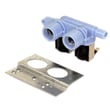
- Check fill performance; slow filling can point to the inlet valve screens
- Inspect hoses and the drain path if you notice slow draining or standing water
- Address new noises early (squeal, grinding, repeated clunking)
Why it matters
Washer lifespan is mostly about wear during spin and agitation. Catching early symptoms and replacing a lower-cost wear part (like a lid switch or drain pump) often prevents secondary damage to higher-cost drive components.
Last updated: February 2026