Installation guide
 Owner’s manual
 Error Codes


What's the average lifespan of a Maytag washer?
Most Maytag washers, including the Maytag MVWC565FW0, average about 10 to 13 years of service life in typical home use. Actual lifespan depends more on load size, installation, water quality, and timely repairs than on the brand name alone; good care can push life beyond that range.
A washer’s “years” are really a mix of usage and stress on key drive and suspension components.
- Load habits: frequent overloading and heavy items (blankets, rugs) shorten life
- Leveling and floor stability: reduces vibration and wear on the suspension
- Detergent use: too much detergent can cause residue, odors, and extra strain
- Water conditions: hard water can increase buildup and valve issues
- Fast fixes: replacing a worn belt, lid lock, or pump early prevents bigger failures
We recommend using the care and cleaning guidance in the MVWC565FW0 user manual.
- Keep loads balanced; mix large and small items
- Use HE detergent and measure carefully
- Run periodic cleaning cycles (or a hot wash with washer cleaner)
- Leave the lid open between loads to reduce moisture and odor
- Check hoses for bulges or leaks and replace as needed
These are typical examples of what’s often economical to replace versus what can signal end-of-life.
| Category | Examples on a top-load washer | What it usually means |
|---|---|---|
| Routine wear parts | belt, lid lock, drain pump | Often worth repairing |
| Performance-related | suspension rods, drive pulley | Repair can restore like-new operation |
| Major mechanical | gear case, tub damage | Cost and labor may be higher |
If your washer won’t drain, a common repair path is inspecting the pump and hoses; the compatible washer drain pump W10876600 is one example of a model-matched part that may be involved.
Knowing the typical 10 to 13-year window helps you decide when maintenance and smaller repairs make sense versus when repeated breakdowns point to a larger mechanical issue. It also helps you plan ahead for parts replacement before a failure stops laundry completely.
Last updated: January 2026
What is the most common problem with a Maytag washer?
For the Maytag MVWC565FW0 washer, the most common service issues we see are won’t drain or won’t spin symptoms. These problems are often tied to the lid lock not engaging, a restricted drain path, or a drive system issue that prevents the basket from reaching full spin.
- Make sure the lid closes fully and the cycle is started normally (lid must lock for spin on many top-load models).
- Reduce the load size and redistribute items (one heavy item can stop spin due to out-of-balance protection).
- Verify the drain hose is not kinked or pushed too far down the standpipe.
- Run a Drain/Spin cycle and listen: a steady hum with no water movement often points to a drain restriction.
- If the washer stops mid-cycle, note any flashing lights or error pattern and compare it to the MVWC565FW0 washer manual.
If basic checks do not help, these model-compatible parts are common suspects:
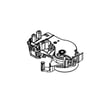
- Lid won’t lock or unlocks during spin: washer lid lock W11307244
- Water won’t pump out or drains very slowly: washer drain pump W10876600 and/or washer drain hose W11244231
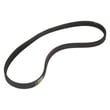
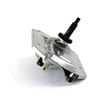
- Loud rubbing, poor agitation, or weak spin: washer drive belt WPW10006384 or whirlpool washer drive pulley W10721967
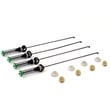
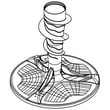
- Excessive shaking that stops spin: washer suspension rod set W11130362
| Symptom | What it usually means | Part to consider |
|---|---|---|
| Won’t spin, lid error behavior | Lid lock not proving closed | W11307244 |
| Won’t drain, standing water | Pump jammed/failed or hose restricted | W10876600, W11244231 |
| Spins weakly or squeals | Belt slipping or pulley wear | WPW10006384, W10721967 |
| Bangs, walks, off-balance often | Suspension not controlling tub movement | W11130362 |
Drain and spin problems can look like “the washer is dead,” but they are often safety-lock or water-removal issues. Fixing the root cause helps prevent repeat cycle failures, wet loads, and extra wear on the drive motor and gear case.
Last updated: January 2026
Do Maytag washers have a filter that needs to be cleaned?
Yes, some Maytag washers have a cleanable filter, but on the Maytag MVWC565FW0 (a top-load washer) it’s more common to have drain-pump debris protection without a simple “front coin-trap” access door like many front-load models. We recommend following the model’s maintenance steps in the MVWC565FW0 user manual.
On many top-load Maytag designs, the “filter” is not a removable cartridge. Instead, lint and debris control is handled by the wash system and the drain path.
Common places debris can collect:
- The drain pump inlet area (small items can lodge here)
- The tub-to-pump hose (socks, coins, lint clumps)
- The drain hose (kinks or buildup)
- The basket and tub ring area (lint residue)
If you suspect a drain restriction, the most directly related service part for this model is the washer drain pump W10876600.
Look for these symptoms before taking anything apart:
- Washer won’t drain or drains slowly
- Humming during drain with little or no water movement
- Standing water left in the tub after the cycle
- Intermittent draining (works sometimes, not others)
- Unplug the washer; then verify the drain hose isn’t kinked or crushed.
- Confirm the standpipe or laundry sink drains freely.
- Run a rinse and spin cycle and listen for normal pump-out sound.
We typically recommend these habits for MVWC565FW0 owners:
- Use HE detergent and avoid overdosing (excess suds can slow draining)
- Empty pockets to reduce coins, screws, and hairpins entering the drain path
- Wash small items in a mesh bag
- Periodically clean the washer and wipe residue from the tub ring
For broader upkeep steps, use how to clean and maintain your washing machine.
A restricted drain path can cause poor spin performance, longer cycle times, and recurring drain issues. Keeping debris out of the pump and hoses helps protect key components and improves wash results.
| Washer type | Typical cleanable filter access | What you’ll usually see |
|---|---|---|
| Front-load | Small lower front access door | Removable pump filter/coin trap |
| Top-load (like MVWC565FW0) | Often no external access door | Debris may collect in pump/hoses |
Last updated: January 2026
What is the capacity of the mvwc565fw0?
We can’t confirm the exact tub capacity (in cubic feet) for the Maytag MVWC565FW0 from the model-specific information available here because the validated documents don’t include readable spec text. The most reliable way to verify capacity is to check the specifications section in the MVWC565FW0 use & care manual or the product rating label on your washer.
Use these checks to get a model-accurate capacity number:
- Look for a “Capacity” or “cu. ft.” line in the specifications section of the MVWC565FW0 use & care manual
- Check the model and serial tag on the washer (usually under the lid or on the cabinet rim)
- If your tag lists a “type” or “series,” still match the full model number: MVWC565FW0
- If you’re comparing listings online, treat them as estimates unless they cite the manufacturer spec
Even when you know the cu. ft. rating, usable space varies by cycle and load type (towels vs. bedding) and by how a high-efficiency top-load washer uses load sensing.
| Load type | Better loading rule | What to avoid |
|---|---|---|
| Mixed everyday laundry | Fill loosely to the top of the basket | Packing items down tight |
| Towels/jeans | Distribute evenly around the agitator | One heavy side (out-of-balance) |
| Bulky items | Wash 1 large item or 2 smaller bulky items | Overfilling above the basket rim |
Confirming the correct capacity helps you choose realistic load sizes, which improves cleaning and spin performance and reduces stress on suspension and drive components.
Last updated: January 2026