Installation guide
 Owner’s manual
 Error Codes



What is the most common problem with a GE dryer?
For the GE GFD45ESSM0WW dryer, the most common customer complaint we see is clothes taking too long to dry or not drying well, and the most frequent root cause is restricted airflow (lint buildup or a venting problem). The next most common issues are no heat and won’t start; those often trace back to power, door switch, or heat-control components.
Quick checks we recommend first (fast, no parts)
- Clean the lint screen before every load and make sure it seats fully.
- Inspect the vent path for kinks, crushed ducting, or heavy lint buildup.
- Confirm the outside vent hood opens freely while the dryer is running.
- Avoid overloading; large loads dry slower and can fool moisture sensing.
- If using sensor cycles, try More Dry for mixed heavy/light loads.
What the manual says for this model
The troubleshooting section for GFD45ESSM0WW points to venting restrictions, a full lint filter, and control settings as common reasons for long dry times; it also notes that a dryer can tumble but not heat if a breaker is tripped (electric models use two breakers). Use the GFD45ESSM0WW owner’s manual for model-specific operating and troubleshooting tips.
When it’s likely a part problem
If airflow is good and the symptom persists, these parts are common suspects on GE dryers:
- Won’t start: door switch, control issues
- No heat or inconsistent heat: heating element, thermistor, thermostats
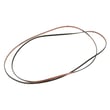
- Noise or drum not turning: belt, idler pulley, drum glides
Common part matches for this model
| Symptom | Likely area | Example compatible part for GFD45ESSM0WW |
|---|---|---|
| Dryer won’t start when door closes | Door safety circuit | Dryer door switch WE4M415 |
| No heat (electric) or weak heat | Heater circuit | Dryer heating element WE11M10001 |
| Long dry times with good heat | Temperature sensing | Dryer heating element control thermistor WE4M398 |
Why it matters
Restricted venting does more than slow drying; it can overheat the dryer, trigger safety shutoffs, and shorten the life of components like thermostats and heating parts. Keeping airflow strong is the best “repair” you can do.
Last updated: January 2026
What is the life expectancy of a GE dryer?
A GE dryer like model GFD45ESSM0WW has a typical life expectancy of about 10 years. With correct venting, regular lint removal, and avoiding overloads, it’s common for this dryer to run longer before major repairs are needed.
What affects how long your GFD45ESSM0WW lasts
We see dryer lifespan change most based on airflow, heat stress, and mechanical wear.
- Venting quality (short, smooth, metal ducting dries faster and runs cooler)
- Lint control (clean the lint filter every load; keep the duct clear)
- Load habits (overloading strains the drum belt, idler, and motor)
- Heat management (restricted airflow can overheat thermostats and the heater)
- Installation and leveling (an unlevel dryer can vibrate and wear bearings faster)
For model-specific care steps and venting guidance, follow the GFD45ESSM0WW owner’s manual.
Quick lifespan guide (what we typically see)
| Dryer age | What’s common | What to do |
|---|---|---|
| 0 to 5 years | Mostly maintenance items | Keep venting clean; level the dryer |
| 5 to 10 years | Wear parts may start showing up | Watch for noise, longer dry times |
| 10+ years | Higher chance of major repair decisions | Compare repair cost vs. replacement |
Maintenance that adds years (and saves energy)
These steps matter because the dryer runs longer and hotter when airflow is restricted.
- Clean the lint filter before or after every load
- Inspect and clean the exhaust duct at least yearly
- Use 4-inch rigid metal ducting where possible; avoid plastic venting
- Don’t dry heavily soiled or oily items (fire risk)
- Stop vibration early by leveling the cabinet and checking the floor
If you’re setting up or reworking the vent path, use the GFD45ESSM0WW installation instructions for the correct ducting and exhaust rules.
Why it matters
A dryer that dries efficiently runs fewer minutes per load; that reduces wear on the motor, drum support parts, and heat components, and it lowers the chance of overheating-related failures.
Last updated: January 2026
Is a 7.3 cubic foot dryer big?
Yes. A 7.3 cubic foot dryer is a large-capacity size for a full-size dryer, and it is typically big enough for family laundry and many bulky items. For GE model GFD45ESSM0WW, the installation information indicates this model is in the 7.5 cu. ft. size class, which is even larger.
How this relates to GE model GFD45ESSM0WW
The capacity question matters because drum size affects tumbling space and airflow.
- GFD45ESSM0WW is referenced in installation information as a 7.5 cu. ft. model size
- A 7.3 cu. ft. dryer is slightly smaller than 7.5 cu. ft., but still “large”
- Larger drums can dry bulky loads more evenly when you avoid overloading
Quick capacity guide
These ranges are a practical way to think about dryer size across brands.
| Dryer capacity | Common description | Typical use |
|---|---|---|
| 5.0 to 6.5 cu. ft. | Standard | Smaller loads, smaller households |
| 6.6 to 7.2 cu. ft. | Large | Most households |
| 7.3 cu. ft. and up | Extra-large | Bulky items, fewer loads |
Tips to get the most from a large drum
Even with a large-capacity dryer, loading and venting have the biggest impact on dry time.
- Load loosely; do not pack the drum tight
- Dry comforters and blankets by themselves when possible
- Separate heavy items (towels) from lightweight items
- Clean the lint filter every load
- Use proper 4-inch metal venting and keep the exhaust path clear
For cycle selection and loading guidance for this GE dryer, follow the GFD45ESSM0WW owner’s manual.
Why it matters
A drum that is too full restricts airflow and can leave clothes damp or wrinkled. Large-capacity dryers (including 7.3 cu. ft. and the 7.5 cu. ft. class used by GFD45ESSM0WW) help items tumble freely, which improves drying performance.
Last updated: January 2026