 Owner’s manual


How do I know if my washing machine pump is bad?
A bad drain pump on your Kirkland SAWS800MQ0 washer usually shows up as water left in the tub, a washer that will not drain or spin, or loud grinding/humming during drain. First rule out a drain-hose or suds issue, then suspect the pump.
Quick signs the drain pump is failing
- Water remains in the basket at the end of the cycle
- Washer will not drain, then will not spin (lid closed)
- Loud grinding, rattling, or a strained hum when it should be draining
- Intermittent draining (works sometimes, stalls other times)
- Burning smell or the pump stops mid-drain (motor overheating)
Rule out common non-pump causes first
Your SAWS800MQ0 can act like it has a bad pump when the drain setup or wash conditions are off.
- Drain hose height: The hose end should not be more than about 96 in. (244 cm) above the floor
- Air gap at standpipe: The hose should fit securely but not be taped or sealed; it needs an air gap
- Clogs: Check the drain hose for kinks or blockage
- Excess suds: Too much detergent can prevent proper drain and spin
- Lid switch: If the lid is open, the washer will not drain/spin
For the exact drain-hose setup and operating checks, use the owner's manual.
Simple checks you can do safely
- Listen during drain: If you hear the motor running but water does not move, the pump impeller may be jammed or worn.
- Check the drain flow: A healthy pump pushes a strong, steady stream into the standpipe or laundry tub.
- Inspect for leaks: Pump housings can crack and leak during drain.
- Look for debris: Coins, socks, and lint can block the pump inlet or impeller.
Parts that commonly fix a “won’t drain” complaint
| Symptom | Most likely area | Part to consider |
|---|---|---|
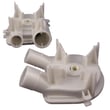
| Hums but won’t drain | Pump jammed or worn | Washer drain pump WP3363394 |
| Drains poorly, then stops | Pump obstruction or hose issue | Washer drain pump WP3363394 |
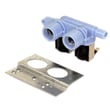
| Won’t fill correctly (separate issue) | Water inlet problem | Washer inlet valve 285805 |
Why it matters
A weak or failing drain pump can leave water in the tub, prevent spin, and cause repeated cycle stalls. Catching it early helps avoid wet loads, excess vibration, and strain on the drive system.
Last updated: February 2026
Why is my washer shaking violently on spin cycle?
A Kirkland SAWS800MQ0 washer usually shakes violently during spin because the load is unbalanced or the washer is not level. If balancing and leveling do not stop the shaking, worn suspension components or a drive system problem can let the tub move too much at high speed; use the owner's manual for model-specific checks.
Quick fixes to try first
- Stop the cycle and redistribute items; mix large and small pieces.
- Run a smaller load; overloading makes balancing harder.
- Remove waterlogged items (blankets, rugs) and spin them in smaller batches.
- Confirm all four feet are firmly on the floor; tighten the lock nuts if equipped.
- Check the floor; weak or uneven flooring can amplify vibration.
What to inspect if it still shakes
Violent shaking that continues with properly sized, balanced loads usually points to a support or drive issue.
- Suspension springs: A stretched or broken spring lets the tub swing and bang. Consider replacing the washer suspension spring WP63907 if you find damage.
- Counterweight spring: If the tub does not recentre smoothly, inspect the counterweight spring (red) WPW10250667.
- Drive block and basket fit: A worn drive block can allow basket wobble during spin; inspect the washer drive block WP389140 for rounding or looseness.
- Clutch and coupling: If the washer grabs, slips, or surges into spin, inspect the clutch 285785 and washer motor coupling 285753A.
Symptoms and likely causes
| What you notice | Most likely cause | What to do |
|---|---|---|
| Shakes only with bulky loads | Unbalanced load | Reduce load size; redistribute |
| Walks forward during spin | Not level; feet not planted | Level and stabilize feet |
| Loud banging even with small loads | Suspension issue | Inspect springs; replace as needed |
| Spin starts rough or jerky | Clutch/coupling wear | Inspect clutch and coupling |
Why it matters
Excessive vibration can damage the basket, drive components, and cabinet over time, and it can also cause leaks by stressing hoses and seals. Fixing the root cause protects the washer and improves cleaning and spin performance.
Last updated: February 2026
What does code SAWS800MQ0 mean?
SAWS800MQ0 is the model number for your Kirkland washer, not an error code. We use it to match the correct parts list, diagrams, and troubleshooting information for your exact washer.
Where to find SAWS800MQ0 on the washer
You will typically find the model and serial label:
- Under the washer lid
- On or near the tub opening rim
- On the cabinet frame near the lid switch area
For label location details and how the washer is intended to operate, use the owner's manual.
Why the model number matters for parts and repairs
Using the exact model number helps prevent ordering the wrong replacement part and speeds up troubleshooting.
Common repairs on a washer like the Kirkland SAWS800MQ0 often involve parts such as:
- Agitation issues: worn agitator dog 80040
- Won’t drain: a failing washer drain pump WP3363394
- Won’t spin or makes grinding noises: washer motor coupling 285753A or clutch 285785
- Won’t fill: washer inlet valve 285805
Quick troubleshooting checks (common “not working” symptoms)
If the washer seems stuck, won’t spin, or won’t drain, these checks from typical operation apply:
- Confirm the lid is fully closed (many washers will not agitate or spin with the lid open)
- Avoid extension cords; plug directly into a working outlet
- Check for excessive suds; measure detergent carefully
- Verify the drain hose is not kinked or clogged
- Make sure the drain hose is not routed too high (many top-load designs have a maximum height around 96 inches)
Model number vs. error code
| Item | What it is | Example |
|---|---|---|
| Model number | Identifies the washer design for parts and manuals | SAWS800MQ0 |
| Error code | A fault code shown during operation (varies by design) | Letters/numbers on the console |
Why it matters
When we troubleshoot or select parts, the model number is the starting point. It ensures the repair steps and replacement parts fit your washer correctly.
Last updated: February 2026
What is the most expensive part to replace on a washing machine?
On most washers (including the Kirkland SAWS800MQ0), the most expensive repairs typically involve major drive and tub components, such as the gearcase/transmission area, the basket/tub, or the drive motor. These repairs cost the most because parts are pricey and labor is more involved.
Most expensive repairs (what usually tops the list)
These are the repairs that most often reach the highest total cost (parts plus labor):
- Tub or basket related repairs: inner basket, outer tub, tub seal, and bearing work
- Gearcase/transmission related repairs: internal drive components that make the washer agitate and spin
- Drive system repairs: motor, clutch, drive block, and related hardware
- Electronic control repairs (on models that use them): control board and user interface
For safety and model-specific service guidance, follow the disassembly and service cautions in the owner's manual.
Examples of higher-cost parts we see for SAWS800MQ0
Below are examples from the SAWS800MQ0 parts list that commonly fall into the “higher-cost” category.
| Repair area | Example part for SAWS800MQ0 | Why it can be expensive |
|---|---|---|
| Basket/tub | Basket W10389328 | Large component; more teardown and reassembly |
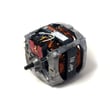
| Drive system | Washer drive motor WP661600 | Higher part cost; may require cabinet and pump removal |
| Timer/controls | Washer timer WP8541270 | Higher part cost; diagnosis time matters |
| Gearcase area | Actuator/gearcase related parts | Often labor-intensive to access |
How we decide if a “big repair” is worth it
The part price is only half the story; labor and the likelihood of additional worn parts matter just as much.
- If the washer won’t drain or spin, check simple causes first (lid closed, drain hose height, clogs, suds) before pricing major parts
- If you hear grinding, roaring, or metal-on-metal during spin, basket/tub or drive components are common suspects
- If the washer fills and drains continuously, correct drain hose setup can prevent unnecessary parts replacement
- If the washer agitates poorly, smaller drive parts can sometimes solve it (for example, agitator dog 80040)
Why it matters
High-cost repairs usually involve deep teardown. Confirming the symptom and ruling out installation or usage issues first helps avoid replacing expensive parts that are not actually failed.
Last updated: February 2026





