Installation guide
 Owner’s manual
 Error Codes


Do KitchenAid dishwashers have a filter that needs to be cleaned?
Yes. The KitchenAid KDTM354ESS1 dishwasher uses a removable triple filtration system at the bottom center of the tub, and it needs periodic cleaning to prevent gritty dishes, odors, and reduced wash performance. Follow the steps in the KDTM354ESS1 owner's manual for removal, cleaning, and reinstallation.
Where the filter is and what it does
KitchenAid’s EQ filtration system has two main pieces:
- Upper filter assembly: catches oversized items and fine particles before they reach the pump
- Lower filter: helps keep food from being recirculated back onto dishes
- Both sit under the lower spray arm area, at the bottom center of the dishwasher tub
How often to clean the filter (typical schedule)
Cleaning frequency depends on how you load and how often you run cycles. Use this as a practical guide:
- Light use (1 to 3 loads/week): every 2 months if you do not scrape or rinse
- Average use (4 to 7 loads/week): about once per month if you do not scrape or rinse
- Heavy use (8 to 12 loads/week): every 2 weeks if you do not scrape or rinse
- Hard water (above 15 grains): at least once per month
| Your situation | What you may notice | What to do |
|---|---|---|
| Filter is dirty | Gritty dishes, leftover soils | Remove and rinse filters under running water |
| Hard water buildup | White residue in tub | Use a soft brush on deposits; clean monthly |
| Filter not seated | Poor cleaning, unusual noise | Reinstall and lock the upper filter in place |
Safe cleaning steps we recommend
- Remove the upper filter assembly by turning it about 1/4 turn counterclockwise and lifting it out
- Lift and pull the lower filter forward to remove
- Rinse under running water until soils are removed
- Use a soft brush for stuck-on debris or calcium deposits
- Avoid wire brushes or scouring pads (they can damage the filter)
- Reinstall both filters and lock the upper filter so it does not spin freely
Why it matters
A clean filter helps the wash system maintain strong water flow and keeps food particles from redepositing on dishes. It also helps your KDTM354ESS1 run efficiently and quietly over time.
Last updated: January 2026
What is the average lifespan of a KitchenAid dishwasher?
A KitchenAid dishwasher typically lasts 10 to 14 years. For your KitchenAid KDTM354ESS1, lifespan depends most on water quality, how often you run it, and routine care like cleaning filters and using rinse aid as recommended in the KDTM354ESS1 owner’s manual.
What affects dishwasher lifespan most
- Hard water: mineral buildup can reduce cleaning and strain the pump, heater, and valve.
- Heavy daily use: more cycles means faster wear on the motor, seals, and racks.
- Detergent and rinse aid habits: rinse aid helps drying and helps control deposits.
- Loading and spray arm clearance: blocked spray arms reduce cleaning and can cause repeat cycles.
- Leaks and door issues: a small leak or poor latch can lead to bigger failures over time.
Maintenance that helps you reach the 10 to 14 year range
- Run a monthly cleaning cycle (dishwasher cleaner or a citrus-based cleaner).
- Keep the sump area clear of labels, glass, and food debris.
- Use rinse aid consistently, especially with hard water.
- Check that racks roll smoothly; replace worn rollers to prevent rack damage.
- Fix draining or filling problems early instead of repeatedly restarting cycles.
Common wear items vs. major components
| Category | Examples | Typical impact on lifespan |
|---|---|---|
| Wear items | Rack rollers, rack adjusters, door seals | Usually inexpensive fixes that keep the unit usable |
| Water handling | Water inlet valve, drain hose | Problems here can cause poor washing, no-fill, or leaks |
| Heating and wash system | Heating element, sump motor, diverter motor | Failures here often drive repair vs. replace decisions |
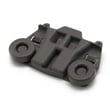
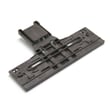
If your lower rack is hard to roll or keeps coming off track, replacing the dishwasher dishrack roller assembly, lower WPW10195417 can prevent extra stress on the rack and tub.
Why it matters
Dishwashers like the KDTM354ESS1 are designed for efficiency and often run longer cycles (commonly 2 to 3 hours per load). Consistent maintenance helps the wash system stay efficient and reduces mineral and debris buildup that shortens service life.
Last updated: January 2026
What is the most common problem with a KitchenAid dishwasher?
On KitchenAid dishwasher model KDTM354ESS1, the most common day-to-day problem we see is poor cleaning (dishes come out dirty) caused by loading issues, low water temperature, or wash system restrictions like clogged spray paths. A close second is won’t start/run when the door is not fully closed and latched.
Most common symptoms and what they usually point to
- Dishes still dirty after a full cycle: cycle selection, water temperature below 120°F (49°C), or blocked spray action.
- Cycle won’t start: door not closed before the countdown ends; door not latched.
- Start/Resume light blinking: door needs to be closed, then press Start/Resume.
- Suds or foam in the tub: wrong soap type (hand dish soap) or too much detergent.
- Cycle ends early or seems incomplete: suds detected or no water during a heated wash.
Quick checks we recommend first (KDTM354ESS1)
Use these steps before replacing parts:
- Confirm the door closes firmly and latches; large dishes should not interfere with the wash system.
- Run hot water at the sink until it is hot, then start the dishwasher; incoming water should be at least 120°F (49°C).
- Use fresh automatic dishwasher detergent (not hand-washing soap) and avoid overfilling.
- If you use rinse aid, make sure the cap is installed after filling.
- For heavy soil, use a stronger cycle and options like ProWash or Tough; load items so they do not block spray arms.
When a part is commonly involved
If the issue is clearly mechanical (not loading or detergent related), these parts are frequent suspects on dishwashers:
| Symptom | Commonly related part | Example part for KDTM354ESS1 |
|---|---|---|
| Won’t start or stops when door moves | Door latch | Dishwasher door latch WPW10653840 |
| Not filling or fills slowly | Water inlet valve | Dishwasher water inlet valve W11175771 |
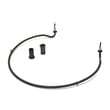
| Not drying well | Heating circuit | Element assembly W10703867 |
Why it matters
Poor cleaning and “won’t start” complaints often come from simple setup issues (door closure timing, water temperature, detergent type). Fixing those first prevents unnecessary part replacement and gets your KitchenAid dishwasher back to normal cycle performance.
For model-specific cycle behavior, options, and troubleshooting steps, follow the KDTM354ESS1 owner’s manual.
Last updated: January 2026