 Installation guide
 Owner’s manual


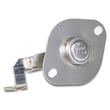
How do I know if my Kenmore dryer thermal fuse is blown?
If your Kenmore electric dryer model 11061252010 won’t start at all or runs but won’t heat, a blown thermal fuse (or thermal cut-off) is a top suspect. The sure way to know is a continuity test with a multimeter after unplugging the dryer.
Common symptoms of a blown thermal fuse
- Dryer will not start (no motor run)
- Dryer tumbles but produces no heat
- Cycle seems to run, but clothes stay damp
- Dryer stops mid-cycle (overheat protection opened)
- You recently had poor airflow (clogged vent or lint buildup)
How to test it (safe, reliable method)
- Unplug the dryer (or switch off the breaker) before opening any panels.
- Access the thermal fuse or thermal cut-off location shown in the 11061252010 installation guide.
- Remove at least one wire from the fuse terminal so you are not reading the rest of the circuit.
- Set your multimeter to continuity (or lowest ohms).
- Touch probes to the fuse terminals:
- Good fuse: continuity (beep) or near 0 ohms
- Blown fuse: no beep, no continuity (open circuit)
What to do if it’s blown
A thermal fuse usually blows because the dryer overheated from restricted airflow. Replace the failed safety device and correct the airflow problem before running the dryer again.
| What you find | What it usually means | What to check next |
|---|---|---|
| Fuse is open (no continuity) | Overheat event | Venting, lint screen, blower housing |
| Fuse tests good | Heat problem elsewhere | Heating circuit, thermostats, element |
Parts that are often involved in “no heat” on this model
Depending on what your tests show, these model-compatible parts are commonly checked or replaced:
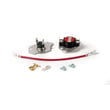
- Dryer thermal cut-off fuse kit 279816 (safety cut-off components)
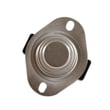
- Dryer high-limit thermostat WP3977767 (opens if temperature gets too high)
- Dryer operating thermostat WP3387134 (regulates normal cycling temperature)
- Dryer element 279838 (heating element for electric heat)
Why it matters
The thermal fuse is a safety device designed to stop heat (and sometimes stop the dryer from running) when temperatures get unsafe. Restoring proper vent airflow helps prevent repeat failures and improves drying performance.
Last updated: February 2026
How do I tell what model my Kenmore dryer is?
Your Kenmore dryer’s model number is printed on the appliance’s ID label (model and serial tag). On most Kenmore electric dryers, you’ll find it in the door opening area or on the cabinet; once you have it (for example, 11061252010), we can match the correct parts and instructions.
Where to look for the model number tag
Check these common locations first:
- Inside the dryer door opening on the cabinet frame
- On the back panel of the dryer cabinet
- Around the lint screen housing area (near the filter opening)
- On the side panel near the front edge (less common)
If you’re installing or moving the dryer, the installation paperwork also has a place to record the model and serial numbers for your records; see the 11061252010 installation guide.
What the model number tells you (and why it matters)
Kenmore model numbers help us identify the correct design family, wiring setup, and compatible replacement parts (belt, heating element, thermostats, door switch). That prevents ordering a part that looks right but does not fit.
Quick examples for this model page
| What you’re doing | Why the exact model matters | Example part on this model page |
|---|---|---|
| Dryer will not heat | Heating circuit parts vary by design | Dryer element 279838 |
| Dryer will not start | Door switch and motor circuits vary | Dryer door switch WP3406105 |
| Drum will not tumble | Belt length and idler style vary | Belt 341241 |
Tips to copy the model number correctly
Use these checks so we match your Kenmore dryer the first time:
- Write the full number exactly as shown (no missing digits)
- Include any letters if present
- Take a clear photo of the entire tag (model and serial)
- Keep the number with your paperwork; the 11061252010 owner’s manual is a good place to store it
Why it matters
Using the exact model number ensures the right fit for critical items like the heating element, thermal cut-off fuse kit, operating thermostat, and drive belt; it also keeps installation and electrical connection instructions aligned with your dryer’s configuration.
Last updated: February 2026
What are common problems with Kenmore dryers?
Common problems on Kenmore electric dryers like model 11061252010 include no heat, long dry times, the drum not turning, and unusual noise. Most of these issues trace back to airflow restrictions (lint and venting), power supply problems, or normal wear of drive and heating components.
Most common symptoms and what usually causes them
- Dryer runs but won’t heat: failed heating circuit parts such as the dryer element 279838, a thermal cut-off, or a thermostat; also check that both household fuses or breakers are on.
- Long drying times: restricted exhaust vent, crushed or improper ducting, lint buildup in the lint screen housing, or a weak blower wheel.
- Drum won’t turn: broken belt, worn idler pulley, or a failing motor.
- Loud thumping/squealing: worn drum support parts (often addressed with a repair kit) or a worn belt/idler.
- Won’t start: door not fully closed, start control not engaged, tripped breaker, blown fuse, or a door switch issue.
Quick checks we recommend first (before replacing parts)
- Confirm power: many electric dryers need two fuses or breaker legs for heat; if one trips, the dryer can run but not heat.
- Check airflow: clean the lint screen, then verify strong airflow at the outside vent hood.
- Verify safe venting: avoid flexible plastic duct; use proper metal venting and routing per the installation guide.
- Run a short heat test: after 5 minutes of running, open the door and feel for heat (then cancel the cycle).
Common parts tied to common problems (model 11061252010)
| Symptom | Likely part to inspect | Example part for this model |
|---|---|---|
| No heat | Heating element | Dryer element (279838) |
| Drum not turning | Belt / idler | Belt (341241), idler pulley (WP691366) |
| Overheats or shuts off | Thermostats / thermal cut-off | High-limit thermostat (WP3977767), thermal cut-off fuse kit (279816) |
| Poor airflow/noisy | Blower wheel | Blower wheel (WP694089) |
Why it matters
Airflow problems can cause long dry times and overheating, which can repeatedly damage heating and safety components. Fixing venting and lint buildup first often prevents repeat failures and improves drying performance.
Last updated: February 2026
Where is the part number on a Kenmore dryer?
On Kenmore electric dryer model 11061252010, the model and serial information (used to match the correct replacement parts) is typically found on an ID label just inside the dryer door opening on the cabinet frame. Use that label when ordering parts or checking specs in the 11061252010 owner's manual.
What to look for on the label
You will usually see several fields together; write them down exactly as shown:
- Model number (example: 11061252010)
- Serial number (unique to your dryer)
- Electrical ratings (volts/amps)
- Manufacturing code/date (varies by label)
Common label locations on Kenmore dryers
If you do not see the label immediately inside the door opening, check these other common spots:
- Along the front frame near the door latch area
- On the inside edge of the door itself
- On the rear panel (less common)
- Behind the lower access panel (some designs)
Model number vs. part number (quick guide)
The label helps us identify the dryer; individual parts have their own numbers.
| Item you have | What it identifies | Where you’ll find it |
|---|---|---|
| Model number | The exact dryer design | ID label on the dryer cabinet |
| Serial number | Your specific unit | Same ID label |
| Part number | A specific replacement part | On the part, packaging, or parts diagram |
Why it matters
Kenmore dryers can use different components across similar-looking models. Using the model number and serial number from the ID label helps us match the correct belt, heating element, thermostat, door switch, or control parts the first time.
Last updated: February 2026








