Installation guide
 Owner’s manual


How do I tell what model my Kenmore dryer is?
Your Kenmore dryer’s model number is printed on the model and serial number label; on Kenmore model 11068842700, that label is located at the top inside the dryer door well. Once you have the full model number, you can match the correct parts, wiring, and installation requirements.
Where to look on the dryer
Check these common label locations first (start with the door opening):
- Top inside the dryer door well (most common on Kenmore 110-series dryers)
- Inside the door opening on the cabinet frame
- Back panel (less common, but possible)
- Near the lint screen housing (some designs place the label nearby)
For the exact label location and how the model and serial number are formatted, use the 11068842700 owner's manual.
How to read the number (and why it matters)
Kenmore model numbers often start with a prefix that helps identify the manufacturing source and parts family. For example, a 110 prefix is commonly associated with Whirlpool-built Kenmore dryers, which is why parts like a heating element, door switch, or drum support roller must match the full model.
Why it matters
Using the complete model number helps us:
- Pull the correct parts diagram and part list
- Match electrical and venting requirements to your exact dryer
- Avoid ordering look-alike parts that do not fit
- Confirm compatible maintenance and troubleshooting steps
Quick checklist before you order parts
Use this checklist to avoid mix-ups:
- Write down the full model number exactly as shown (all digits)
- Record the serial number too (helps with production variation)
- Compare the model number on the label to what’s on any paperwork
- If replacing a wear item, match it to the model-specific part listing
Common parts that depend on the exact model
| Symptom | Often involved part | Example for this model |
|---|---|---|
| Dryer will not start | Door switch | Dryer door switch WP3406107 |
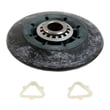
| Loud rumbling or thumping | Drum support roller | Support WPW10314173 |
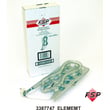
| No heat or weak heat | Heating element | Dryer heating element WP3387747 |
If the label is hard to read
If the label is faded, gently wipe it with a damp cloth and read it under bright light. Avoid solvents; they can remove the remaining print.
Last updated: February 2026
How to replace a Kenmore dryer thermistor?
For Kenmore dryer model 11068842700, we replace the thermistor by disconnecting power, accessing the blower housing or exhaust duct area, swapping the sensor and reconnecting the wires exactly as found. Use the 11068842700 owner's manual for safety notes and panel handling.
Before you start (safety and prep)
- Unplug the dryer (or switch off the breaker) before servicing.
- Let the dryer cool completely if it was recently running.
- Take a quick photo of wire positions before you disconnect anything.
- Work with the dryer pulled out far enough to avoid crushing or kinking the vent.
- Keep screws organized by panel so reassembly is straightforward.
Replacement steps (typical for this Kenmore platform)
- Disconnect power.
- Remove the rear panel (or the lower access panel, depending on your configuration).
- Locate the thermistor on or near the blower housing or exhaust duct.
- Disconnect the wire connector from the thermistor.
- Remove the mounting screw(s) and take out the old thermistor.
- Install the new thermistor, secure it, and reconnect the wiring.
- Reinstall panels, restore power, and run a timed heat cycle to confirm normal heating.
What part is involved?
On this model, the thermistor is commonly replaced as the dryer thermistor. If you are sourcing the part for 11068842700, match by model number and wiring connector style.
| Symptom | What it often points to | What to check next |
|---|---|---|
| Runs but heat is erratic | Thermistor out of range | Thermistor, wiring, venting |
| Stops early on auto cycles | Moisture/temperature sensing issue | Thermistor and moisture sensor |
| Overheats or shuts down | Airflow restriction or safety trip | Lint screen, ducting, thermal cut-off |
Why it matters
The thermistor helps the dryer regulate temperature. A failing thermistor can cause long dry times, overheating, or cycles that end too soon, even when the heating element is still good.
Last updated: February 2026
What is the average lifespan of 11068842700?
The average lifespan of the Kenmore 11068842700 dryer is about 13 years with normal household use. Regular vent cleaning, lint removal, and timely replacement of wear parts (belt, rollers, idler) are what most often determine whether it reaches or exceeds that average.
What affects lifespan the most
- Venting and airflow: restricted exhaust overheats components and shortens life.
- Lint control: lint buildup stresses the blower housing, heater area, and thermostats.
- Load size: frequent overloading strains the drive motor and drum support system.
- Heat settings: consistently running high heat can accelerate wear on heating and cycling parts.
- Maintenance and repairs: replacing common wear items early prevents bigger failures.
Maintenance checklist (best return for the effort)
Use the schedule in your owner's manual as your baseline.
- Clean the lint screen before every load.
- Check airflow at the outside hood; it should be strong and steady.
- Keep the vent path as short and straight as possible; clean it regularly.
- Avoid crushing or kinking the vent when pushing the dryer back.
- Listen for squealing or thumping; address it before it damages the drum or motor.
Common wear items and what they usually mean
| Symptom | Most common cause | Example part for this model |
|---|---|---|
| Squealing, chirping | Worn idler or drum support components | Dryer idler pulley 279640 |
| Long dry times, overheating | Poor airflow or heat system issue | Dryer heating element WP3387747 |
| Thumping, rubbing | Drum seal or drum support wear | Dryer drum seal 280114 |
Why it matters
A dryer that is vented correctly and kept clear of lint runs cooler and with less strain; that directly extends the life of the heating system, drive motor, and drum support parts. The installation requirements for safe, cleanable venting are outlined in the installation guide.
Last updated: March 2026