View engine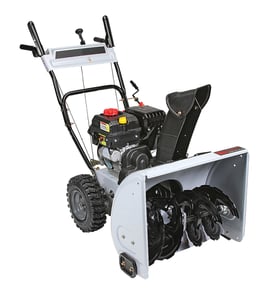



What is the typical lifespan of a gas snowblower?
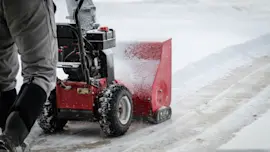
A gas snowblower like the MTD 31AS6HEG799 typically lasts 10 to 15 years with normal seasonal use and routine maintenance; a well-cared-for machine commonly reaches 15 to 20 years. Lifespan is driven more by maintenance and storage than by hours alone.
What affects lifespan the most
- Fuel care (fresh gas, stabilizer for storage, clean carburetor)
- Regular oil changes and correct oil level
- Keeping belts properly tensioned and replacing worn belts
- Avoiding impacts (curbs, gravel, ice chunks) that stress auger and bearings
- End-of-season cleaning and dry storage to prevent rust and corrosion
Quick “age vs. condition” guide
| If your snowblower is... | Expectation | What we recommend |
|---|---|---|
| Under 5 years old | Long service life ahead | Stay on a yearly maintenance routine |
| 5 to 10 years old | Mid-life | Replace wear items before they fail |
| 10 to 15 years old | Typical replacement window | Repair if core systems are solid |
| 15+ years old | Often still usable | Repair selectively; prioritize safety and reliability |
Parts that commonly determine whether it’s worth repairing
On the MTD 31AS6HEG799, wear items are often the difference between “runs great” and “feels worn out.” If performance drops, these are smart first checks:
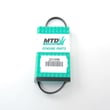
- Belt 256963 (auger drive belt wear can reduce throwing power)
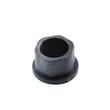
- Bearing 741P0919B (bearing wear can cause noise, drag, or wobble)
- Skid shoes and shave plate wear (affects scraping and housing clearance)
- Shear pins (protect the auger and gearbox when you hit an obstruction)
Why it matters
A realistic lifespan helps you plan maintenance and avoid mid-storm breakdowns. Replacing inexpensive wear parts on schedule often extends the life of the engine, auger system, and drive system by years.
Related DIY help: how to make your snowblower last longer
Last updated: January 2026
Is a 3 stage snow blower better than a 2 stage?
A 3-stage snowblower can be “better” than a 2-stage when you regularly face deep, heavy, or icy snow because it moves snow into the impeller faster; for many owners of MTD model 31AS6HEG799, a 2-stage is the better value if snowfall is moderate and you want simpler upkeep.
2-stage vs 3-stage: what changes
- 2-stage: auger gathers snow, impeller throws it.
- 3-stage: adds an accelerator (a fast center intake) to feed snow to the impeller faster.
- Result: 3-stage units typically clear dense end-of-driveway plow piles and drifts quicker.
Quick comparison
| Feature | 2-stage snowblower | 3-stage snowblower |
|---|---|---|
| Best for | Most driveways, typical storms | Heavy, wet snow; deep drifts; packed snow |
| Clearing speed | Good | Faster in tough snow |
| Complexity | Lower | Higher (more moving parts) |
| Maintenance | Usually simpler | Usually more involved |
| Cost | Lower | Higher |
How to decide for your driveway
- If you often get 8+ inches, wet snow, or frequent plow berms, 3-stage is worth considering.
- If you get lighter snow or smaller storms, 2-stage performance is usually plenty.
- If storage space and maneuverability matter, 2-stage models are often easier to handle.
Why it matters
Choosing the right “stage” affects how quickly you can clear snow and how much maintenance you take on over time. More stages can mean faster intake in extreme conditions, but also more components to inspect, adjust, and replace.
Maintenance note (applies to both)
If your current machine is not throwing snow well, the issue is often adjustment or wear in the auger/drive system. On MTD 31AS6HEG799, a worn auger belt is a common service item; see belt 256963. For step-by-step guidance, use how to replace a snowblower belt video.
Last updated: January 2026
Is it worth fixing a snowblower?
Fixing an MTD snow thrower model 31AS6HEG799 is usually worth it when the problem is a common wear item (belt, bearing, shear pin, spark plug) and the engine still runs strong; we typically recommend replacing only when repair cost approaches about half the price of a comparable new unit.
Quick decision checklist
- The engine starts easily and runs smoothly after a basic tune-up.
- The auger or drive issue points to a wear part (belt, bearing, cable adjustment).
- The machine has solid compression and no major oil leaks.
- You can do the repair yourself or the labor is minimal.
- Parts are straightforward to access and the housing is not severely rusted.
Common “worth it” repairs on this model
On the 31AS6HEG799, many performance problems come down to routine drivetrain wear. If the auger stops turning or slips under load, inspecting and replacing the auger belt is often a practical first step; the compatible belt 256963 is one example of a typical wear part.
If you hear grinding, squealing, or feel rough rotation at an auger or pulley support point, a worn bearing can be the culprit; the bearing 741P0919B is a common type of replacement part used in rotating assemblies.
When replacement is usually the better call
Major engine work is where costs and downtime climb fastest.
| Situation | Usually fix | Usually replace |
|---|---|---|
| Belt/bearing wear, chute/drive adjustments | Yes | No |
| Repeated stalling from old fuel or carb cleaning needed | Often | Sometimes |
| Low compression, heavy smoking, internal engine damage | Rarely | Yes |
Why it matters
A snowblower that is mechanically sound but slipping a belt or dragging a bearing can feel “worn out” even though it is close to full performance with a modest repair. Making the fix decision based on the engine’s health and repair cost helps you avoid overspending.
Helpful DIY guidance
- How to replace a snowblower belt video
- Snowblower won't self-propel
- How to make your snowblower last longer
Last updated: January 2026