Installation guide
 Owner’s manual



What is the capacity of Maytag MEDC300XW1?
The Maytag MEDC300XW1 electric dryer has a 7.0 cu. ft. capacity, which is a full-size drum designed to handle typical family loads like towels, jeans, and mixed laundry in fewer cycles.
How to confirm capacity for your exact dryer
Capacity is a model-level specification, so the most reliable place to confirm it is the product literature for MEDC300XW1.
- Check the model specifications section in the MEDC300XW1 owner's manual
- Compare the model number on the door opening or cabinet label to MEDC300XW1
- If you are matching a replacement drum or support parts, confirm the model before ordering
What 7.0 cu. ft. means in everyday use
A 7.0 cu. ft. Maytag dryer typically supports these load types well:
- One full basket of everyday mixed clothing
- A set of bath towels
- Several pairs of jeans (avoid packing tightly)
- Bulky items (dry one comforter at a time, depending on fill and size)
Quick reference
| Spec | MEDC300XW1 value | Why it matters |
|---|---|---|
| Drum capacity | 7.0 cu. ft. | Helps you size loads for faster, more even drying |
| Dryer type | Electric | Heating performance depends on 240V supply and airflow |
Why it matters
Overloading a 7.0 cu. ft. drum restricts tumbling and airflow, which increases dry time and heat stress on components like the heating circuit and thermostats. For best performance, load loosely and keep venting clear (venting guidance is covered in the installation literature).
Last updated: January 2026
How do I know if my Maytag dryer thermal fuse is bad?
On a Maytag MEDC300XW1 electric dryer, a bad (blown) thermal fuse most often shows up as a dryer that will not run at all, or a dryer that runs but will not heat. Confirm the symptom first, then check airflow and power supply before replacing parts.
Quick symptom checklist
- Dryer will not start (no motor run)
- Drum tumbles but there is no heat
- Dryer stops mid-cycle and will not restart until it cools
- Burning smell or very hot cabinet (often points to restricted venting)
- Repeated fuse failures after replacement (usually an airflow problem)
What to check before you replace anything
- Power supply: This dryer uses a 120/240V supply and can have two fuses or two breakers; if one trips/blows, the dryer may run but not heat.
- Door and controls: Make sure the door is fully closed and the controls are set to a running position.
- Airflow: Clean the lint screen, check the vent hose for kinks, and confirm strong airflow at the outside vent hood.
Use the startup and “no heat” checks in the MEDC300XW1 installation guide to verify the basics (door closed, start pressed firmly, breakers/fuses OK, and heat check after a few minutes).
How we test a thermal fuse (basic method)
Unplug the dryer first. A thermal fuse is a one-time safety device; when it opens, it will not reset.
- Access the fuse (commonly on the blower housing or heater duct area)
- Remove at least one wire from the fuse terminal
- Measure continuity with a multimeter
- Good fuse: continuity (near 0 ohms)
- Blown fuse: no continuity (open circuit)
Common “replace together” items
If overheating caused the failure, it is smart to inspect the high-limit thermostat and heating circuit components at the same time.
| If your dryer… | Most likely issue | What to do next |
|---|---|---|
| Won’t start | Thermal fuse, door switch, timer, motor circuit | Test fuse and door switch first |
| Runs but no heat | One breaker/fuse tripped, heating element circuit, thermal cut-off | Check both breakers/fuses, then test heat circuit |
| Blows fuse again | Restricted venting, blower issue | Clean venting end-to-end and verify airflow |
Why it matters
A blown thermal fuse is usually a symptom of overheating, and overheating is commonly caused by restricted venting. Fixing airflow helps prevent repeat failures and protects the heating system.
Last updated: January 2026
What is the most common problem with Maytag dryers?
For Maytag electric dryers like model MEDC300XW1, the most common problem we see is no heat or long dry times caused by restricted airflow (lint buildup or a crushed/incorrect vent). Poor venting overheats the dryer and can lead to failures such as a blown thermal cut-off fuse or a weak heating circuit.
Most common symptoms and what they usually point to
- Runs but no heat: power supply issue (one leg of 240V missing), heating circuit problem, or airflow restriction
- Takes too long to dry: vent restriction, clogged lint screen housing, or blocked exterior hood
- Won’t start: door switch issue, thermal safety device opened, or timer/control problem
- Loud rumbling/squealing: worn drum support rollers or idler pulley
- Burning smell or very hot cabinet: severe vent restriction or lint accumulation
Quick checks we recommend first (MEDC300XW1)
Start with airflow and power, because they cause the highest share of “dryer problems.”
| What you notice | Fast check | Likely fix |
|---|---|---|
| No heat after 5 minutes | Verify both household fuses/breakers are on | Restore full 240V supply |
| Clothes still damp | Inspect vent path and outside hood for blockage | Clean/replace venting |
| Dryer stops heating | Check for overheating from poor airflow | Correct venting, then test safety parts |
| Dryer won’t start | Confirm door closes and switch clicks | Replace door switch if failed |
Parts that commonly fail when airflow is poor
If venting is restricted, heat builds up and protective parts can open to prevent overheating.
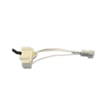
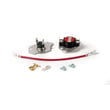
- Dryer thermal cut-off fuse kit 279816 (common after overheating)
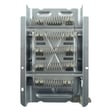
- Dryer element 279838 (open coil can cause no heat)
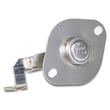
- Dryer high-limit thermostat WP3977767 (can trip from high temps)
- Dryer blower wheel WP694089 (broken wheel reduces airflow)
Why venting matters (and what “good venting” looks like)
Improper venting can trap lint, crush easily, and restrict airflow. For this Maytag dryer, we follow the venting guidance in the MEDC300XW1 installation guide, including using proper materials and sealing joints with clamps (not screws that protrude into the duct).
When to use the manual
Use the MEDC300XW1 owner’s manual for cycle selection tips and operating guidance; correct cycle and load size also reduce “long dry time” complaints.
Last updated: January 2026
How long does a Maytag Bravos dryer last?
A Maytag Bravos dryer typically lasts 10 to 15 years with normal household use and proper venting and maintenance. For your Maytag MEDC300XW1 electric dryer, good airflow and correct installation clearances are two of the biggest factors that help it reach that lifespan; see the MEDC300XW1 installation guide.
What affects dryer lifespan the most
- Venting and airflow: long or kinked venting increases heat stress and can shorten dryer life.
- Overheating protection trips: repeated high-heat conditions can lead to thermal fuse or thermostat failures.
- Load habits: frequent overloading strains the drive motor, belt, and drum support rollers.
- Installation conditions: very cold locations can extend dry times and increase wear.
- Routine cleaning: lint buildup reduces airflow and raises operating temperatures.
Quick lifespan expectations (typical)
| Item | Typical lifespan | Notes |
|---|---|---|
| Electric dryer (most brands) | 10 to 15 years | Assumes proper venting and normal loads |
| Wear items (belt, rollers, idler) | 3 to 8 years | Depends on use and noise/vibration |
| Heating system safety parts | Varies | Often fail sooner when venting is restricted |
Why venting matters on the MEDC300XW1
Your installation instructions emphasize using the straightest, most direct vent route and avoiding excessive elbows and length because restricted venting reduces performance, increases energy use, and can shorten the life of the dryer. Keeping the vent path short and smooth helps protect the heating system and motor.
Parts that commonly wear first (and what you’ll notice)
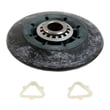
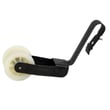
- Drum support rollers: squealing, thumping, or a rumble (see dryer drum support roller WPW10314173).
- Idler pulley/belt system: squeal, drum not turning.
- Heating circuit parts: no heat or overheating symptoms.
Why it matters: If your dryer is taking longer to dry, running hotter than normal, or getting noisy, addressing airflow and early wear parts usually prevents bigger failures and helps the dryer reach the 10 to 15 year range.
Last updated: January 2026