Owner’s manual
 Error Codes



What are the advantages of bottom mount refrigerators?
A bottom-mount refrigerator like the Maytag MFI2665XEM8 keeps fresh-food shelves at eye and waist level, so you reach everyday items with less bending. The freezer stays below, which works well when you use the refrigerator section more often than frozen storage.
- Easier access to fresh foods (produce, drinks, leftovers) because they sit higher
- Less bending and squatting compared with top-freezer designs
- Better organization for refrigerated items because shelves and drawers are in the main viewing area
- Freezer drawer style can make it simpler to see larger frozen items at a glance
- Often more room for wide platters in the refrigerator section (layout dependent)
| Feature | Bottom-mount refrigerator | Top-freezer refrigerator |
|---|---|---|
| Most-used section height | Refrigerator is higher | Refrigerator is lower |
| Bending for fresh food | Less | More |
| Freezer access | Drawer or lower door | Upper door |
| Best for | Fresh-food heavy households | Frozen-food heavy households |
Most households open the refrigerator compartment far more than the freezer. With a bottom-mount design, the items you grab most are positioned where you can see and reach them quickly, which reduces door-open time and helps temperatures stay more stable.
- Keep frequently used items on the middle shelves for fastest access
- Avoid overpacking; airflow helps maintain even cooling
- Make sure door seals close fully to prevent warm air leaks
- If you have water and ice features, replace the filter on schedule for best taste and flow (see owner's manual)
Last updated: February 2026
Is a top mount or bottom mount fridge better?
A bottom-mount refrigerator like the Maytag MFI2665XEM8 is better when you want fresh-food items at eye level and more organized freezer access; a top-mount is better when you want the simplest layout and typically the lowest purchase and operating cost. Your “better” choice depends on how you use the fridge every day.
| Feature | Top-mount (freezer on top) | Bottom-mount (freezer on bottom) |
|---|---|---|
| Fresh-food access | You bend more | More at eye level |
| Freezer access | Easier reach | Pull-out drawer style |
| Organization | Usually simpler | Often more bins, drawers |
| Energy use | Often slightly lower | Often slightly higher |
| Price | Often lower | Often higher |
- You use the refrigerator section more than the freezer.
- You want wide shelves and easier access to produce drawers.
- You prefer a pull-out freezer drawer for frozen-food organization.
- You want fewer “digging” moments in the freezer.
- You want a straightforward, budget-friendly layout.
- You prefer the freezer at chest height.
- You want fewer moving drawer parts in the freezer area.
- You prioritize efficiency over extra storage features.
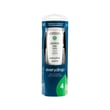
The layout affects daily ergonomics (how often you bend), how evenly you can organize food, and how well you maintain temperatures. For example, if you rely on filtered water and ice, keeping up with routine maintenance like replacing the refrigerator filter EDR4RXD1 helps performance regardless of top-mount or bottom-mount design.
Use the owner's manual to confirm your recommended temperature settings, shelf and bin configurations, and any model-specific care steps. Those details help you get the most out of a bottom-mount design.
Last updated: February 2026
Why does my Maytag bottom freezer build up ice on the bottom?
Ice building up on the bottom of your Maytag MFI2665XEM8 bottom-mount freezer almost always happens when the defrost drain is clogged. Defrost water cannot flow to the drain pan, so it refreezes on the freezer floor and gradually forms a thick ice sheet.
During normal defrost cycles, frost melts off the evaporator and should drain through a small drain hole and tube to a pan underneath the refrigerator. When that drain path plugs with ice, food particles, or sludge, water backs up and freezes in the lowest spot.
Why it matters: A clogged drain can lead to recurring ice buildup, poor airflow, warmer freezer temps, and water leaking when the ice finally melts.
- Look for a sheet of ice on the freezer floor (often under the lower basket).
- Check for water droplets or a frozen “waterfall” on the back freezer wall.
- Listen for the evaporator fan; restricted airflow can make temps uneven.
- Confirm the freezer door closes fully and the gasket seals all the way around.
- Make sure food packages are not blocking interior vents.
- Unplug the refrigerator.
- Remove the freezer bin/basket and take out the rear interior panel (if accessible).
- Melt the ice at the bottom using a hair dryer on low or warm towels.
- Flush the drain hole with hot water (a turkey baster works well) until it flows freely.
- Clear the drain tube from the back (near the drain pan) if needed.
- Reassemble and restore power; monitor for 24 hours.
For model-specific panel removal and drain access details, use the owner's manual.
| Cause | What you’ll notice | Fix |
|---|---|---|
| Drain hole iced over | Ice sheet on freezer floor | Melt ice, flush drain with hot water |
| Debris/sludge in drain tube | Problem returns quickly | Flush repeatedly; clear tube from rear |
| Door not sealing | Frost near door edges | Inspect gasket, level unit, adjust door |
| Poor airflow | Warm spots, slow freezing | Reposition food; keep vents clear |
If you also have water dispenser or ice maker flow issues, air in the water line can mimic “no water” symptoms after service. Our guide on how to purge air from a refrigerator water dispenser video helps restore steady flow.
Last updated: February 2026
Why is my Maytag refrigerator leaking from the bottom?
On a Maytag MFI2665XEM8 bottom-mount refrigerator, water leaking from the bottom is usually caused by a clogged or frozen defrost drain, a slow leak in the water supply circuit (filter, reservoir, or inlet valve), or a door gasket that lets humid air in and creates excess meltwater. Use the owner's manual to locate access points for your exact configuration.
- Water under crisper drawers: defrost drain overflow is most likely.
- Ice sheet on freezer floor: drain is frozen or clogged.
- Leak after dispensing water or making ice: water filter or inlet valve is most likely.
- Water near the front corners: door not sealing or condensation can contribute.
- Drips behind the unit: check the supply line connection at the valve.
- Unplug the refrigerator.
- Remove freezer items and find the drain trough.
- Melt ice with warm water and flush the drain until it runs freely to the drain pan.
If the leak correlates with ice maker or dispenser use, inspect and reseat connections.
- Replace a filter that will not seal correctly.
- Check for seepage at the valve and cracks in the reservoir.
Model-matched parts often involved:
- Refrigerator filter EDR4RXD1
- Refrigerator reservoir W11346622
- Refrigerator water inlet valve WPW10498990
- Clean the gasket and the cabinet sealing surface.
- Warm and reshape minor waves with a hair dryer on low.
- Replace a torn or hardened gasket.
| What you notice | Most likely cause | Best next step |
|---|---|---|
| Water under crisper area | Defrost drain clog | Thaw and flush drain |
| Leak after dispensing | Filter or valve seepage | Reseat/inspect; replace as needed |
| Frost buildup then puddles | Door gasket leak | Clean/reshape or replace gasket |
Stopping the leak prevents floor damage, odors, and ice buildup that can restrict airflow and reduce cooling performance.
Last updated: February 2026