Installation guide
 Owner’s manual


How do you reset an Amana dryer?
To reset your Amana NED4700YQ1 electric dryer, we recommend a simple power reset: unplug the dryer (or switch the breaker off) for 5 to 10 minutes, then restore power and try a cycle again. This clears many minor control glitches.
- Turn the dryer OFF.
- Unplug the power cord (or turn both dryer breakers off if your home uses a 240V breaker pair).
- Wait 5 to 10 minutes.
- Restore power.
- Select a timed, heated cycle and press Start firmly.
Use this quick checklist from the installation and use guidance in the NED4700YQ1 installation guide.
- Confirm the controls are set to a running or On position.
- Press Start firmly.
- Make sure the dryer is plugged in and power is on.
- Check household fuses or breakers (many electric dryers use 2 fuses or a 2-pole breaker).
- Verify the dryer door is fully closed; a failed door switch can prevent starting.
| Symptom after reset | Most common cause | What to check next |
|---|---|---|
| No lights, no response | No power to dryer | 2 fuses or 2-pole breaker, outlet power |
| Runs but no heat | Heating circuit issue or airflow restriction | Breakers, venting, heater circuit |
| Won’t start, door feels “loose” | Door switch not closing | Test/replace dryer door switch WP3406107 |
A reset only clears temporary control issues. If the dryer still will not start or heat, the problem is usually power supply, door-switch sensing, or a safety device opening due to overheating or restricted venting. Keeping the lint screen and venting clean helps prevent repeat shutdowns and long dry times.
Last updated: February 2026
How long should an Amana dryer last?
Most Amana electric dryers, including model NED4700YQ1, typically last 10 to 16 years with normal household use. Consistent airflow maintenance (lint screen and venting) and avoiding overheating are the biggest factors that keep the motor, heater, and thermostats running longer.
- Vent restriction (crushed hose, long run, clogged wall cap) that makes the dryer run hot and long
- Lint buildup inside the cabinet or blower housing
- Overloading the drum, which strains the belt, idler pulley, and drum support parts
- Electrical supply issues (loose connections, tripped breaker) that cause repeated hard starts
- Heat cycling problems from failed thermostats or thermal cut-offs
Use these habits to help your NED4700YQ1 reach the upper end of the 10 to 16 year range:
- Clean the lint screen before every load (replace it if torn or warped)
- Check that the vent behind the dryer is not kinked or crushed
- Keep the dryer level so the drum tumbles correctly (leveling guidance is in the NED4700YQ1 installation guide)
- Run a vent cleaning schedule (more often if you dry towels, pet bedding, or have a long vent run)
- Stop using the dryer if you smell burning or notice repeated overheating; correct airflow first
| Symptom | Most common wear area | Typical fix |
|---|---|---|
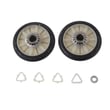
| Squealing, thumping, or rumbling | Drum support and belt path | Install a dryer repair kit 4392065 |
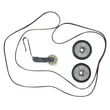
| Drum not turning but motor runs | Belt or idler pulley | Replace the belt and inspect pulleys |
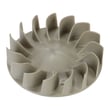
| Long dry times | Venting or blower wheel | Clear venting; inspect blower wheel |
| No heat | Heater circuit safety parts | Check power supply and heater components |
A dryer that is forced to run hot and long wears out faster and can repeatedly trip safety devices like thermal cut-offs. Keeping airflow strong and the cabinet clean reduces stress on the heating element, drive motor, and operating thermostat.
Last updated: February 2026
What is the downside to a ventless dryer?
A ventless dryer’s main downside is slower drying and more heat and humidity released into the room. For an Amana electric dryer like model NED4700YQ1, this matters because it is designed to vent outdoors using a 4-inch heavy metal exhaust system, as shown in the NED4700YQ1 installation guide.
- Longer drying times compared with traditional vented dryers.
- More room heat and humidity, which can be uncomfortable in small laundry areas.
- More maintenance; many ventless designs require regular cleaning of extra filters and (on some types) a heat exchanger.
- Often smaller capacity or more sensitivity to overloading.
- Higher upfront cost in many cases.
Your NED4700YQ1 is a vented electric dryer. The installation requirements call for exhausting outdoors and using a 4-inch heavy metal vent (rigid metal recommended; flexible metal only if accessible for cleaning).
| Feature | Ventless dryer | Vented dryer (NED4700YQ1) |
|---|---|---|
| Drying speed | Typically slower | Typically faster when venting is correct |
| Room conditions | Adds heat and humidity indoors | Sends heat and moisture outdoors |
| Maintenance focus | Filters, condenser/heat exchanger (model dependent) | Lint screen plus vent duct and hood |
| Installation need | No exterior vent | Exterior vent required |
With a vented dryer like the NED4700YQ1, proper venting is directly tied to drying performance and safe airflow. A crushed, kinked, or overly long vent run can reduce airflow, increase drying time, and increase energy use. Using the correct vent material (heavy metal, not plastic or foil) also helps prevent lint buildup and airflow restriction.
- If you cannot run an outdoor vent, ventless can be the right fit, but plan for longer cycles.
- If you already have a good outdoor vent, a vented dryer like the NED4700YQ1 is usually the better choice for speed and comfort.
- Keep vent runs short and direct with as few turns as possible.
- Avoid screws into the duct that can catch lint; use clamps.
- If drying is slow on a vented dryer, start with vent restriction checks (lint screen, duct, hood).
For more ways to improve drying performance, see dryer takes a long time to dry.
Last updated: February 2026
Who makes Amana gas dryers?
Whirlpool Corporation makes Amana-branded dryers (including gas dryer models). For your Amana dryer model NED4700YQ1, you can confirm the manufacturer details and model identification information in the NED4700YQ1 owner's manual.
- Brand on the appliance: Amana
- Manufacturer: Whirlpool Corporation
- Appliance type: Dryer (gas or electric, depending on the specific model)
- Where to verify your exact model: Model/serial tag on the cabinet opening or door area
Knowing the manufacturer helps because many Amana dryers share Whirlpool-built designs, so parts like thermostats, heating components, and drive parts are often listed under Whirlpool-style part numbering.
| What you’re doing | What to use | Why it helps |
|---|---|---|
| Ordering replacement parts | Full model number (NED4700YQ1) | Ensures correct fit and wiring style |
| Checking installation requirements | NED4700YQ1 installation guide | Confirms venting, electrical, and safety requirements |
| Troubleshooting symptoms | Dryer component names (timer, thermal fuse, door switch) | Speeds up diagnosis and part matching |
Proper venting and airflow are a big deal for performance and safety. We recommend reviewing the venting section in the NED4700YQ1 installation guide and following best practices from how to keep a dryer clean and economical.
Last updated: February 2026
Why did my Amana dryer just stop working?
If your Amana NED4700YQ1 electric dryer suddenly stopped working, the most common cause is a power or start interlock issue: a tripped breaker or blown fuse (many dryers use two), the door not fully closed, or the controls not set to an active cycle. Use the checks in the NED4700YQ1 installation guide to confirm power and start conditions.
- Make sure the dryer is plugged in and the electrical supply is on.
- Confirm the controls are set to a running/On position.
- Press Start firmly.
- Verify the door is fully closed; a failed door switch can prevent starting.
- Check both household fuses or both circuit breakers; reset by switching OFF then ON.
- If the dryer is in a cold area, do not operate it below 45°F; cycles can behave unpredictably.
| Symptom | Most likely cause | What we recommend |
|---|---|---|
| No lights, no sound | Power supply issue | Check both breakers/fuses; confirm outlet power |
| Lights on, won’t start | Door not closed or door switch issue | Re-close door; test/replace dryer door switch WP3406107 |
| Starts then stops quickly | Overheat protection or airflow restriction | Clean lint screen and venting; inspect blower housing |
| Runs but no heat | One breaker tripped (still runs on 120V) or heater circuit issue | Check both breakers/fuses; then test heater and safety devices |
Electric dryers like the NED4700YQ1 can still appear to have power even when one leg of the 240V supply is missing. That is why checking both breakers/fuses is the fastest way to solve a “stopped working” complaint and prevents unnecessary parts replacement.
If power and door closure are confirmed and the dryer still will not start, the next most common suspects are the door switch, timer, or drive motor. Use the wiring and diagnostic guidance in the NED4700YQ1 owner’s manual to pinpoint the failed component before ordering parts.
Last updated: February 2026