Owner’s manual
 View engine


How to find Craftsman mower parts?
For Craftsman model 247204280, the fastest way to get the right replacement parts is to match by the exact model and serial number from the product ID label, then confirm the item in the parts list and diagrams in the 247204280 operator’s manual. This prevents ordering a similar-looking part that will not fit.
Step 1: Get the correct ID information
Use the product ID label on the mower to record the model and serial number exactly as printed.
- Write down the full model number: 247204280
- Write down the full serial number (needed for production-run changes)
- Take a clear photo of the label for future orders
- If the label is dirty or faded, wipe it gently so all digits are readable
- Use the model number first; use the serial number to confirm the correct variation
Step 2: Match the part using diagrams and descriptions
Once you have the model and serial number, use the exploded-view diagrams and parts list to identify the exact part number for your mower’s configuration.
| What to verify | What to compare | Why it matters |
|---|---|---|
| System | Deck, drive, electrical, steering, frame | Keeps you in the right section |
| Part name | Belt, blade, switch, solenoid, pulley | Avoids ordering the wrong component |
| Specs | Length, width, hole pattern, connector style | Ensures proper fit and performance |
| Notes | “Replaces”, “used on”, serial break info | Catches mid-year design changes |
Common parts customers look up on this model
These are frequently searched items when diagnosing no-start, no-crank, or drive complaints:
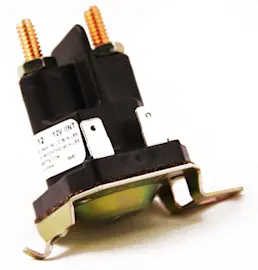
- Lawn tractor starter solenoid 725-06153a
- Lawn tractor interlock switch 725-04363
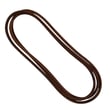
- Lawn tractor ground drive belt 954-04317A
Why it matters
Craftsman riding and zero-turn mowers can use different deck and drive setups even within the same series. Using the model and serial number plus the diagram callouts ensures you get the correct OEM replacement and restores safe operation.
Last updated: February 2026
How to look up Craftsman model number?
For Craftsman model 247204280, you can look up the model number by finding the model and serial tag on the mower, then using that exact model number when searching parts and manuals. On most Craftsman riders, the tag is on the frame under the seat or on the underside of the seat; our 247204280 operator’s manual also references using the model and serial number for service and parts.
Where to find the model and serial number tag
Check these common locations on a Craftsman rear-engine riding mower:
- On the frame directly under the seat (lift the seat to view)
- On the underside of the seat pan
- Near the rear frame rails close to the transaxle area
- On a sticker or metal plate; wipe off grass and oil to read it clearly
How to use the model number once you find it
Use the model number exactly as printed (including dots or dashes if shown) to match the correct parts diagrams.
- Search using the full model number: 247204280
- Use the serial number when ordering service or confirming production variations
- If your manual covers multiple models, match by the model number family (for example, 247.20428*)
- Keep a photo of the tag for future belt, blade, and electrical part lookups
Quick checklist: model number vs. serial number
| Item | What it does | Why you need it |
|---|---|---|
| Model number | Identifies the mower design | Ensures correct parts diagrams and assemblies |
| Serial number | Identifies the production run | Helps confirm exact fit when designs change |
Why it matters
Parts like a ground drive belt, starter solenoid, or interlock switch can vary by model family and production run. Using the exact model and serial information helps you avoid ordering a blade, belt, or electrical component that does not match your mower.
Last updated: February 2026
Is it worth rebuilding a riding mower engine?
For the Craftsman 247204280 rear-engine riding mower, rebuilding the engine is worth it only when the rest of the mower is in solid condition and the engine problem is clearly limited (for example, top-end wear). If the failure is widespread, replacement is the better value.
How we decide: rebuild vs replace
Use these checkpoints before you spend money on parts and machine work:
- Compression and smoke: low compression or heavy blue smoke often means deeper wear.
- Oil consumption: constant topping off points to rings or cylinder wear.
- Metal in oil: glitter or flakes suggest bottom-end damage.
- Starting and charging health: repeated jump-starting indicates electrical issues to fix first.
- Overall mower condition: worn transaxle, steering, or deck problems can erase rebuild value.
Quick cost and risk comparison
| Option | Typical cost range (parts + labor) | Best when | Main risk |
|---|---|---|---|
| Rebuild existing engine | Higher and variable | Damage is isolated; you do the labor | Hidden wear increases cost fast |
| Replace engine (new/reman) | Medium to high | You want predictable results | Upfront cost |
| Replace mower | Highest | Multiple major systems are worn | New setup and fitment |
If you rebuild, do these basics first
Before any teardown, we recommend following the safety and service steps in the 247204280 owner’s manual. Then:
- Disconnect the spark plug wire and secure it away from the plug.
- Verify fuel quality; old fuel causes hard-start and poor running.
- Check oil level and condition; change oil before extended testing.
- Confirm the battery and cables are healthy (jump-starting should be temporary).
Why it matters
An engine rebuild can look cheaper on paper, but labor time and “while you’re in there” parts add up quickly. If the mower also needs a drive belt, electrical repair, or drivetrain work, putting rebuild money into a replacement plan usually delivers better reliability per dollar.
Last updated: February 2026
What brand engine does Craftsman use?
Craftsman riding mowers like model 247204280 are commonly equipped with engines sourced from major small-engine manufacturers; the exact engine brand depends on the specific build and engine model installed on your unit. We recommend confirming the engine make on the engine label and cross-checking it in the 247204280 operator’s manual.
How to identify the engine brand on your mower
Look for the engine manufacturer and model on the engine itself (not the mower frame tag).
- Check the engine shroud (top cover) for a brand badge or decal
- Locate the engine ID label (often near the valve cover, blower housing, or starter)
- Write down the engine model and type/spec numbers
- Compare those numbers to the engine section in your documentation
- Use the engine model to buy the correct oil, air filter, and tune-up parts
Common engine brands used on Craftsman riders
Craftsman has used several engine suppliers across different rider series and years. For Z6000-series style riders covered by the operator manual, the mower uses a separate Engine Operator’s Manual for engine-specific maintenance (oil type, capacity, service intervals). That is the best indicator of the engine manufacturer for your exact unit.
| What you’re checking | Where to find it | Why it helps |
|---|---|---|
| Engine brand | Engine shroud/label | Confirms manufacturer (not just mower brand) |
| Engine model and spec | Engine ID tag | Ensures correct filters, plugs, belts, and service parts |
| Mower model number (247204280) | Frame tag | Ensures correct chassis, deck, and drive parts |
Why it matters
Engine brand and engine model determine the correct maintenance items (oil, air filter, spark plug) and the right troubleshooting steps. Your mower’s operator manual also notes you must check engine oil before operating, and it references the engine manual for the correct procedure.
Last updated: February 2026
What is the difference between a front engine and rear engine riding mower?
A front-engine riding mower puts the engine under the hood in front of the operator; a rear-engine riding mower places the engine behind the seat. On a Craftsman 247204280, the layout affects traction, turning feel, service access, and what attachments and deck designs are typically used.
Key differences that matter day to day
- Weight distribution and traction: Rear-engine designs keep more weight over the drive wheels, which helps grip on slopes and when the grass catcher is loaded.
- Turning and handling: Rear-engine models are often shorter and can feel more nimble; front-engine tractors tend to feel more stable at higher mowing speeds.
- Mower deck and cut quality: Front-engine tractors commonly support wider decks; rear-engine models often use mid-size decks designed for tighter spaces.
- Service access: Front-engine layouts usually make engine service (oil, air filter, spark plug) easier; rear-engine layouts can make some checks more “reach-in” from the rear.
- Noise and heat near the operator: Rear-engine mowers can put more engine noise and heat closer to the seat area.
- Towing and pushing: Many rear-drive hydrostatic units use bypass features for short-distance pushing; follow the 247204280 owner’s manual for the correct procedure and safety cautions.
Quick comparison
| Feature | Front-engine riding mower | Rear-engine riding mower |
|---|---|---|
| Engine location | In front of operator | Behind operator |
| Typical feel | More “tractor-like” | More compact, nimble |
| Traction with bagger | Good, varies by model | Often stronger due to rear weight |
| Common deck widths | Often wider | Often mid-size |
| Service access | Usually easier | Sometimes tighter |
Why it matters
Engine placement changes how the mower balances, turns, and transfers power to the drive system. That directly impacts traction on hills, turf scuffing during tight turns, and how convenient routine maintenance feels over the season.
Last updated: February 2026
What years did they make the Craftsman 247204280?
Craftsman model 247204280 falls under the Z6000 Series zero-turn riders covered by a manual dated November 28, 2017, so it was in production by at least the 2017 model-year timeframe. For the exact build year of your specific mower, use the model and serial number information shown in the 247204280 operator’s manual.
How to identify the exact year for your specific mower
We use the mower’s identification label (model and serial) to pinpoint the build date range because the same model family can span multiple seasons.
- Locate the product identification label (commonly under the seat area or on the frame)
- Write down the model number (247204280) and the serial number exactly as shown
- Compare the model family format in the manual (Z6000 Series 247.20428*) to confirm you are in the right series
- Use the serial number to determine the manufacturing date (the serial format is what ties to a specific year)
- Keep the manual handy for parts lookups and maintenance intervals
What we can say from the documentation
The operator’s manual for the Z6000 Series lists model numbers 247.20411*, 247.20428*, and 247.27775* and shows a form date of November 28, 2017.
| Item | What it tells you | What it does not tell you |
|---|---|---|
| Manual date: Nov 28, 2017 | The series was active by 2017 | The exact year your unit was built |
| Model family: 247.20428* | Your model fits the 247.20428* family | The exact start and end production years |
| Serial number | Identifies the build timeframe | Nothing unless you record it accurately |
Why it matters
Knowing the exact year helps us match the correct parts and revisions (for example, electrical safety switches, belts, and deck components) so you avoid ordering a part that fits a different production run.
Last updated: February 2026