Owner’s manual
 Error Codes



How to raise a refrigerator off the floor?
To raise a Kenmore Elite refrigerator model 79576089600 off the floor, we adjust the front leveling screws/legs to lift the cabinet. Turn the leveling screws clockwise to raise and counterclockwise to lower; keep the front slightly higher than the rear so the doors close properly (see the 79576089600 owner's manual).
Safe way to lift and level it
- Unload heavy items from the doors and lower bins to reduce weight.
- Have a helper push gently against the top front of the cabinet to take weight off the leveling screws.
- Use a screwdriver to turn the front leveling screws:
- Clockwise: raises that side
- Counterclockwise: lowers that side
- Raise the front just enough to clear the floor and stabilize the refrigerator.
- Recheck door closing; the front should be slightly higher than the rear.
Quick checks before you start
- Confirm the refrigerator is in its final position before fine leveling.
- Avoid dragging the unit; lifting/rolling prevents floor damage.
- If the floor is weak or uneven, leveling legs may not fully stop vibration.
What “raised enough” looks like
| Goal | What to look for | What to adjust |
|---|---|---|
| Stop rocking | Cabinet feels solid on the floor | Raise the low front corner |
| Improve door closing | Doors swing shut without popping open | Make front slightly higher |
| Prevent scraping | Leveling legs clear the floor when moving | Screw legs in for moving, out for final leveling |
Why it matters
Proper leveling reduces vibration and rattling, helps the doors seal, and prevents the leveling legs from scraping the floor during positioning.
Last updated: January 2026
What size is Kenmore refrigerator model 79576089600?
Kenmore Elite refrigerator model 79576089600 is a bottom-freezer design in the Kenmore 795.7608 model family. For exact exterior dimensions (width, depth, height), we use the measurements listed for your specific color and configuration in the 79576089600 owner's manual.
What “size” usually means (and what to check)
When customers ask for “size,” it typically refers to one or more of these:
- Exterior dimensions: width, depth (with and without handles), height
- Capacity: total cubic feet and split between fresh food and freezer
- Clearance needs: space behind, above, and at the sides for airflow and door swing
- Fit details: door opening clearance, hinge-side clearance, and leveling range
Typical size range for this style of refrigerator
Most Kenmore 795 bottom-freezer refrigerators are built to fit standard kitchen openings. Use this as a planning range, then confirm the exact numbers in the manual.
| Measurement | Typical range for bottom-freezer units | Why it varies |
|---|---|---|
| Width | 30 to 36 in. | cabinet design, door style |
| Height | 66 to 70 in. | hinge design, leveling legs |
| Depth | 30 to 35 in. | handle depth, door thickness |
How to measure your 79576089600 correctly
For the most accurate “will it fit” answer, we recommend measuring your actual unit and comparing to the manual specs.
- Measure width at the widest point (often the doors)
- Measure height from floor to top hinge cover (include leveling leg setting)
- Measure depth with doors closed; note whether you included the handle
- Add clearance for ventilation and for pulling the refrigerator out for service
Why it matters
Getting the correct dimensions helps prevent installation problems like doors that cannot open fully, poor airflow that affects cooling performance, and difficulty sliding the refrigerator into the cabinet opening.
Last updated: January 2026
What are the common problems with Kenmore Elite refrigerators?
Common problems on the Kenmore Elite 79576089600 bottom-mount refrigerator include warm temperatures (often airflow or control-setting related), doors that do not seal or close fully, water leaks tied to defrost drainage, and normal-to-concerning operating noises. We use the troubleshooting steps in the 79576089600 owner's manual to narrow the cause before replacing parts.
Most common symptoms and what to check first
- Not cooling or too warm: confirm temperature settings, then wait 24 hours after any adjustment before changing again.
- Freezer too warm or ice slow: check for blocked air vents and heavy door openings.
- Frost or ice buildup: look for door sealing issues and frequent door openings.
- Doors will not close completely: check leveling, food packages blocking the door, and bins or shelves out of position.
- Water puddles or dripping: check for a defrost drain issue and confirm the drain path is clear.
- Bad ice taste or odor: discard early batches after install, replace old ice, wrap foods tightly, and consider filtration.
Quick troubleshooting checklist (in order)
- Verify controls: adjust the refrigerator control first, then wait 24 hours before re-checking.
- Check airflow: move items away from vents so cold air can circulate.
- Inspect door closure: push doors firmly shut; rearrange items and reseat bins/shelves.
- Clean condenser coils: dirty coils reduce heat transfer and can cause poor cooling.
- Look for drain and moisture issues: water in the defrost drain pan can be normal during defrost, but puddles usually point to a drain problem.
- Listen to the noise type: some sounds are normal; persistent clicking, grinding, or loud fan noise usually indicates a component issue.
Parts that commonly relate to these symptoms
| Symptom | Common area | Example part for this model |
|---|---|---|
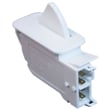
| Interior light issues, door-ajar behavior | Door switch | Refrigerator door push-button switch 6600JB1010A |
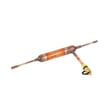
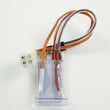
| Frost/temperature swings | Defrost sensing | Refrigerator defrost sensor assembly 6615JB2005C |
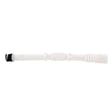
| Water under or behind unit | Drain path | Refrigerator drain tube 5251JA3003D |
| Warm temps, noise near back | Condenser airflow | Refrigerator condenser fan 4680JK1001B |
Why it matters
Cooling, defrost, and door sealing all work together. A small issue like blocked vents, dirty condenser coils, or a door that does not fully close can create bigger problems such as warm food, excess frost, and longer compressor run times.
Last updated: January 2026
Why did my bottom freezer stop working?
If your Kenmore Elite refrigerator model 79576089600 bottom freezer stopped cooling, the most common causes are a control setting that is too warm, blocked air vents that restrict airflow, or frost buildup from a defrost problem. Start with the control and airflow checks in the 79576089600 owner's manual.
Quick checks we recommend first
- Confirm the freezer is set to the normal target of 0°F (-18°C); allow 24 hours after any adjustment.
- Make sure packages are not blocking the air vents between the freezer and fresh food section.
- Check that the freezer drawer closes fully and the door gasket seals all the way around.
- Clean dust from the condenser area so the sealed system can reject heat properly.
- If you just loaded a lot of unfrozen food, use the ULTRAICE feature (boost cooling for about 24 hours).
Correct temperature guidance for this model
This model uses numbered controls (higher numbers make that compartment colder). Use the target temperatures below to guide your setting.
| Compartment | Target temperature | What to do if too warm |
|---|---|---|
| Refrigerator | 37°F (3°C) | Increase refrigerator control 1 step, wait 24 hours |
| Freezer | 0°F (-18°C) | Increase freezer control 1 step, wait 24 hours |
When it points to a defrost or airflow failure
If the freezer starts cold but warms over time, or you see heavy frost on the back wall inside the freezer, airflow is being restricted. That typically involves the defrost system (heater, sensor, or control) or the evaporator fan.
- Heavy frost behind the rear panel: defrost system issue
- Little to no airflow sound from the freezer: fan or ice blockage
- Freezer warms and icemaker slows: temperature not reaching 0°F
A common defrost-related component for this model is the refrigerator defrost sensor assembly 6615JB2005C.
Why it matters
Freezer temperature directly affects food safety and ice production. Keeping the freezer at 0°F (-18°C) and maintaining clear airflow prevents thawing, soft ice cream, and recurring frost problems.
Last updated: January 2026