 Owner’s manual


Is there a way to reset a Whirlpool duet washer?
Yes. For the Whirlpool GHW9150PW4 (Duet-style) washer, the simplest reset is to cancel the current cycle and power-cycle the washer. In many cases, pressing PAUSE/CANCEL twice clears the cycle so you can select a new cycle; see the steps in the GHW9150PW4 user manual.
Quick reset options for GHW9150PW4
- Cancel/reset the cycle: Press PAUSE/CANCEL twice.
- Power reset: Unplug the washer (or switch off the breaker) for 1 minute, then restore power.
- Restart correctly: Select a cycle, then press and hold HOLD TO START for about 1 second.
- If the door will not unlock: The washer may need to drain first; select DRAIN/SPIN.
What to do if you are seeing an error code
Your GHW9150PW4 can display codes such as FH (water inlet problem), FO2 (drain problem), or SUD (excess suds routine). A reset may clear the display temporarily, but you will usually need to correct the cause.
| Code | What it means on GHW9150PW4 | What to check first |
|---|---|---|
| FH | Water inlet problem (no or insufficient water supply) | Faucets fully open, inlet screens not clogged, hoses not kinked |
| FO2 | Drain problem | Drain hose kink/clog, standpipe height not too high |
| SUD | Suds routine activated | Use HE detergent, reduce detergent amount |
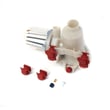
If you suspect a drain issue and the washer will not drain or unlock, inspect the drain path and consider the pump 280187 if the pump is noisy, jammed, or not moving water.
Why it matters
Resetting can clear a stuck cycle or control glitch, but repeat codes usually point to a real issue (water supply, draining, or oversudsing). Fixing the root cause helps prevent repeat shutdowns and protects the electronic control.
Last updated: January 2026
What is the most common problem with Whirlpool washer front?
For the Whirlpool GHW9150PW4 front-load washer, the most common “front” complaints we hear are water leaking at the door opening and door seal odor or residue. The model’s care and troubleshooting guidance focuses on cleaning the door seal, using HE detergent, and correcting vibration and drain issues; see the GHW9150PW4 use & care manual.
Common front-area symptoms and likely causes
- Water leaking from the front: debris on the door seal, a torn door boot, or a clamp not seated
- Musty odor at the door: moisture trapped in the seal area, detergent residue, door kept closed between loads
- Door won’t open or lock: door not fully closed, cycle not canceled, or door strike alignment
- Vibration or “walking”: washer not level, feet not locked, unbalanced load
- Drain-related issues: drain hose kinked/clogged or pump restriction (can also create noise during draining)
Quick checks we recommend first
- Inspect and wipe the door seal: pull back the gray seal and remove trapped items; clean per the manual.
- Leave the door slightly open after cycles to help the seal dry.
- Use only HE detergent; oversudsing can extend cycles and contribute to odor and drain complaints.
- Confirm the washer is level and the feet are tightened.
Parts that often address “front” leak complaints on this model
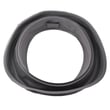
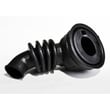
If you confirm the leak is coming from the rubber seal around the door opening, the replacement part is the washer door boot WP8182119. If the boot is fine, also inspect the retaining clamps and hose connections for proper fit.
| Symptom at the front | What to inspect first | When a part is likely needed |
|---|---|---|
| Water on floor near door | Door seal lip, trapped items, boot tears | Boot is torn or deformed |
| Odor at door opening | Seal folds, detergent residue, ventilation | Cleaning and ventilation do not help |
| Door won’t latch | Door strike alignment, door fully closed | Strike or lock components are worn |
Why it matters
Front leaks and seal odor can worsen quickly if moisture and residue build up. Addressing cleaning, detergent use, and seal condition early helps prevent repeat leaks, odors, and cycle interruptions.
Last updated: January 2026
What size washer was the Whirlpool duet?
For Whirlpool Duet washer model GHW9150PW4, the manual confirms it’s a full-size front-load washer and provides cabinet dimensions for fit and installation. The manual text we have does not clearly label a single “capacity” (cu. ft.) value for this exact model.
What “size” can mean for GHW9150PW4
When customers ask about Duet “size,” it usually refers to one of these:
- Capacity (cu. ft.): how much the drum holds
- Cabinet dimensions: outside measurements for closets, alcoves, and undercounter installs
- Full-size vs. compact: overall footprint and typical load volume
- Pedestal/stacking fit: added height and required clearances
For this model, the most reliable model-specific “size” details we can confirm are the cabinet dimensions shown in the GHW9150PW4 washer manual.
Model-specific dimensions we can confirm
The manual’s “Washer Dimensions” section shows these measurements:
| Dimension (as shown in manual) | Measurement |
|---|---|
| Width | 27 in. |
| Height | 38 in. |
| Depth (front-to-back) | 50 1/2 in. |
Note: The manual excerpt presents these numbers together; it does not explicitly label which figure is depth vs. door-open clearance in the text we have. If you’re planning a tight install, use the full dimension diagram and spacing guidance in the manual.
If you need capacity (cu. ft.)
Because capacity isn’t stated in the model-specific text we have for GHW9150PW4, use these practical checks:
- Look for a capacity listing on the model/serial tag or product label
- Compare your exact model number (GHW9150PW4) to Whirlpool Duet spec sheets
- Use the manual’s loading guidance to judge whether it meets your needs
Why it matters
Capacity affects how many towels or bedding items you can wash per load; cabinet dimensions determine whether the washer fits in your laundry space and whether a pedestal or stacking setup will work.
Last updated: January 2026





