Owner’s manual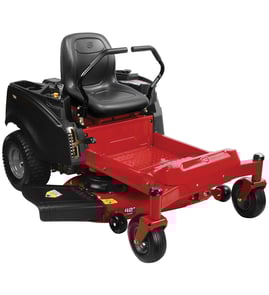



What are common problems with Craftsman riding mowers?
Common problems on the Craftsman riding lawn mower model 247270200 are no-start conditions (battery, fuse, ignition and safety interlock switches), poor running from fuel or ignition maintenance issues, and drive or deck problems caused by worn belts, pulleys, or brake components. Use the owner's manual troubleshooting and maintenance sections to narrow it down fast.
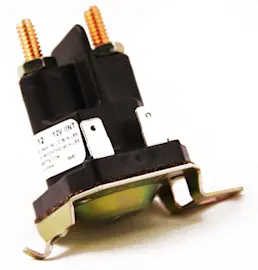
- Engine won’t crank: blown fuse, bad seat switch, weak battery connections, faulty solenoid
- Cranks but won’t start: stale fuel, dirty air filter, fouled spark plug, fuel delivery restriction
- Runs rough or lacks power: clogged air cleaner, old fuel, spark plug wear, carburetor varnish
- Mower won’t move or slips: worn or stretched ground drive belt, idler pulley wear, linkage out of adjustment
- Deck won’t engage or cuts uneven: belt routing issue, worn idlers, loose deck linkage, dull blade
- Park on level ground, set the parking brake, and remove the key.
- Confirm the PTO or blade lever is disengaged and you are seated (interlock logic).
- Check fuel freshness and oil level; replace old fuel if it smells “varnished.”
- Inspect belts and pulleys for glazing, cracking, or wobble.
- Look for loose, corroded, or damaged wiring at the battery, solenoid, and switches.
These are frequent wear items for drive and control complaints on riding mowers like the 247270200:
| Symptom | Common wear item | Example part on this model page |
|---|---|---|
| Slipping or no drive | Ground drive belt | Lawn mower v-belt 754-0754 |
| Squeal, poor belt tension | Idler pulley | Idler pulley 756-0981A |
| Weak stopping or dragging | Brake components | Brake assembly 661-0006 |
| Steering play | Steering wheel or related hardware | Toro lawn tractor steering wheel 631-04028 |
Catching a worn belt, weak interlock switch, or dragging brake early prevents bigger failures like overheated pulleys, damaged bearings, and premature belt breakage. The maintenance schedule in the manual also helps keep starting and cutting performance consistent.
Last updated: February 2026
What brand engine does Craftsman use?
For Craftsman rear-engine riding mower model 247270200, the engine is a Briggs & Stratton. The model’s documentation also lists an engine identifier (198707-0141) for this mower; use that identifier when matching engine-specific maintenance and repair parts.
Use these checks to make sure you are buying the right parts for the engine versus the mower chassis:
- Read the engine shroud or valve cover label; it should say Briggs & Stratton
- Locate the engine ID tag and note the model/type/code numbers
- Confirm the mower model on the frame tag is 247270200 (sometimes printed as 247.27020)
- Use the engine ID for tune-up items (spark plug, air filter, carburetor parts)
- Use the mower model for chassis parts (belts, cables, brake parts)
The 247270200 owner's manual includes these engine-related callouts that help with parts matching.
| What you need | Where it’s used | Example from the manual |
|---|---|---|
| Engine brand | Engine service and parts lookup | Briggs & Stratton |
| Engine identifier | Engine parts breakdowns | 198707-0141 |
| Spark plug reference | Tune-up | P/N 802592 |
| Fuel type | Operation | Unleaded regular |
Craftsman riding mowers are built across multiple years and configurations. Confirming the Briggs & Stratton brand and using the engine ID from the manual prevents mismatched ignition and fuel-system parts and keeps routine maintenance on schedule.
Last updated: February 2026
What is the advantage of a rear engine mower?
A rear-engine riding mower like Craftsman model 247270200 puts the engine weight over the drive wheels, which improves traction on typical residential lawns and helps the mower feel stable and easy to maneuver in tighter areas. It is a practical choice for routine mowing up to about 10 inches of grass.
- Better traction: rear weight bias helps the drive wheels grip, especially on slightly uneven turf.
- Good maneuverability: compact layout makes it easier to steer around trees, beds, and fences.
- Simple, homeowner-friendly design: fewer “tractor-style” features to manage for basic mowing.
- Stable feel on flat lawns: balanced stance for normal residential cutting.
- Convenient access for routine checks: the manual shows common service points like the battery under the hood.
| What you are doing | Rear-engine mower benefit | What to watch for |
|---|---|---|
| Starting and driving off | Traction helps you move smoothly | Always start in neutral with brake fully depressed (per the manual) |
| Cutting typical lawn grass | Handles normal residential mowing well | Avoid mowing unusually tall, dry grass or dry leaves (fire risk) |
| Steering around obstacles | Shorter overall feel, easier turns | Check overhead clearance under branches and wires |
For most homeowners, the biggest “advantage” is time and control: you get a riding mower that is easier to handle than a larger lawn tractor, while still giving you the traction and stability needed for consistent cutting on a standard yard.
- Mow when grass is dry and at a normal height; avoid tall, dry grass and leaf piles.
- Keep the deck properly leveled and tire pressure consistent (the manual notes 12 psi as the recommended tire pressure).
- Let the engine cool at least two minutes before refueling.
- Keep the engine and deck clear of clippings and debris.
- Follow the operating and safety steps in the owner's manual.
Last updated: February 2026
What year is a Craftsman 247270200 riding mower?
The Craftsman riding mower model 247270200 is identified in the documentation as model 247.27020, but the manual does not list a single build year. The most accurate way to determine the year is to use the mower’s model/serial tag and decode the manufacturing date shown there (see the 247270200 owner's manual).
On most Craftsman rear-engine riding mowers, the model/serial tag is located under the seat or on the rear frame near the seat pan. Once you find it, record everything exactly as printed.
- Lift the seat and look for a white or silver sticker/plate
- Write down the serial number and any date code
- Check for a printed manufacture date (month/day/year) or a coded date string
- If the label is dirty, wipe it gently so all digits are readable
- Match the model format: 247.27020 corresponds to 247270200
The parts list in the manual confirms the platform and component families used on this mower (for example, steering wheel and fasteners), which helps ensure you are looking at the correct model tag and ordering the right parts.
| What you have | What it’s used for | Why it matters |
|---|---|---|
| Model number (247270200) | Identifies the mower family | Ensures correct diagrams and parts match |
| Serial number | Identifies your exact production run | Needed to pinpoint the build year |
| Engine model/type code | Identifies the engine’s build info | Helps date the engine and match engine parts |
Even without the exact year, we can still match parts correctly by using the model number and the correct diagram callouts.
- Use the model number 247270200 to select parts by diagram location
- Compare your hardware to the parts list (example: mtd lawn tractor screw 710-0599)
- For deck and drive issues, match belt routing and pulley style before ordering
- If steering components differ, verify the steering wheel style and column parts first
Craftsman model numbers can span multiple production runs with small changes (cables, pulleys, brackets). Using the model/serial tag is the fastest way to lock in the correct configuration and avoid returns.
Last updated: February 2026