Owner’s manual


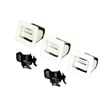
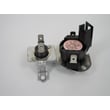
How do I know if my Kenmore dryer thermal fuse is blown?
If your Kenmore Elite dryer model 11087081601 won’t start or it runs but won’t heat, a blown thermal fuse is a top suspect. The sure way to confirm is a continuity test with a multimeter after unplugging the dryer; a blown fuse shows no continuity.
Common symptoms of a blown thermal fuse
- Dryer will not start (no motor run)
- Dryer tumbles but produces no heat
- Cycle ends early or seems to run with weak airflow
- Burning smell or repeated overheating symptoms (often caused by a clogged vent)
How to test the thermal fuse (quick, accurate check)
- Unplug the dryer (or switch off the breaker) before opening any panels.
- Access the fuse location shown in the 11087081601 owner’s manual.
- Remove at least one wire from the fuse terminal so you are not reading through the circuit.
- Set your multimeter to continuity (or lowest ohms scale).
- Touch a probe to each fuse terminal.
What the meter reading means
| Meter result | What it means | What to do next |
|---|---|---|
| Beep or near 0 ohms | Fuse is good | Check airflow, thermostats, heater circuit |
| No beep or OL/infinite | Fuse is blown | Replace the fuse and fix the overheating cause |
Why the fuse blows (and what to fix so it doesn’t happen again)
A thermal fuse usually opens because the dryer overheated. Before running the dryer with the new fuse, we recommend:
- Clean the lint screen and confirm it seats correctly
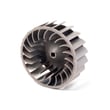
- Inspect and clean the blower housing; a damaged dryer blower wheel WP697772 can reduce airflow
- Check the vent duct for kinks, crushing, or heavy lint buildup
- Confirm the outside vent hood opens freely
- Avoid long runs of flexible venting; use rigid or semi-rigid where possible
Why it matters
Replacing a thermal fuse without correcting airflow problems often leads to another blown fuse, longer dry times, and overheating that can damage heating and temperature-control parts.
Last updated: February 2026
How to hard reset a Kenmore dryer?
For Kenmore Elite dryer model 11087081601, a hard reset is a power reset: unplug the dryer (or switch the breaker off) for about 1 minute, then restore power and try a cycle again. If the control is still acting up, we follow the control-panel reset steps in the 11087081601 owner's manual.
Hard reset steps (safe, works for most Kenmore dryers)
- Turn the dryer OFF.
- Unplug the power cord (or turn the dryer breaker OFF).
- Wait 60 seconds.
- Restore power.
- Open and close the door once, then select a cycle and press Start.
- If the dryer will not start, confirm the door is fully latched.
If the dryer still will not run or heat
A reset clears many temporary control glitches, but it will not fix airflow restrictions or failed heating components.
- Clean the lint screen and confirm strong airflow at the outside vent hood.
- Check for a crushed, kinked, or excessively long vent run.
- If the drum turns but there is no heat, common suspects are the heating circuit parts such as the dryer heating element WP8544771 and the temperature sensor.
- If the dryer shuts down mid-cycle, overheating from poor venting can trip safety devices.
Quick symptom guide
| What you see | What a reset helps | What to check next |
|---|---|---|
| Buttons unresponsive | Control glitch | Power cycle, then try a different cycle |
| Starts then stops | Temporary fault | Venting, lint buildup, overheating |
| Runs but no heat | Rarely | Heating element, thermostats, thermistor |
| Won’t start at all | Sometimes | Door latch, power supply, start circuit |
Why it matters
Resetting is the fastest way to rule out a temporary electronic lockup. If the dryer is overheating because of lint or a blocked exhaust duct, the dryer can shut down to protect the heater and wiring, so airflow checks are just as important as the reset.
Last updated: February 2026
How to unlock Control Lock on Kenmore Elite dryer?
To unlock Control Lock on your Kenmore Elite dryer model 11087081601, press and hold the Control Lock button for about 5 seconds until the lock indicator turns off. If it does not respond, restore power for 1 minute and try again using the same button.
Quick steps to unlock (and relock)
- Press Power/Cancel once to wake the control (if the panel is dark).
- Press and hold Control Lock for 5 seconds.
- Watch for the Control Lock light/icon to turn off.
- To relock, press and hold Control Lock again for 5 seconds.
- If the dryer beeps but stays locked, unplug the dryer (or switch the breaker off) for 1 minute, then retry.
What to check if it still will not unlock
Control Lock is a control-panel feature, so the fix is usually a setting or power reset, not a heating or drum issue.
| Symptom | Most likely cause | What we recommend |
|---|---|---|
| Lock light stays on | Wrong button or not held long enough | Hold Control Lock a full 5 seconds |
| No response from any buttons | Control not powered or control glitch | Power reset for 1 minute, then retry |
| Buttons work but lock will not clear | Stuck key or control issue | Inspect for a physically stuck button; follow the control panel steps in the 11087081601 owner’s manual |
Why it matters
Control Lock prevents accidental cycle changes and helps keep kids from starting the dryer. If it is left on, the dryer can appear “dead” even though power is present and the door is closed.
Last updated: February 2026
What are common problems with Kenmore dryers?
Common problems we see on Kenmore dryers like model 11087081601 include no heat, long dry times, the drum not turning, and loud squealing or thumping. Most of these issues trace back to restricted airflow (lint buildup) or normal wear on drive and heating components; check the 11087081601 owner's manual for cycle and safety guidance.
Most common symptoms and likely causes
- Dryer won’t heat: failed heating circuit parts, or airflow so restricted the dryer overheats and shuts heat down
- Takes too long to dry: clogged lint screen, crushed/blocked vent, lint buildup in the exhaust ducting
- Drum won’t turn: worn belt system parts, seized rollers, or a failing motor
- Loud noise (squeal, rumble, thump): worn drum support rollers, idler pulley wear, or blower wheel damage
- Door won’t stay closed: worn latch/catch hardware
Parts that commonly fix these problems (for this model)
If your symptom matches, these are frequently replaced on Kenmore Elite 11087081601 dryers:
| Symptom | Common part to check | Example part for this model |
|---|---|---|
| No heat | Heating element, temperature sensing | Dryer heating element WP8544771, dryer thermistor WP8577274 |
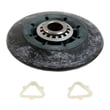
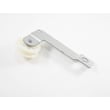
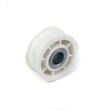
| Squealing/rumbling | Rollers and idler pulley | Support WPW10314173, dryer idler pulley 279640 |
| Poor airflow/noisy airflow | Blower wheel, lint ducting | Dryer blower wheel WP697772 |
Quick checks we recommend before replacing parts
- Clean the lint screen fully (wash off fabric softener residue if present)
- Confirm strong airflow at the outside vent hood while the dryer runs
- Inspect the vent path for kinks, crushing, or long runs with many elbows
- Try a timed cycle with a higher temperature setting to compare performance
- If the dryer is noisy, stop it and rotate the drum by hand to feel for rough spots
Why it matters
Airflow problems can cause long dry times and overheating, which can shorten the life of heating and safety components. Catching worn rollers or an idler pulley early also helps prevent belt damage and drum wear.
Last updated: February 2026
What are the codes for Kenmore Elite dryer?
Kenmore Elite dryer model 11087081601 commonly displays codes like PF (power failure) and F:01, F:02, F:20, F:22, F:23, F:24, F:25 to point you toward a power, control, keypad, heater relay, or thermistor-related problem. For model-specific reset steps and diagnostics, use the 11087081601 owner's manual.
Common Kenmore Elite dryer codes and what they mean
- PF: Power failure (outage, loose plug, tripped breaker)
- F:01: Main electronic control board problem
- F:02: Keypad or user interface problem
- F:20: Heater relay problem (electric heat circuit control)
- F:22 / F:23: Outlet thermistor problem (temperature sensing at exhaust)
- F:24 / F:25: Inlet thermistor problem (temperature sensing at intake)
What to do first (safe, high-success checks)
- Clear the code: Unplug the dryer (or switch off the breaker) for 2 minutes, then restore power.
- Fix power issues (PF):
- Reset the house breaker (electric dryers typically use a 2-pole breaker)
- Confirm the cord is fully seated in the outlet
- Avoid extension cords
- Improve airflow (helps thermistor and heating-related codes):
- Clean the lint screen
- Check the vent hose for kinks or crushing
- Make sure the outside vent hood opens freely
Parts that often relate to these codes (for this model)
If troubleshooting points to a temperature-sensing or heating issue, these model-matched parts are commonly involved:
| Symptom or code family | What it usually points to | Model-matched part example |
|---|---|---|
| F:22, F:23, F:24, F:25 | Temperature sensing out of range | Dryer thermistor WP8577274 |
| F:20, no heat, overheating | Heating circuit or airflow restriction | Dryer heating element WP8544771 |
| Long dry times, weak airflow | Lint buildup or air movement issue | Dryer blower wheel WP697772 |
Why it matters
These codes are designed to prevent poor drying performance and overheating. Addressing power stability and airflow first often resolves PF and reduces repeat thermistor or heating-related errors.
For a broader list of Kenmore Elite code definitions and troubleshooting paths, use Kenmore elite dryer error codes.
Last updated: February 2026
What size is a Kenmore Model 11087081601 dryer?
Kenmore Elite dryer model 11087081601 is a full-size 27-inch class dryer. Plan on an exterior footprint of about 27 inches wide, around 29 inches deep, and about 38 to 43 inches tall (height changes with leveling legs and top console style). For the exact cabinet dimensions and required clearances, use the 11087081601 owner's manual.
Typical exterior size and what changes it
These are the measurements that most affect fit in a laundry alcove:
- Width: 27 inches (standard full-size cabinet)
- Depth: about 29 inches; vent elbow and cord can add space behind
- Height: about 38 to 43 inches; leveling legs and floor slope change final height
- Front clearance: door swing and handle need extra room
- Rear clearance: depends on vent routing and whether the duct is rigid or semi-rigid
How we recommend measuring (so it fits the first time)
Measure your actual dryer and the space, then compare:
- Measure width at the widest cabinet point.
- Measure depth with the door closed; do not include the open door.
- Measure height from floor to the top; note how far the leveling legs are extended.
- Add room for the exhaust duct so it is not crushed.
- Confirm you can still access and remove the lint screen.
Clearance planning guide
| Area | What to allow | Why it matters |
|---|---|---|
| Sides | 0 to 1 inch each side | Prevents rubbing; improves service access |
| Rear | 4 to 6 inches typical | Protects venting and power cord |
| Front | Full door swing | Loading and unloading laundry |
Why it matters
Correct sizing and clearance helps prevent restricted airflow that causes long dry times and overheating. It also makes common service tasks, such as replacing a worn dryer blower wheel WP697772, much easier.
Last updated: February 2026
Where is the model number on a Kenmore Elite dryer?
On Kenmore Elite dryer model 11087081601, the model number is printed on the rating label. You’ll usually find it on the door opening (cabinet frame) when you open the dryer door; some units also place it on the back near the top.
Where to look first (fastest checks)
- Open the dryer door and look around the door opening on the cabinet frame.
- Check the inside edge of the door itself.
- Look on the rear panel near the top of the dryer.
- If the label is worn, use a flashlight and look for faint stamped or printed characters.
What the label looks like
Most Kenmore dryers use a rectangular sticker or plate that includes:
- Model number (for example, 11087081601)
- Serial number
- Electrical or gas information (voltage, amps, or BTU)
- Manufacturer details
Use the location diagrams and identification notes in the 11087081601 owner's manual to match what you see on your dryer.
Quick reference table
| Location | How to access | Most common? |
|---|---|---|
| Door opening on cabinet frame | Open door, inspect frame perimeter | Yes |
| Inside edge of dryer door | Open door, inspect door edge | Common |
| Back of dryer near top | Pull dryer forward, inspect rear panel | Sometimes |
Why it matters
We use the exact model number to match the correct Kenmore Elite dryer parts (like a heating element, thermistor, or idler pulley) because similar-looking dryers can use different components and wiring.
Last updated: February 2026
Why is my Kenmore Elite dryer not tumbling?
If your Kenmore Elite dryer model 11087081601 powers on but will not tumble, the most common causes are a broken drive belt, a seized drum support roller, a failed idler pulley, or a motor issue. Start with simple checks (door fully closed, cycle selection), then inspect the belt-drive components.
Quick checks we recommend first
- Confirm the door closes firmly and the latch catches; a dryer will not run if the door switch is not made.
- Try a Timed Dry cycle (not an automatic sensor cycle) to rule out a control setting issue.
- Unplug the dryer for 2 minutes, then retry.
- If you hear a hum but the drum does not move, suspect a jammed drum, roller, or motor.
- If the dryer starts then stops quickly, suspect belt or idler problems.
Parts that commonly stop tumbling on this model
These are frequent tumble-related wear items for Kenmore 110-style dryers like 11087081601:
| Symptom | Most likely cause | What you typically find |
|---|---|---|
| Motor runs, drum does not move | Broken/slipped belt or idler failure | Belt off the drum, idler not tensioning |
| Loud squeal or thump, then no tumble | Worn roller(s) | Flat spots, wobble, seized roller |
| Humming, drum hard to turn by hand | Jammed roller, blower wheel, or motor | Drum binds, roller does not spin freely |
| No motor sound at all | Door switch, thermal cutout, or motor | No response when Start is pressed |
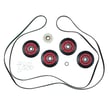
If you are hearing squealing, thumping, or grinding, we typically replace the wear items as a set using the dryer repair kit 4392067. If the drum is hard to rotate, check the support WPW10314173 rollers and the dryer idler pulley 279640 for binding.
Why it matters
A dryer that will not tumble often has a belt-drive problem. Continuing to press Start can overheat the motor or damage the belt path, turning a simple roller or idler repair into a bigger breakdown.
Safety and service notes
- Unplug the dryer before removing panels or reaching inside.
- If you smell burning or see scorching, stop using the dryer until the cause is corrected.
- Use the 11087081601 owner's manual for model-specific access steps and cycle guidance.
Last updated: February 2026