Owner’s manual




How to do a hard reset on a Kenmore washer?
For the Kenmore Elite washer model 79640518900, a “hard reset” is a simple power reset: turn the washer off, unplug it (or switch the breaker off) for about 1 minute, then restore power and press POWER. This clears many control glitches and lets you restart a cycle.
Hard reset steps (power reset)
- Press POWER to turn the washer off.
- Unplug the power cord (or turn the circuit breaker off).
- Wait 60 seconds.
- Plug the washer back in (or turn the breaker on).
- Press POWER, reselect your cycle, then press START/PAUSE.
If the washer was mid-cycle, remember that pressing POWER cancels the cycle and the settings are lost; the door may stay locked briefly if the water level or temperature is high.
If it still will not start after the reset
These checks solve the most common “dead” or “won’t start” complaints on this Kenmore front-load platform:
- Confirm the plug is fully seated in a grounded 120-VAC, 60-Hz outlet.
- Check the house breaker or fuse; reset the breaker if it tripped.
- Close the door firmly, then press START/PAUSE (the washer will not run unless the door locks).
- If the control shuts off, reselect the cycle and press START/PAUSE within 4 minutes.
- If the tub is full of water and the door stays locked, use the drain/spin method described in the 79640518900 owner's manual.
What a “reset” can and cannot fix
| Symptom | Reset helps most when | Likely next step if it returns |
|---|---|---|
| Display frozen or buttons unresponsive | Control logic glitch after a pause or power flicker | Check power supply and retry cycle selection |
| Cycle will not start | Door not fully closed or timing out | Verify door lock operation; inspect latch |
| Won’t drain | Temporary control error | Clean the pump filter; check drain path |
Why it matters
A power reset is the safest first step because it restores the control to a known state without changing any mechanical adjustments. If the issue is actually a door-lock or drain problem, the reset helps you confirm it quickly so you can move to the right repair.
Last updated: February 2026
How to force a Kenmore Elite washer to drain?
To force-drain a Kenmore Elite washer model 79640518900, we use the built-in Drain & Spin method: press POWER, choose a SPIN SPEED setting (or NO SPIN for drain-only), then press START/PAUSE to pump the water out. See the exact button sequence in the 79640518900 owner's manual.
Fast ways to drain (from the control panel)
- Press POWER to turn the washer on.
- Press SPIN SPEED to pick a spin speed.
- For drain only, select NO SPIN.
- Press START/PAUSE; the washer drains, then tumbles and may spin (unless NO SPIN is selected).
- If the door will not unlock because the water level is too high, use the same POWER + SPIN SPEED + START/PAUSE drain method.
If it still will not drain
These checks fix most “won’t drain” situations on front-load washers:
- Make sure the drain hose is not crushed or kinked.
- Confirm the standpipe or laundry tub drain is not backing up.
- Verify the drain hose is installed at a proper height and not shoved too far into the standpipe.
- Avoid over-extending the drain hose; long extensions can cause poor draining.
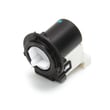
- If you suspect a pump issue, inspect and replace the drain pump motor (4681EA2001T) - washer part by lg electronics 4681EA2001T if it is not running or is seized.
Drain hose setup limits (quick reference)
| Item to check | Typical target | What happens if wrong |
|---|---|---|
| Max hose end height | Up to 96 in. | Poor draining or siphoning issues |
| Standpipe insertion depth | About 8 to 12 in. | Slow drain, overflow risk |
| Hose past elbow bracket | No more than 4 in. | Drain problems and washer odor risk |
Why it matters
Forcing a drain the correct way protects the door lock, prevents water spills, and helps avoid repeat drain errors caused by hose routing, clogs, or a failing drain pump.
Last updated: February 2026
What is the capacity of the Kenmore front load washer model 79640518900?
The Kenmore Elite washer model 79640518900 is an ultra-large capacity front-load washer; its exact cubic-foot capacity varies by version, so we recommend confirming the listed capacity in the 79640518900 owner's manual for your specific unit.
How to confirm the exact capacity for your washer
Capacity is typically shown in the specifications section of the manual or on the product identification information.
- Check the specifications pages in the 79640518900 owner's manual
- Verify you are using the full model number 79640518900 (not a partial 796 prefix)
- If you have a serial number label inside the door opening, record it for reference
- Compare your washer’s dimensions and features to the manual’s “key parts and components” section
What “capacity” means in real laundry loads
Capacity is the drum volume rating (cubic feet). In practical terms, higher capacity helps you wash bulky items (comforters, towels) with better turnover and fewer loads.
| Load type | What to expect in an ultra-large front-load washer | Tip |
|---|---|---|
| Everyday mixed load | Fewer loads per week | Do not pack items tightly |
| Towels/denim | Better tumbling than overfilled loads | Use the correct cycle and spin |
| Bulky items | More room for comforters | Leave space at the top of the drum |
Why it matters
Using the correct capacity helps prevent overloading, which reduces vibration, improves cleaning, and can help protect key components like the drain system and door lock.
If your washer struggles to drain after heavy loads, a restricted filter or a weak pump can be involved; the washer drain pump filter 383EER2001A and drain pump motor (4681EA2001T) - washer part by lg electronics 4681EA2001T are common related parts for drain performance issues.
Last updated: February 2026
What is the life expectancy of a Kenmore washing machine?
A Kenmore washer typically lasts 10 to 15 years with normal household use and routine care. For the Kenmore Elite 79640518900, following the cleaning and maintenance steps in the 79640518900 owner's manual helps prevent odor, leaks, and drain problems that shorten washer life.
Typical lifespan and what affects it
The biggest drivers of washer life are load size, detergent use, and how well the machine is kept clean and draining properly.
- Load habits: frequent overloading and unbalanced loads increase wear on bearings, shocks, and the drive system
- Moisture control: leaving damp items inside can lead to odor and residue buildup
- Cleaning routine: wiping the door seal and glass helps maintain a watertight seal
- Water quality: mineral buildup can reduce performance over time
- Drain health: keeping the drain path clear reduces strain on the pump
Maintenance that extends washer life (high impact)
We recommend building these into your routine because they directly reduce common failure causes.
| Task | How often | Why it helps |
|---|---|---|
| Wipe door opening, seal, and glass | Weekly | Prevents residue and helps maintain a good seal |
| Remove laundry promptly | Every load | Reduces odor, wrinkling, and moisture-related buildup |
| Clean drain pump filter | Monthly or when draining slows | Prevents clogs that overwork the drain pump |
| Clean water inlet filters | Every 6 to 12 months | Helps maintain fill speed and reduces valve issues |
If you’re already seeing slow draining or a “won’t drain” symptom, inspecting the drain pump filter and the pump itself is a practical next step; the washer drain pump filter 383EER2001A and the drain pump motor (4681EA2001T) - washer part by lg electronics 4681EA2001T are common related parts for this model.
Signs your washer is nearing end of life
- Loud rumbling or grinding during spin (often tub bearing related)
- Repeated leaking at the door area even after cleaning the seal
- Frequent drain errors or repeated slow-drain symptoms
- Excessive vibration that persists after leveling and load balancing
Why it matters
A washer that is kept clean, drains freely, and runs balanced loads puts less stress on high-wear components (pump, bearings, shocks, and motor system). That directly translates into fewer breakdowns and a longer service life.
Last updated: February 2026
What model is my Kenmore Elite washer?
Your Kenmore Elite washer’s model number is printed on the identification plate; on model 79640518900, it’s located inside the washer door. Once you find that tag, match the full number exactly (all digits) when ordering parts or looking up troubleshooting steps in the 79640518900 owner's manual.
Where to look for the model number tag
Check these common locations on Kenmore front-load washers:
- Inside the door opening on the cabinet front (door jamb area)
- On the inner edge of the door itself
- Behind the door, near the latch area
- Along the front frame just inside the opening
What to write down (and why)
We recommend recording the information exactly as shown on the tag:
- Model number (example: 79640518900)
- Serial number
- Date of purchase (if available)
Why it matters
The model number determines the correct Kenmore and LG-built component matches (for example, a door lock, drain pump, or water inlet valve). Using the full model number prevents ordering a similar-looking part that will not fit.
Quick check: model number vs. serial number
| Item on the tag | What it’s used for | Use it to order parts? |
|---|---|---|
| Model number | Identifies the exact washer design and parts list | Yes |
| Serial number | Identifies your specific unit’s production run | Sometimes (service history) |
If you’re ordering a common repair part
Once you confirm your model number, match parts by the exact ID. For example, if your washer is not draining and diagnostics point to the pump, the drain pump motor (4681EA2001T) - washer part by lg electronics 4681EA2001T is a common fit for this model.
Last updated: February 2026
When was Kenmore Elite made?
Kenmore Elite is a long-running premium Kenmore product line, so it was made across many years rather than in a single year. For your Kenmore Elite washer model 79640518900, the most accurate way to pin down when your specific unit was made is to use the model and serial information shown in the 79640518900 owner's manual.
What “Kenmore Elite” means (and what it does not)
Kenmore Elite is a branding tier used on multiple appliance types (including washers), and production spans multiple generations.
- It is not a single model or a single production year
- Different Kenmore Elite washers were made in different years
- Your exact manufacture date is tied to your washer’s serial number
- The model and serial tag is typically located inside the washer door
How to find the manufacture date for model 79640518900
Use your washer’s identification plate information to determine the build date.
- Open the washer door.
- Locate the identification plate inside the door opening.
- Write down the model number (79640518900) and the serial number.
- Use the serial number format guidance in the 79640518900 owner's manual to interpret the date code (or provide it to a service professional for decoding).
Where to look
| Item | Where you’ll find it | Why it matters |
|---|---|---|
| Model number | Identification plate inside the washer door | Confirms exact product version |
| Serial number | Same identification plate | Encodes production timing |
| Purchase date | Receipt or records | Helps estimate age if serial decoding is unclear |
Why it matters
Knowing the approximate manufacture date helps us match the right Kenmore washer parts, confirm compatibility for items like a door lock assembly or drain pump motor, and narrow troubleshooting steps for issues such as draining, filling, or door locking.
Last updated: February 2026
Why is my Kenmore Elite washer leaking from the bottom?
A bottom leak on Kenmore Elite model 79640518900 almost always comes from the drain path (pump, filter, or hoses) or the door boot area letting water run down the cabinet. We focus first on the drain pump filter, tub-to-pump hose, and drain pump seals, then confirm the washer is installed correctly per the 79640518900 owner's manual.
Quick checks that find most bottom leaks
- Unplug the washer; turn off both water supply taps.
- Look for water trails: front-center (pump/filter area) vs. front-left/right (door boot) vs. rear (fill hoses/drain hose).
- Check the drain hose for kinks or pinching behind the washer (a restriction can force water out at weak points).
- Clean and reseat the pump filter and its O-ring; a loose filter cap commonly drips at the bottom front.
- Inspect the tub-to-pump hose for cracks, pinholes, or loose clamps.
Parts that commonly cause a bottom leak on this model
If you see dripping during drain or spin, these are the most likely culprits:
| Where you see water | Most likely cause | What to do next |
|---|---|---|
| Bottom front, during drain/spin | Pump/filter area | Clean filter, check cap seal; inspect pump housing |
| Bottom front, steady drip | Tub-to-pump hose | Check for splits and clamp tightness |
| Bottom front, louder drain noise + leak | Drain pump | Replace the pump motor assembly |
| Water runs down from door opening | Door boot or clamp | Inspect boot for tears; check clamp seating |
Helpful model-matched parts to consider:
- Washer drain pump filter 383EER2001A (clogged or not sealing)
- Washer tub-to-pump hose 4738ER1002A (cracked or loose)
- Drain pump motor (4681EA2001T) - washer part by lg electronics 4681EA2001T (leaking at pump body or seal)
- Lg washer door boot MDS47123602 (torn boot can send water down the front)
Why it matters
A small leak from the bottom can quickly damage the drain pump, wiring, and floor. Fixing a restriction (kinked hose or clogged filter) also prevents slow-drain symptoms the manual calls out, such as water draining slowly or not at all.
Safety and install notes
- Keep the washer out of freezing conditions; frozen water in hoses or the pump can cause leak damage.
- If the washer was recently moved, confirm shipping bolts were removed before operation (excess vibration can loosen clamps and connections).
Last updated: February 2026