Installation guide
 Owner’s manual
 Error Codes


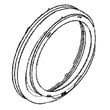
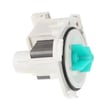
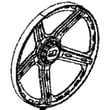
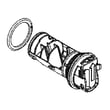


Does my Kenmore top load washer have a filter?
Yes. The Kenmore washer model 41741912510 uses a pump filter cleanout (often called a drain pump filter) that traps lint, coins, and small items before they reach the drain pump. Cleaning it helps prevent “check drain filter” messages and slow or no draining. See the 41741912510 owner's manual.
On this Kenmore design, the filter is part of the drain pump system and is meant to be cleaned periodically.
- Catches debris (coins, hair pins, lint) before it jams the pump
- Helps prevent slow drain, standing water, and drain-related error messages
- Needs cleaning more often if you wash pet bedding, rugs, or heavily soiled loads
- Can hold water even after the cycle ends, so plan for a small spill
Follow the steps in the 41741912510 owner's manual for your exact access method. In general, we use this safe approach:
- Unplug the washer.
- Place towels and a shallow pan near the lower front area.
- Open the access area for the pump filter cleanout.
- Slowly loosen the filter cap to let water drain into the pan.
- Remove the filter, clear debris, rinse it, then reinstall it snugly.
- Run a quick rinse and drain to confirm normal draining.
| Symptom | Most common cause | Next step |
|---|---|---|
| Slow or no drain | Pump filter clogged | Clean the pump filter cleanout |
| “Check drain filter” message | Debris in filter or drain path | Clean filter; check drain hose for kinks |
| Humming but not draining | Pump jammed by debris | Clean filter; inspect pump inlet |
If the washer still will not drain after cleaning, the drain pump itself may be failing. For this model, the replacement is the washer drain pump assembly 132510083.
A clean pump filter protects the drain pump, improves drain performance, and reduces the chance of mid-cycle stoppages caused by restricted water flow.
Last updated: February 2026
How to identify a Kenmore washer model?
You can identify your Kenmore washer model by finding the model and serial label on the washer cabinet. For Kenmore model 41741912510, the Use & Care Guide specifies the serial plate is inside the door opening (front-load style), so check the door opening and door jamb first.
Check these common label locations (in order):
- Inside the door opening on the cabinet frame (most common for front-load Kenmore 417 models)
- On the door jamb area behind the door
- Along the lower side of the main cabinet near the front edge
- Behind or on the back of the control panel (some designs)
For the exact label location and how to record it, use the 41741912510 owner's manual.
Record both numbers exactly as shown on the label:
- Model number (identifies the exact design and parts list)
- Serial number (identifies production run details)
- Purchase date (helps when matching service information)
| Item | What it’s used for | Example format |
|---|---|---|
| Model number | Matching parts and diagrams | 41741912510 |
| Serial number | Production details for service | Letters and numbers |
Kenmore washers often share similar looks across multiple series, but parts like the water inlet valve, control board, or drain pump can vary by model. Using the correct model number helps us match the right replacement part the first time.
Last updated: February 2026
What is the UL code on the Kenmore Elite Oasis HE washer?
On Kenmore washers, a UL code indicates the washer detected an unbalanced load and stopped or limited the spin to protect the tub and drive system. For model 41741912510, we use the same balancing and leveling checks outlined in the 41741912510 installation guide.
- Pause the cycle and redistribute items evenly around the basket (avoid one heavy item by itself).
- Remove a few items if the load is overfilled or tightly packed.
- Run a Drain/Spin (or Spin Only) cycle after rebalancing.
- Confirm the washer sits solidly on the floor; adjust leveling feet so it does not rock.
- Wash bulky items (blankets, rugs, comforters) one at a time when possible.
- If the load is balanced but the tub still bangs, inspect suspension components for wear.
A UL code is most common when the washer cannot stabilize the tub at high speed.
| Check | What “good” looks like | What causes UL |
|---|---|---|
| Load size | 3/4 full, items can tumble | Overloaded or tightly packed |
| Load mix | Similar-weight items | One heavy item (towel, robe) |
| Leveling | No rocking, feet firmly planted | Washer rocks or sits on a soft floor |
| Suspension | Tub recenters smoothly | Excessive bouncing or banging |
If you consistently get UL with normal loads and a level washer, worn suspension can let the tub swing too far during spin. On this Kenmore platform, a common wear item is the shock absorber; replacing it restores damping and reduces out-of-balance shutdowns. See the electrolux washer shock absorber 132744210 if your inspection shows leaking, broken mounts, or weak resistance.
Ignoring repeated UL events can lead to loud banging, poor spin-out (wet clothes), and extra strain on the drive belt, pulley, and motor system.
Last updated: February 2026
What is the average lifespan of a Kenmore washer?
A Kenmore washer typically lasts 10 to 15 years with normal household use and basic maintenance. For the Kenmore 41741912510 compact front-load washer, consistent care (proper loading, correct detergent, and routine cleaning) is what most often determines whether it reaches the high end of that range; see the 41741912510 owner's manual for model-specific care guidance.
Most washers fail from wear items and water-related issues over time. The biggest factors are:
- Loads per week (more cycles equals faster wear)
- Overloading (stresses the drive system and suspension)
- Detergent choice and amount (too much can cause residue and odors)
- Water quality (hard water accelerates buildup)
- Ventilation and cleaning (front-loaders need routine gasket and dispenser cleaning)
These symptoms often show up as a washer approaches replacement age:
- Repeated drain problems or slow draining
- Excessive vibration or banging during spin
- Water not filling correctly or inconsistent fill levels
- Intermittent no-start or control issues
- Burning rubber smell or slipping during agitation/spin
| Symptom | Common system involved | Example part for this model |
|---|---|---|
| Won’t fill or fills slowly | Water inlet system | Washer 3-way water inlet valve 132518842 |
| Won’t drain or leaves water | Drain system | Washer drain pump assembly 132510083 |
| Loud thumping, walking | Suspension/shocks | Electrolux washer shock absorber 132744210 |
| Weak spin, squeal, burning rubber smell | Belt and pulley drive | Washer drive belt 132353120 |
Knowing the typical 10 to 15 year lifespan helps us decide whether a repair is cost-effective. If your 41741912510 is near that age and needs a high-cost repair (motor, control board, or multiple components), comparing repair cost to replacement value usually leads to a better decision.
We recommend these habits for Kenmore front-load washers:
- Leave the door slightly open between loads to dry the boot/gasket
- Run a monthly cleaning cycle (or hot wash) and wipe the door seal
- Use HE detergent and measure carefully
- Keep the washer level to reduce suspension wear
- Check hoses and connections periodically for seepage
Last updated: February 2026
What is the cubic feet capacity of a Kenmore washer model 41741912510?
The Kenmore washer model 41741912510 is a compact front-load washer; compact front-load washers typically hold about 2.0 to 2.5 cu. ft. For the exact rated capacity for your specific unit, we recommend confirming it in the 41741912510 owner's manual.
- Check the specifications section in the 41741912510 owner's manual.
- Look for the model/serial plate inside the door opening; it confirms you are matching the correct model number.
- If your washer is installed under-counter or in an alcove, verify you are referencing the compact model documentation (417.4194* family).
- If you are comparing to a full-size front-load washer, use the dimensions as a quick sanity check (compact units are smaller).
The installation guide for the 417.4194* compact platform shows these typical dimensions:
| Measurement | What it represents | Typical value shown |
|---|---|---|
| Width | Cabinet width | 24 in (60.5 cm) |
| Height | Floor to top | 33.5 in (85 cm) |
| Depth | To front of closed door | 25 to 26 in |
Capacity affects load size, cycle performance, and detergent use. If you overload a compact washer, you can get poor rinsing, out-of-balance spinning, and extra wear on drive components like the washer drive belt 132353120 and suspension parts.
Last updated: February 2026
Who makes Kenmore replacement parts?
Kenmore is a brand name, so replacement parts for Kenmore washer model 41741912510 are typically manufactured by the original equipment manufacturer (OEM) that built the washer and its components, then sold under Kenmore part sourcing. The most reliable way to match the correct maker and fit is to cross-reference the part listing and diagrams in the 41741912510 owner's manual.
Kenmore parts commonly come from major OEM suppliers that build washers and subassemblies (controls, pumps, valves, motors). For your Kenmore 41741912510 compact washer, the key is matching by model number and the exact part ID/part number, not by the brand name printed on the appliance.
- Use the full model number 41741912510 when searching.
- Match the exact part ID shown for the part you need.
- Compare the part name to the symptom (fill, drain, spin, vibration).
- Confirm compatibility using the exploded-view diagrams and notes.
- If multiple revisions exist, choose the one listed for your model.
These are common washer components where the OEM supplier matters less than correct fit and electrical rating.
| Symptom | Common part type | Example for this model |
|---|---|---|
| Won’t fill or fills slowly | Water inlet valve | Washer 3-way water inlet valve 132518842 |
| Won’t drain | Drain pump | Washer drain pump assembly (match by model) |
| Excessive vibration/banging | Shock absorber/springs | Electrolux washer shock absorber (match by model) |
| No spin or motor issues | Motor control/inverter | Washer drive motor inverter board (match by model) |
Kenmore-branded appliances were produced by different OEMs over the years, so “Kenmore” alone does not identify the correct replacement part. Using the exact model number 41741912510 prevents ordering a valve, belt, control board, or pressure switch that looks similar but will not mount, connect, or operate correctly.
Last updated: February 2026