 Owner’s manual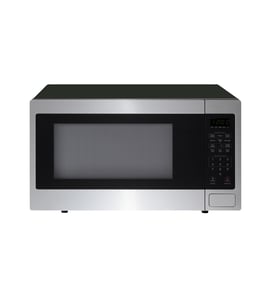




Can you use an over-the-range microwave as a countertop?
No. We do not recommend using an over-the-range microwave as a countertop unit because it is designed for a built-in, above-the-cooktop installation with specific venting and clearances. For safe countertop use, follow the placement and airflow requirements in the KCMS1555SSS1 owner's manual.
What makes over-the-range and countertop microwaves different
Over-the-range (OTR) models are built to be mounted and supported by brackets and cabinetry, and they rely on that installation for proper airflow and safe operation. Countertop models (like KitchenAid KCMS1555SSS1) are designed to sit on a sturdy surface with open space around the vents.
Key differences that matter:
- Mounting and support: OTR units are meant to be secured to a wall/cabinet system.
- Airflow design: OTR venting paths differ from countertop venting needs.
- Clearance rules: OTR clearances are based on being above a range, not on a counter.
- Cord routing: OTR cord length and routing assume an upper cabinet outlet.
- Heat exposure: OTR units are intended to live above cooking equipment; countertop placement changes nearby heat and obstruction risks.
Safe countertop setup guidelines (what we follow for KCMS1555SSS1)
For a countertop microwave, we use these practical rules based on the model’s installation guidance:
- Set it on a level, stable counter or shelf strong enough for the microwave plus food.
- Keep a few inches of open space at the back and sides where the exhaust vents are.
- Do not block exhaust vents or air intake openings.
- Keep the legs/feet installed so air can flow underneath.
- Avoid placing items on top of the microwave while it is operating.
Quick placement check
| Item to check | What “good” looks like | What to avoid |
|---|---|---|
| Vent clearance | Open space at sides/back | Tight cubby, flush to wall |
| Bottom airflow | Feet in place | Sitting on a soft mat/towel |
| Surface strength | Solid counter/shelf | Weak cart or unstable table |
| Nearby heat | Away from heat sources | Next to or above a cooktop |
Why it matters
Microwaves need consistent airflow to prevent overheating and nuisance shutdowns. Blocking vents or using the wrong installation style can lead to poor cooking performance and can damage internal components.
Last updated: February 2026
How to change power level on KitchenAid microwave?
On the KitchenAid KCMS1555SSS1 countertop microwave, we change the power level by starting a timed cook cycle, then selecting COOK POWER and choosing the percentage you want before pressing START. This lets you simmer, melt, or reheat more evenly than using 100% power.
Steps to change the power level (KCMS1555SSS1)
- Place food on the turntable and close the door.
- Touch COOK TIME.
- Enter the cook time using the number pads.
- Touch COOK POWER.
- Enter or select the desired power level (percent).
- Touch START to begin cooking.
- Touch OFF (or open the door) to clear the display when finished.
For the exact button names and options on this model, use the KCMS1555SSS1 owner's manual.
Common power levels and what they are used for
| Power level | Percent | Typical use |
|---|---|---|
| High | 100% | Boiling liquids, most quick heating |
| Medium | 50% | Stews, pot roasts, gentler cooking |
| Defrost | 30% | Manual defrosting bread, fish, meats |
| Low | 10% | Taking the chill off fruit, very gentle warming |
Why it matters
Lowering cook power helps prevent overcooking edges while the center is still cold. It is especially helpful for foods like cheese, egg dishes, custards, and chocolate that can scorch at full power.
Quick tips if results still seem uneven
- Stir or rotate food halfway through when possible.
- Use a microwave-safe cover with a vent to manage steam.
- For manual defrosting, use 30% power and check food when prompted by tones.
Last updated: February 2026
What are the dimensions of a 1.5 cu ft microwave?
Most 1.5 cu ft countertop microwaves, including the KitchenAid KCMS1555SSS1, are roughly 21 to 22 inches wide, 12 to 14 inches tall, and 16 to 18 inches deep. For the exact cabinet cutout and clearance requirements for your unit, use the KCMS1555SSS1 owner's manual.
Typical size ranges (what you can expect)
These are common exterior dimensions for a 1.5 cu ft countertop microwave:
- Width: 21 to 22 in.
- Height: 12 to 14 in.
- Depth: 16 to 18 in. (often deeper if you include the handle)
- Weight: commonly 35 to 45 lb.
| Spec | Typical range for 1.5 cu ft countertop microwaves | What to measure at home |
|---|---|---|
| Width | 21 to 22 in. | Widest point of the cabinet |
| Height | 12 to 14 in. | Countertop to top of case |
| Depth | 16 to 18 in. | Back of case to front edge (include handle if present) |
How to measure your microwave correctly
To avoid fit issues on a shelf or in a microwave cart, we recommend:
- Measure width at the widest point (some trims flare slightly).
- Measure depth including any door handle or front trim.
- Leave air space around the sides and back for ventilation.
- Confirm the outlet location and cord reach before moving the unit.
Why it matters
Microwaves that are the same capacity (1.5 cu ft) can still vary by more than an inch in depth or height. That difference affects ventilation clearance, door swing, and whether the unit sits flush on a shelf.
Last updated: February 2026
What is the average life of a countertop microwave?
Most countertop microwaves last 7 to 10 years with normal home use. For a KitchenAid KCMS1555SSS1 1.5 cubic foot microwave, keeping vents clear, cleaning the cavity and door surfaces regularly, and avoiding arcing situations helps you reach that typical lifespan; heavy daily use can shorten it.
What affects lifespan the most
- Usage frequency and cook time (multiple long heat cycles per day wears components faster)
- Ventilation: blocked exhaust or intake raises internal temperatures
- Cleanliness: grease and food soil can cause odors, corrosion, and arcing
- Door condition: a misaligned or damaged door should be serviced before use
- Power quality: repeated blown fuses can point to an underlying electrical issue
Quick care steps that extend life
We follow the care guidance in the KCMS1555SSS1 owner's manual and recommend these habits:
- Wipe the cavity with mild, nonabrasive soap and a soft cloth; avoid abrasives and steel wool.
- For heavy soil, heat 1 cup of water for 2 to 5 minutes to steam-soften residue, then wipe dry.
- Deodorize by heating water with lemon juice or vinegar for 2 to 5 minutes.
- Keep the door and frame contact area clean so the door closes properly.
- Do not block vents; leave a few inches of space at the back and side for airflow.
When repair vs. replace usually makes sense
| Symptom | Common cause | Typical next step |
|---|---|---|
| Completely dead (no display) | Blown fuse, door switch issue | Test fuse and interlocks; replace failed part |
| Runs but does not heat | High-voltage component failure | Professional service is usually best |
| Randomly shuts off | Overheating from blocked vents | Improve airflow, clean vents, re-test |
If the unit is dead, a common first check is the fuse WP8183507. If it is blown, replace it and also address the root cause (often a door-interlock or wiring issue).
Why it matters
A microwave that is kept clean, properly ventilated, and used with microwave-safe cookware runs cooler and avoids arcing. That reduces stress on high-voltage parts and helps your KCMS1555SSS1 reach the normal 7 to 10 year service life.
Last updated: February 2026
Who makes the KitchenAid microwave?
KitchenAid microwaves (including model KCMS1555SSS1) are made under the Whirlpool Corporation umbrella. That means the KitchenAid brand is supported by Whirlpool’s engineering, factory-specified parts system, and service network, even though production can vary by product line.
What this means for parts and service
When you’re shopping for replacement parts or troubleshooting a KitchenAid countertop microwave, you’ll often see Whirlpool-family part numbering and component styles.
- Use the exact model number KCMS1555SSS1 when ordering parts
- Follow the safety and service guidance in the KCMS1555SSS1 owner’s manual
- Expect common microwave components such as door interlock switches, fuses, and latch hardware
- For “dead” or no-power symptoms, start with basic electrical checks before replacing parts
Common parts you may see on this model
These are examples of parts listed for KCMS1555SSS1 that commonly relate to power and door-safety operation:
| Part type | Example part for this model | What it affects |
|---|---|---|
| Fuse | Fuse WP8183507 | No power, unit goes dead, intermittent power loss |
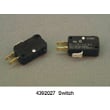
| Door switch | Switch 4392027 | Won’t start, stops when door moves, door-safety interlock issues |
| Latch hardware | Latch bracket WP8205451 | Door alignment, proper switch engagement |
Why it matters
Knowing Whirlpool Corporation is behind KitchenAid helps you troubleshoot and buy parts more accurately. Microwaves rely on door interlock circuits and protective fusing; using the correct model-based parts list reduces repeat failures and fit issues.
Last updated: February 2026


