Installation guide
 Owner’s manual
 Error Codes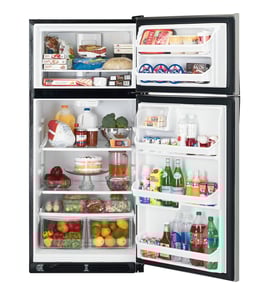




Are all refrigerators 70 inches high?
No. Refrigerators are not all 70 inches high; height varies by style and capacity. Many full-size models land in the mid-60s to low-70s inches, but some top-freezer units are shorter and built-in models can be taller. For your Kenmore 25368882010, confirm the exact dimensions in the installation guide.
Typical refrigerator height ranges (what we see most often)
- Top-freezer and bottom-freezer: often about 61 to 69 inches
- French door: often about 68 to 72 inches
- Side-by-side: often about 65 to 71 inches
- Built-in/specialty: can be taller than 72 inches
How to measure correctly (so it fits the opening)
Measure the opening and the refrigerator, then compare:
- Height: floor to the lowest cabinet or trim above
- Width: wall to wall at the tightest point
- Depth: from the back wall to the front edge of counters
- Door swing clearance: space for doors to open without hitting walls
- Ventilation clearance: allow airflow around the cabinet
The Kenmore 25368882010 installation instructions call out typical clearances used for proper air circulation (for example, 3/8 inch at the sides and top and 1 inch at the rear). Those clearances can affect whether a “70-inch” refrigerator actually fits in a tight cabinet opening.
Fit check: quick comparison table
| What you are checking | What to do | Why it matters |
|---|---|---|
| Opening height | Measure floor to cabinet above | Prevents binding and vibration |
| Refrigerator height | Use the model’s published spec | Avoids forced installs |
| Clearance space | Add required air gaps | Protects cooling performance |
| Leveling | Plan for slight front-to-back tilt | Helps doors close and seal |
Why it matters
A refrigerator that is even 1/2 inch too tall (or installed without the recommended clearance) can lead to poor airflow, harder door closing, and installation headaches. Using the model-specific guidance helps you avoid returns and cooling issues.
Last updated: February 2026
How to tell cubic feet of Kenmore refrigerator by model number?
For Kenmore model 25368882010, the most reliable way to get cubic feet is to look up the capacity listed in the specifications section of the 25368882010 owner's manual. If you need a quick estimate, we can calculate it by measuring the usable interior space and converting cubic inches to cubic feet.
Fast ways to find capacity (best to least precise)
- Check the specs in the manual: capacity is typically listed as “total capacity” (and sometimes split into fresh food and freezer). Use the 25368882010 owner's manual.
- Look for a rating label: some refrigerators list capacity on the model and serial tag or an adjacent product label.
- Measure and calculate: good for an estimate when labels are missing.
- Use model-family clues carefully: Kenmore models that start with 253 are commonly Frigidaire-built, but the model number alone does not consistently encode an exact cubic-foot value.
How to calculate cubic feet from measurements
- Empty the compartment enough to measure.
- Measure interior width, height, and depth in inches (fresh food and freezer separately if you want a split).
- Multiply:
width × height × depth = cubic inches. - Convert:
cubic inches ÷ 1728 = cubic feet.
Example conversion table
| What you have | What to do | Result |
|---|---|---|
| Interior volume in cubic inches | Divide by 1728 | Cubic feet |
| Fresh food and freezer measured separately | Convert each, then add | Total cubic feet |
Why it matters
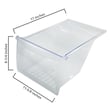
Cubic feet helps us match the right refrigerator parts and accessories (like shelves, door bins, and drawers) and set realistic expectations for storage. For example, if you are replacing storage components, model-specific fit matters more than capacity, such as the crisper drawer - refrigerator storage component by frigidaire 240337103.
Last updated: February 2026
What are the disadvantages of a top mount fridge?
A top-mount refrigerator like the Kenmore 25368882010 puts the freezer at eye level and the fresh-food section below, so the main tradeoffs are less convenient access to everyday refrigerated items, fewer built-in organization features than some newer layouts, and fewer dispenser options on many models.
Common disadvantages (what you will notice day to day)
- More bending for fresh food: the refrigerator compartment is lower, so you reach down more often for produce, drinks, and leftovers.
- Less flexible organization in some designs: many top-mounts have simpler shelf and bin layouts compared with some bottom-freezer or French door models.
- Fewer exterior features on many models: through-the-door ice and water is less common on top-mount styles.
- Freezer access can be tighter: stacked items can be harder to see and rotate, especially in a smaller top freezer.
- Door swing and clearance needs: you still need enough space for doors to open fully and for airflow around the cabinet.
Installation and space considerations (often overlooked)
Your installation setup can make the disadvantages feel bigger or smaller. For example, if the refrigerator is wedged in too tightly, it can be harder to access lower shelves and drawers.
Here are key setup points we follow from the installation guide:
- Place the refrigerator near a grounded outlet (avoid extension cords/adapters).
- Allow minimum clearances for airflow: 3/8 inch at sides and top, 1 inch at the rear.
- Keep the unit level; the cabinet should tilt about 1/4 inch front-to-back so doors close and seal properly.
- Do not block the toe grille; airflow is essential for proper operation.
Quick comparison: top-mount vs other common layouts
| Layout | Main advantage | Main disadvantage |
|---|---|---|
| Top-mount freezer | Usually simpler design and easy freezer access | More bending for fresh-food access |
| Bottom-freezer | Fresh food at eye level | Freezer access is lower |
| French door | Wide fresh-food access and organization | Often larger footprint and more features to maintain |
Why it matters
If you use fresh-food items more than frozen foods, the lower refrigerator section can feel inconvenient over time. Also, good leveling and clearances help the doors seal well, which supports stable temperatures and reduces frost and moisture issues.
Last updated: February 2026
Are top mount or bottom mount fridges better?
Top-mount and bottom-mount refrigerators are both solid choices; the better option depends on what you access most. Your Kenmore 25368882010 is a top-mount design, which typically costs less and gives easy freezer access, while bottom-mount models prioritize fresh-food convenience.
Quick comparison
| Feature | Top-mount (freezer on top) | Bottom-mount (freezer on bottom) |
|---|---|---|
| Fresh-food access | Lower shelves require more bending | Fresh food sits higher, easier daily access |
| Freezer access | Easier reach for frozen items | Lower drawer, more bending |
| Typical value | Often lower upfront cost | Often higher upfront cost |
| Storage style | Simple shelves and bins | More drawer-style organization |
| Service/maintenance | Generally straightforward | Varies by design |
When a top-mount is the better fit
A top-mount refrigerator like the Kenmore 25368882010 is the better choice when you want practical storage and simple ownership.
- You use the freezer frequently
- You want a simpler layout with fewer specialty drawers
- You prefer a classic door-swing setup
- You want strong value for the money
- You want straightforward installation and leveling steps
When a bottom-mount is the better fit
Bottom-mount models are the better choice when you reach into the fresh-food section many times per day.
- You cook often and want refrigerator items at eye level
- You want less bending for produce, dairy, and leftovers
- You like wide shelves for platters and meal prep
- You prefer freezer baskets that separate items by type
Installation and door-seal basics (either style)
Correct placement and leveling help doors close and seal properly, which protects cooling performance and helps prevent moisture issues.
- Place the refrigerator near a grounded outlet
- Avoid heat sources and direct sunlight
- Keep required airflow clearances around the cabinet
- Level the cabinet so all corners sit firmly on the floor
- Adjust the front so doors close freely and seal evenly
For the exact clearances and the step-by-step leveling method for Kenmore 25368882010, use the installation guide.
Why it matters
Choosing the right freezer location affects daily comfort, and proper installation reduces temperature swings, frost buildup, and door-gasket wear.
Last updated: February 2026