Owner’s manual
 Error Codes


How many cubic feet is my Kenmore Elite refrigerator?
Your Kenmore Elite side-by-side refrigerator model 10657799701 is typically in the 25 to 27 cubic feet range for this style and size class. For the exact capacity rating for your specific unit, check the model specifications in the 10657799701 owner's manual.
How to confirm the exact capacity for model 10657799701
We recommend using the model-specific documentation because capacity can vary by configuration (ice maker, dispenser housing, and shelf layout).
- Look for a “Product data sheet” or specifications section
- Check for “Total capacity” and sometimes separate refrigerator and freezer capacities
- Use the model number 10657799701 exactly when matching specs
- If you only see compartment volumes, add fresh food + freezer for total capacity
Typical capacity ranges (for context)
These ranges help you sanity-check what you find in the manual.
| Refrigerator type | Typical total capacity | Notes |
|---|---|---|
| Side-by-side (standard depth) | 22 to 27 cu. ft. | Most common range for many Kenmore and Whirlpool-built designs |
| Side-by-side (larger footprint) | 27 to 30 cu. ft. | Often wider cabinets or more interior volume |
Why it matters
Knowing cubic feet helps you compare replacement refrigerators, choose the right storage accessories, and set realistic expectations for usable space (ice maker and dispenser components reduce usable volume even when total capacity is high).
Last updated: January 2026
What is the average lifespan of a Kenmore Elite refrigerator?
Most Kenmore Elite refrigerators, including the Kenmore Elite model 10657799701, typically last 10 to 15 years. With consistent care (cleaning, good door sealing, and stable temperatures), it’s common to reach the upper end of that range before major sealed-system repairs become more likely.
Typical lifespan and what to expect
A practical way to think about refrigerator life is by “repair zones” over time:
| Age of refrigerator | What’s most common | What we usually recommend |
|---|---|---|
| 0 to 5 years | Minor adjustments, small part replacements | Keep up with cleaning and filter changes |
| 6 to 10 years | Wear items and airflow/defrost issues | Diagnose early to avoid food loss |
| 10 to 15 years | Higher chance of major cooling or control issues | Compare repair cost vs. replacement |
| 15+ years | Increasing risk of sealed-system failure | Replace if cooling repairs get expensive |
What shortens (or extends) refrigerator life
These factors have the biggest impact on lifespan for a side-by-side refrigerator:
- Dirty condenser area causing higher compressor run time
- Door gaskets not sealing, leading to moisture, frost, and long run cycles
- Poor airflow from blocked vents or overpacked shelves
- Defrost problems that let frost build up on the evaporator
- Water and ice system issues that create leaks or ice clumps
For model-specific care and cleaning intervals, follow the 10657799701 owner’s manual.
Parts that commonly affect longevity
When a refrigerator “seems old,” it’s often a serviceable system issue (airflow, defrost, or ice maker) rather than the cabinet itself. On model 10657799701, common repair-related parts include:
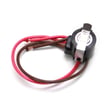
- Refrigerator defrost bi-metal thermostat WPW10225581 (helps prevent frost buildup)
- Refrigerator heater WP2323198 (defrost heat source)
- Refrigerator evaporator fan motor WP2315549 (moves cold air through the compartments)
- Refrigerator water inlet valve WPW10159839 (feeds the ice maker and dispenser)
Why it matters
A refrigerator that runs longer than normal to hold temperature uses more energy and puts extra wear on the compressor and sealed refrigeration system. Fixing airflow, sealing, or defrost issues early often extends service life and improves temperature stability.
Last updated: January 2026
What are the common problems with Kenmore Elite refrigerators?
Common problems on the Kenmore Elite 10657799701 side-by-side refrigerator include warm temperatures from poor airflow, frost buildup from a defrost issue, and ice or water dispenser troubles. We recommend starting with cleaning, airflow checks, and the built-in troubleshooting steps in the 10657799701 owner's manual.
Most common symptoms and what usually causes them
- Not cooling or weak cooling: dirty condenser coils, blocked vents, evaporator fan issue, or control problem
- Excess frost or ice buildup: defrost heater, defrost thermostat, or door not sealing
- Noisy operation: normal operating sounds, fan blade rubbing ice, or compressor/start components
- Ice maker not making ice: water supply issue, inlet valve issue, ice maker failure, or freezer too warm
- Water tastes odd or dispenser sputters: air in the line after filter change, needs flushing
Quick checks we recommend first (10 to 20 minutes)
- Confirm controls are set correctly (see 10657799701 owner's manual).
- Make sure vents are not blocked; allow space around food for proper air circulation.
- Clean condenser coils and clear dust from the base grille area.
- If you recently changed the water filter, flush the water system (the manual calls this out after filter changes).
- Listen for where the noise is coming from (freezer rear panel often points to evaporator fan or ice buildup).
Parts that commonly fix these issues
| Symptom | Common part to check | Example part for this model |
|---|---|---|
| Frost buildup, warm freezer | Defrost thermostat or heater | Refrigerator defrost bi-metal thermostat WPW10225581, refrigerator heater WP2323198 |
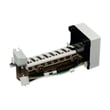
| No ice or slow ice production | Ice maker or water inlet valve | Refrigerator ice maker 2198597, refrigerator water inlet valve WPW10159839 |
| Warm fridge section, poor airflow | Evaporator fan motor/blade | Refrigerator evaporator fan motor WP2315549, refrigerator evaporator fan blade WP2169142 |
Why it matters
Cooling, defrost, and dispenser problems often start small (restricted airflow, minor icing, or an unflushed water system) and then snowball into temperature swings, leaks, or repeated ice maker failures. Addressing the root cause early protects food and reduces strain on the sealed system.
Last updated: January 2026