

Can I replace dishwasher parts myself?
Yes. On the Magic Chef DU2J dishwasher, we see many DIYers successfully replace mechanical and access-easy parts (like door hardware and seals) with basic tools and careful shutoff of power and water. For electrical diagnosis or leak-related repairs, we recommend a more cautious approach and thorough testing.
Good DIY replacements on model DU2J
These repairs are typically straightforward because they involve the door area or simple fasteners:
- Replace a leaking or worn dishwasher door seal WP902894
- Fix a door that drops or won’t stay open with a dishwasher door spring WP912652
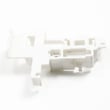
- Restore proper latching with a latch W10131752
- Replace stripped or missing fasteners such as a hinge screw WP179051
Before you start (safety and prep)
- Shut off power at the breaker (dishwashers can be hardwired)
- Turn off the water supply valve under the sink
- Protect the floor with towels; keep a shallow pan handy
- Take photos of wire and screw locations as you disassemble
- Use the correct screwdriver bit to avoid stripping door and hinge screws
When DIY is still possible, but needs testing
Some symptoms require electrical checks or careful reassembly. If you are comfortable using a meter, you can still DIY:
| Symptom | Common area to check | Example part for DU2J |
|---|---|---|
| Won’t start, acts like door is open | Door interlock circuit | Door switch 99002254 |
| Overfills or won’t fill correctly | Float and fill sensing | Float WP99002363 or water switch WP99002560 |
| Detergent door won’t open | Dispenser actuator | Wax motor WP902899 |
Why it matters
Replacing the right dishwasher part yourself can stop leaks, restore safe door operation, and prevent repeat failures caused by misalignment or worn seals. It also helps you avoid replacing larger assemblies when a small component is the real cause.
Last updated: February 2026
What are the commonly replaced parts in a dishwasher?
In a Magic Chef DU2J dishwasher, the most commonly replaced parts are the door sealing and latching parts, drain and fill safety parts, and small hardware that wears from heat, vibration, and repeated door use. These repairs typically address leaks, won’t-start symptoms, and poor draining.
Common parts that get replaced most often
These are the parts we see replaced frequently because they directly affect leaking, starting, and draining:
- Door sealing parts (to stop water leaks at the front)
- Door latch and switch parts (to fix “won’t start” or stops mid-cycle)
- Drain components (to fix standing water)
- Fill and overfill protection parts (to fix no-fill or overfilling)
- Door balance parts (to fix a door that drops open)
DU2J examples from our parts list
Here are model-matched examples that commonly solve real-world symptoms:
| Symptom | Likely area | Example DU2J part |
|---|---|---|
| Water leaking from the door | Door seal | Dishwasher door seal WP902894 |
| Door won’t latch or cycle won’t start | Latch/switch | Latch W10131752 |
| Door slams open or won’t stay up | Door spring | Dishwasher door spring WP912652 |
| Overfills or won’t fill correctly | Float/water level | Float WP99002363 |
| Dead or intermittent power | Power supply | Power cord 903730 |
Quick checks before you buy parts
These quick steps often pinpoint the right part the first time:
- Check the door seal for tears, flattening, or hardened spots; clean the sealing surface.
- Confirm the door closes squarely; loose hinge screws can mimic a bad seal.
- Listen for a solid “click” when closing; a weak latch can prevent starting.
- Inspect the float for sticking from soap buildup; it should move freely.
- Verify the dishwasher is getting power at the outlet before replacing electrical parts.
Why it matters
Dishwashers usually fail in a few high-wear systems: the door system (seal, latch, springs), the water management system (float, water switch), and the drain path (hose and related parts). Targeting the correct system prevents repeat leaks, nuisance no-starts, and poor wash performance.
Last updated: February 2026
Why is my Magic Chef dishwasher not draining?
If your Magic Chef DU2J dishwasher won’t drain, the most common causes are a kinked or clogged drain path, a stuck float, or a door/latch issue that stops the drain portion of the cycle. Start with simple blockages, then move to switches and hoses.
Quick checks that fix most no-drain problems
- Cancel the cycle and wait a few minutes; some models drain only during specific steps.
- Remove standing water (cup or wet/dry vac) so you can inspect the sump area.
- Check the sink drain and garbage disposal inlet (a blocked disposal connection can stop dishwasher draining).
- Inspect the drain hose for kinks, crushing, or a sag that traps water.
- Look for food debris or broken glass around the sump area.
Parts to inspect on model DU2J
These DU2J-RELATED parts commonly affect draining when they stick, leak, or fail.
| What to check | What you’ll notice | Related DU2J part |
|---|---|---|
| Float moves freely up and down | Overfill protection can stop draining/filling if stuck | Float WP99002363 |
| Drain hose is clear and routed correctly | Slow drain, no drain, or backflow into tub | Drain hose WPY913158 |
| Door fully latches and stays closed | Unit may stop mid-cycle and never reach drain step | Latch W10131752 |
Step-by-step troubleshooting order (fastest to slowest)
- Check the drain hose routing: Make sure it has a high loop under the counter and is not kinked.
- Clear the hose and connection: Disconnect at the sink/disposal and clear sludge or debris.
- Verify the float: Lift and release it; it should move smoothly and drop under its own weight.
- Confirm the door is closing firmly: If the door pops open or the latch feels loose, the cycle can pause before draining.
- Electrical checks (if you’re comfortable): Unplug power and test suspect switches and wiring.
Helpful technique: how to use a multimeter to test electrical parts video
Why it matters
A dishwasher that can’t drain often leaves dirty water in the tub, causes odors, and can trigger overflow protection. Fixing the drain path early also prevents strain on the pump and related components.
Last updated: February 2026





