Installation guide
 Owner’s manual


How do I tell what model my Kenmore dryer is?
Your Kenmore dryer’s model number is printed on the model and serial number plate; for Kenmore model 11068932790, that plate is the official identifier you use to match the correct parts, wiring, and specifications. Record both the model and serial numbers for future service and ordering.
Where to look for the model number plate
On most Kenmore electric dryers like 11068932790, you will find the model and serial number plate in one of these common spots:
- Inside the dryer door opening (around the door frame)
- On the back panel of the dryer cabinet
- Near the lint screen housing area (depending on the exact console and top design)
- On an inner cabinet panel that becomes visible when the door is open
For the exact location and how it’s labeled on your unit, use the 11068932790 owner's manual.
What to write down (and why)
When you find the plate, copy the information exactly as shown.
- Model number (example: 11068932790)
- Serial number (unique to your dryer)
- Date of purchase (helpful for maintenance history)
Why it matters
The model number narrows parts to the correct design series; the serial number helps identify production variations that can affect fit and wiring.
Quick check: model number vs. part numbers
| Item | What it identifies | Example format |
|---|---|---|
| Model number | The dryer design and parts list | 11068932790 |
| Serial number | Your specific unit | Letters and numbers |
| Part number / part ID | A replacement component | WP3387747 |
If the label is hard to read
- Wipe the plate gently with a damp cloth and dry it
- Use a flashlight at an angle to make faint printing easier to see
- Take a close-up photo and zoom in
- Match the dryer type first (electric vs. gas); 11068932790 is an electric dryer
Last updated: February 2026
What is the average lifespan of 11068932790?
A Kenmore electric dryer like model 11068932790 typically lasts 13 years with normal household use. Regular vent cleaning, correct electrical supply, and replacing wear parts (like fuses or rollers) on time are what most often determine whether it reaches that lifespan.
What affects lifespan the most
- Airflow and venting: restricted exhaust overheats the heater and safety devices.
- Load size: chronic overloading strains the drive motor and drum support system.
- Heat settings: high heat on every load increases thermal stress.
- Maintenance: lint screen cleaning every load, periodic duct cleaning.
- Timely part replacement: worn support parts can damage the drum and bulkhead.
Common “end-of-life” symptoms vs fixable issues
| Symptom | Often caused by | Usually worth repairing? |
|---|---|---|
| Runs but no heat | Heating circuit issue | Yes |
| Stops mid-cycle | Overheat protection opening | Yes |
| Loud rumble/squeal | Drum support wear | Yes |
| Burning smell | Lint restriction or failing component | Yes (address immediately) |
Practical maintenance checklist
- Clean the lint screen; replace it if torn or warped (see screen W10120998).
- Inspect and clean the exhaust path from blower housing to wall cap.
- Keep the dryer level to reduce drum and seal wear.
- If drying times increase, check airflow before replacing heating parts.
Why it matters
A dryer that runs hot because of poor airflow shortens the life of the heating element, thermal cut-off, and motor. Following the maintenance steps in the 11068932790 owner's manual helps prevent nuisance shutdowns and expensive repeat failures.
Last updated: March 2026
What replacement parts are most commonly needed for the 11068932790?
For Kenmore electric dryer model 11068932790, the most commonly replaced parts are in the heating and airflow safety circuit (thermal fuse, cut-off, thermistor, heating element) and the drum support/drive system (idler pulley, blower wheel). These parts address no-heat, overheating, noise, and no-start complaints.
Most common replacement parts (and what they fix)
- Dryer thermal fuse WP3390719: dryer will not heat or will not run (depending on design) after overheating.
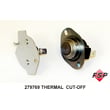
- Cut-off kit 279769: no heat or overheating protection trips.
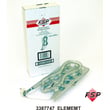
- Dryer heating element WP3387747: runs but does not heat, or heats intermittently.
- Thermistor WP8577274: temperature control problems, cycling issues.
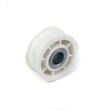
- Dryer idler pulley 279640: squealing noise, belt tension problems.
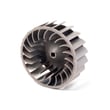
- Dryer blower wheel WP697772: poor airflow, loud vibration, long dry times.
Quick symptom-to-part guide
| Symptom | First checks | Parts often involved |
|---|---|---|
| No heat | Verify 240V supply, airflow | Heating element, thermal fuse, cut-off kit, thermistor |
| Long dry times | Lint screen, vent restriction | Blower wheel, venting components |
| Squealing/rumbling | Drum turns but noisy | Idler pulley, drum support components |
| Stops mid-cycle | Overheating from poor airflow | Thermal fuse, cut-off kit |
Before you order
- Confirm the exact symptom and do basic airflow checks first.
- Use a multimeter to test continuity on fuses and heater components.
- Match parts by model number to avoid fit issues; the 11068932790 installation guide is helpful for access and reassembly basics.
Why it matters
Replacing the failed part without fixing the root cause (especially a clogged vent) often leads to repeat failures. Restoring proper airflow protects the heating element and safety devices and brings drying times back to normal.
Last updated: March 2026