Owner’s manual
 Error Codes


Where do I find the model number on a Kenmore Elite refrigerator?
On Kenmore Elite refrigerator model 79572373312, the model number is printed on the rating label inside the fresh food (refrigerator) compartment. The most common spot is on an interior side wall near the crisper drawers; check behind the lower crisper drawer area first, then the front frame near the door opening.
- Inside the refrigerator compartment on the left or right wall, near the crisper drawers
- On the front frame (mullion area) visible when you open the refrigerator door
- Behind or just above the lower crisper drawer (you may need to slide the drawer out)
- On the back exterior panel of the refrigerator (less common, but possible)
- Near the bottom front, behind the toe grille or kick plate (some designs)
The rating label typically includes:
- Model number (for this unit: 79572373312)
- Serial number
- Electrical ratings (volts/amps)
- Refrigerant type and charge information
For label location diagrams and how the information is formatted, use the 79572373312 owner's manual.
- Remove food items that block the side walls.
- Slide out the crisper drawers and look on the wall behind them.
- Wipe the area with a damp cloth; labels can blend into the liner.
- Check the door opening frame (front edge) with the door fully open.
| Area | How to access | Typical effort |
|---|---|---|
| Fresh food side wall | Open door, look near crispers | Low |
| Behind crisper drawers | Slide drawers out | Medium |
| Toe grille/kick plate | Pull grille off carefully | Medium |
| Back exterior | Pull unit out slightly | Higher |
We use the exact model number to match Kenmore parts correctly (like a water filter, door gasket, or ice maker) because small design changes can affect fit and compatibility.
Last updated: February 2026
How many cubic feet is my Kenmore refrigerator model 79572373312?
For Kenmore Elite refrigerator model 79572373312, the exact cubic-foot capacity is listed on the model’s rating label and in the 79572373312 owner’s manual. Most Kenmore 795-prefix bottom-mount refrigerators fall in the 20 to 22 cu. ft. range, but the label/manual gives the precise number for your unit.
- Check the rating label inside the fresh food compartment (commonly on a side wall near the crisper area).
- Look for wording like “Total capacity”, “Capacity”, or “cu. ft.”
- Confirm the full model number matches 79572373312 exactly.
- Use the capacity value when ordering shelves, bins, or filters so you get the right fit.
Kenmore model numbers that start with 795 are commonly associated with LG-built designs. That prefix helps identify the manufacturing platform, but it does not tell you the capacity by itself.
If you are estimating space for groceries or comparing refrigerators, this is a practical guide for many bottom-mount units in this family:
| Refrigerator style | Typical capacity range |
|---|---|
| Bottom-mount (common) | 20 to 22 cu. ft. |
| Larger bottom-mount variants | 22 to 25 cu. ft. |
Capacity affects how the refrigerator is configured inside (shelf spacing, bin sizes, and airflow). It also helps when choosing maintenance items like a genuine Kenmore refrigerator water filter 9690 AGF80300801 and planning filter-change intervals.
Last updated: February 2026
What is the average lifespan of a Kenmore Elite refrigerator?
A Kenmore Elite refrigerator like model 79572373312 typically lasts 12 to 15 years with normal household use. Keeping airflow clear, cleaning key components, and maintaining door seals helps the sealed system and compressor run less, which extends service life.
- Condenser cleanliness: Dust buildup makes the compressor work harder.
- Door seal condition: Air leaks cause longer run times and temperature swings.
- Ventilation space: Tight cabinets trap heat and shorten component life.
- Ice maker and dispenser use: Heavy use increases wear on moving parts.
- Power quality: Surges and frequent outages stress electronics and the compressor.
Use the maintenance schedule in the 79572373312 owner's manual.
- Vacuum condenser area and grills regularly (more often with pets).
- Keep food from blocking interior air vents.
- Clean and inspect door gaskets; replace if torn or warped.
- Replace filters on schedule to protect water flow and taste.
- Level the refrigerator so doors close fully and consistently.
| Item | What it impacts | Typical symptom when overdue/worn |
|---|---|---|
| Water filter | Water taste, flow to dispenser/ice maker | Slow dispense, odd taste/odor |
| Air filter | Odors in fresh food section | Persistent smells |
| Door gasket | Temperature stability, frost control | Condensation, frost, warm spots |
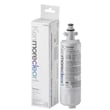
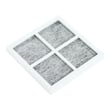
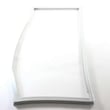
For this model, common replacements include the genuine Kenmore refrigerator water filter 9690 AGF80300801, the lg refrigerator air filter ADQ73214408, and the refrigerator door gasket, right ADX72930461.
A refrigerator that runs longer to hold temperature uses more electricity and puts extra load on the compressor and start components. Simple airflow and sealing maintenance helps your Kenmore Elite refrigerator cool efficiently and reach the full 12 to 15 year lifespan.
Last updated: February 2026
What are the common problems with Kenmore Elite refrigerators?
Common problems we see with Kenmore Elite refrigerators like model 79572373312 include warm temperatures, ice maker or water dispenser issues, leaks, frost buildup, and door sealing problems. Many of these symptoms trace back to airflow, filtration, or dispenser components and can be diagnosed quickly with a few checks from the 79572373312 owner’s manual.
- Not cooling or weak cooling: dirty condenser area, airflow restriction, or a sealed-system issue
- Ice maker not making ice: water supply problem, frozen fill path, or ice maker failure
- Water dispenser slow or not dispensing: clogged filter, air in the line, or dispenser lever issue
- Water leaking or puddles: blocked defrost drain, loose water line, or door not sealing
- Frost buildup in freezer: door gasket leak, frequent door openings, or defrost system trouble
- Bad odors: expired air filter, spills, or food stored uncovered
- Confirm temperature settings; most refrigerators run best around 37°F fresh food and 0°F freezer.
- Make sure vents inside the compartments are not blocked by food packages.
- Check the door seal for gaps and verify the doors close on their own.
- If water flow is weak, replace the water filter and flush several gallons.
- Listen for the evaporator fan; no airflow usually means a fan or frost issue.
| Problem | Common fix | Example part for this model |
|---|---|---|
| Bad-tasting water or slow dispensing | Replace water filter | Genuine Kenmore refrigerator water filter 9690 AGF80300801 |
| Odors in fresh food section | Replace air filter | Lg refrigerator air filter ADQ73214408 |
| Door not sealing, frost, sweating | Replace door gasket | Refrigerator door gasket, right ADX72930461 |
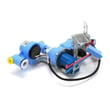
| No ice production | Replace ice maker assembly | Refrigerator ice maker AEQ73110203 |
Cooling, ice, and leak complaints often start small, but they can lead to spoiled food, recurring frost, or water damage. Catching a weak door seal, clogged filter, or airflow restriction early keeps the compressor from running excessively and helps the refrigerator hold steady temperatures.
- Kenmore 795 model bottom freezer refrigerator error codes
- How to replace the water filter in a Kenmore refrigerator
Last updated: February 2026
Why is my refrigerator not getting cold at the bottom?
If your Kenmore Elite refrigerator model 79572373312 is warm at the bottom, the most common causes are restricted airflow (blocked vents, overpacked drawers), an evaporator fan or air duct issue, or a defrost problem that leaves frost buildup and prevents cold air from circulating into the lower section. Check settings and airflow first, then inspect for frost and fan operation using the 79572373312 owner's manual.
- Set the refrigerator to 37°F and freezer to 0°F, then wait 24 hours for stabilization.
- Make sure food packages are not blocking air vents (especially near the back wall).
- Confirm drawers and bins are fully seated so they do not obstruct airflow.
- Clean the condenser area and ensure the unit has breathing room around it.
- Listen for the evaporator fan (usually a steady whir when the compressor is running).
| What you notice | Most likely cause | What to do next |
|---|---|---|
| Freezer is cold but fresh food bottom is warm | Airflow restriction or duct issue | Clear vents; inspect the air duct path |
| Frost/ice on back wall inside freezer | Defrost system problem | Defrost fully; check if frost returns quickly |
| No fan sound, temps drift warm | Evaporator fan not running | Check for ice blockage; test fan circuit |
| Both sections warming, compressor runs a lot | Dirty condenser coil or sealed system issue | Clean coil; if no improvement, service may be needed |
These parts are model-specific options we often see involved when cooling is uneven:
- Refrigerator duct assembly ADJ73252223 (moves cold air into the fresh food section)
- Refrigerator condenser coil ACG73645004 (releases heat; dust buildup reduces cooling)
- Refrigerator compressor start relay EBG60663230 (helps the compressor start and run)
Bottom-warm conditions usually mean cold air is not reaching the lower fresh food area. Fixing airflow and heat removal early helps prevent food spoilage and reduces compressor run time and energy use.
Last updated: February 2026
How to tell if a Kenmore refrigerator compressor is bad?
On Kenmore Elite model 79572373312, a bad compressor shows up as poor cooling with the unit running almost constantly, unusual buzzing or clicking near the back, and the compressor area getting very hot. Before condemning it, we confirm airflow, condenser cleanliness, and start components using the 79572373312 owner's manual.
- Refrigerator and freezer temperatures keep rising even though the compressor runs
- Loud humming, buzzing, or repeated clicking from the compressor compartment
- Compressor is extremely hot and then shuts off (overload trips)
- Breaker trips or the unit repeatedly loses power when the compressor tries to start
- Frost pattern is weak or uneven (often paired with long run times)
- Condenser coil is clogged; clean it and verify the condenser fan is running (if equipped). A dirty coil can mimic a failing compressor.
- Start relay/overload is failing; a bad relay can cause clicking and no-start even when the compressor itself is OK.
- Airflow issues; blocked vents, a failed evaporator fan, or heavy frost from a defrost problem can cause warm temps.
- Door sealing problems; warm air leaks force long run times and poor cooling.
| What you’re checking | What it affects | Model-matched part to consider |
|---|---|---|
| Dirty heat exchanger | High temps, long run time | Refrigerator condenser coil ACG73645004 |
| No-start or clicking | Compressor won’t start reliably | Refrigerator compressor start relay EBG60663230 |
| Compressor overheats | Trips off on overload | Refrigerator compressor overload protector 6750CL0001D |
| Sealed system restriction | Poor cooling, odd pressures | Refrigerator filter dryer ADH73150208 |
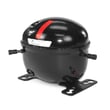
| Confirmed compressor failure | No cooling even with good airflow and start parts | Refrigerator compressor TCA38091801 |
- Listen at the back: steady hum suggests it is running; repeated click every few minutes suggests start trouble.
- Feel for airflow: warm air should move out near the condenser area when running.
- Check temperatures: if both sections are warm and it runs nonstop, focus on condenser coil, fans, and start relay first.
- Inspect door gaskets: look for gaps, tears, or areas that do not grip a dollar bill.
Replacing a compressor is a major repair. Verifying basics like condenser coil condition, door sealing, and the start relay prevents unnecessary sealed-system work and gets cooling restored faster.
Last updated: February 2026