Owner’s manual
 Error Codes


How to identify a Kenmore washer model?
To identify a Kenmore washer model like 11026892690, we look for the model and serial number plate on the washer cabinet. On many Kenmore top-load washers, it’s under the lid or around the lid opening; on front-load washers, it’s often in the door opening.
Where to look on Kenmore washers
Common locations for the model/serial tag include:
- Under the washer lid, around the lid opening (top-load)
- On the back of the control panel or rear panel
- On the main cabinet side near the bottom edge
- Behind the door or in the door jamb (front-load)
For this Kenmore washer, the 11026892690 owner’s manual explains that the model and serial numbers are on the “Model and Serial Number Plate.”
What the model number tells us (and why it matters)
Kenmore model numbers help us match the correct parts, diagrams, and troubleshooting steps. Even a single digit difference can change the correct fit for items like a lid switch, drain pump, or inlet valve.
Quick guide
| What you’re checking | What to match exactly | Why it matters |
|---|---|---|
| Model number | 11026892690 | Ensures parts and diagrams match your washer |
| Serial number | As printed on the tag | Helps identify production run details |
| Type of washer | Top-load vs front-load | Changes where the tag is located and which parts fit |
Tips to record it correctly
- Copy the model number exactly as printed (include all digits)
- Take a clear photo of the tag before ordering parts
- If the tag is worn, check for a duplicate label on the cabinet or rear panel
If you’re identifying the model to order a part
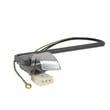
Once you confirm the model number, we use it to filter compatible parts. For example, if your washer won’t spin because the lid isn’t registering as closed, a common related component is the washer lid switch WP3949238.
Why it matters
Using the exact model number prevents wrong-part returns and speeds up repairs, especially for fit-critical items like the lid switch, motor coupling, and drain pump.
Last updated: January 2026
What is the average lifespan of a Kenmore washer?
A Kenmore washer typically lasts 10 to 15 years. For the Kenmore 11026892690 washer, good installation, correct loading, and routine care (like periodic cleaning and hose replacement) are the biggest factors in reaching the high end of that range; see the 11026892690 owner's manual for care and maintenance basics.
What affects lifespan the most
- Load size and balance: Overloading and frequent off-balance loads increase wear on the drive system and suspension.
- Water quality: Hard water can leave deposits that contribute to odors and component wear.
- Hose condition: Old inlet hoses are a common failure point; replacing them on schedule helps prevent leaks.
- Detergent use: Too much detergent can cause excessive suds and strain draining and spinning.
- Installation and leveling: A washer that is not level tends to vibrate more and wear faster.
Maintenance habits that help your 11026892690 last longer
We recommend these simple habits for this model:
- Clean the washer interior periodically (hot cycle with cleaner as directed in the manual).
- Keep loads loose and evenly distributed; do not pack items around the agitator.
- Inspect inlet hoses regularly and replace them every 5 years.
- Level the washer and keep the front leg lock nuts tight to reduce vibration.
- Address draining issues early; a struggling pump can shorten component life.
Quick “repair vs. replace” guide
| If your washer is... | Typical next step | Why |
|---|---|---|
| Under 10 years old | Repair is often worthwhile | Major components usually have useful life left |
| 10 to 15 years old | Compare repair cost vs. condition | Multiple wear items may be near end-of-life |
| Over 15 years old | Replace is often more practical | Higher chance of repeated repairs |
Why it matters
Knowing the typical lifespan helps you plan maintenance and decide when a repair (for example, a no-drain issue that may involve the washer drain pump WP3363394) makes sense versus investing in a replacement.
Last updated: January 2026
What replacement parts are most commonly needed for the 11026892690?
For Kenmore washer model 11026892690, the most commonly replaced parts are the ones tied to everyday wear, draining, filling, and lid safety. If your washer will not agitate, will not drain, will not spin, or will not fill, these are the first parts we recommend checking, along with the troubleshooting steps in the owner's manual.
Commonly replaced parts for this model
These parts fail most often because they handle frequent motion, water flow, or safety interlocks:
- Washer lid switch WP3949238: stops spin and agitation if the lid is open or the switch fails
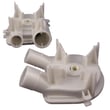
- Washer drain pump WP3363394: drains water; a common cause of no-drain or slow-drain symptoms
- Inlet valve 285805: controls hot and cold water fill; issues show up as no-fill or slow-fill
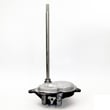
- Coupling 285753A: connects the motor to the drive system; common for no-agitate and no-spin
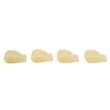
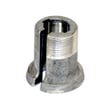
- Agitator dog 80040: helps the upper agitator “ratchet”; common for weak or one-direction agitation
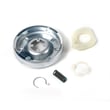
- Clutch 285785: helps the basket reach full spin; common for poor spin or wet clothes
Quick symptom-to-part guide
Use this as a fast way to narrow down what to inspect first.
| Symptom | Most likely parts to check | What you may notice |
|---|---|---|
| Will not drain | Drain pump, drain hose | Water left in tub, humming, slow drain |
| Will not fill or fills slowly | Inlet valve, inlet hose screens | No water, weak flow, long fill time |
| Will not spin | Lid switch, coupling, clutch | Stops before spin, wet clothes |
| Agitates poorly | Agitator dogs, agitator cam | Clothes not moving, clicking, weak rollover |
Why these parts matter
On a direct-drive Kenmore top-load washer like the 11026892690, a single worn drive or safety component can stop the whole cycle. For example, a failed lid switch can prevent spin entirely, and a worn coupling can stop both agitation and spin.
Before you order: fast checks that prevent wrong-part returns
We recommend these simple checks first because they often solve the problem without parts:
- Confirm the lid closes firmly; listen for a lid-switch click
- Check and clean inlet hose screens if filling is slow (the manual calls this out)
- Make sure the drain hose is not taped or sealed into the standpipe; it needs an air gap
- Verify the drain hose is installed correctly to prevent leaks and siphoning
- Redistribute an unbalanced load if the washer is noisy or will not spin out
Last updated: March 2026