Installation guide
 Owner’s manual


What's the average lifespan of a KitchenAid dishwasher?
Most KitchenAid dishwashers last 10 to 12 years. For your KitchenAid KUDR01TJWH0, lifespan depends most on water quality, how often you run it, and routine maintenance like cleaning filters and keeping the door seals and spray arms clear; see the owner's manual for care guidance.
Typical lifespan and what affects it
A dishwasher’s service life is mainly driven by heat, water, detergent, and moving parts (pump, motor, door system).
- Water hardness: hard water speeds up scale buildup on the heating system and internal passages
- Usage frequency: multiple loads per day shortens life compared to a few loads per week
- Loading habits: overloading can strain the wash system and racks
- Maintenance: regular cleaning reduces clogs and odor-causing buildup
- Leak prevention: keeping seals clean helps prevent water damage to components
Maintenance that extends life (high impact)
These steps prevent the most common wear issues: leaks, poor cleaning, and drain problems.
- Wipe the door sealing surfaces and inspect the door gasket for debris or tears
- Keep the spray arm holes clear; remove labels, seeds, and glass fragments
- Run hot water at the sink before starting a cycle (helps fill temperature)
- Use the right detergent amount; too much can cause residue and foaming
- Clean the tub and wash system periodically (especially with hard water)
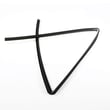
If you’re seeing leaks at the door, a worn seal is a common fix; the dishwasher door seal W10542314 is a model-matched replacement part.
Quick “repair vs. replace” guide
Use this as a practical rule of thumb for a KitchenAid dishwasher in the 10 to 12 year range.
| Situation | Usually makes sense to | Why |
|---|---|---|
| Minor leak at door, otherwise runs normally | Repair | Seals and small parts are straightforward fixes |
| Not draining due to a clogged or split hose | Repair | Drain path issues are often low-cost |
| Repeated motor/pump problems or multiple failures | Replace | Cost and downtime add up |
Why it matters
Knowing the typical lifespan helps you plan: if your KUDR01TJWH0 is near the 10 to 12 year mark, proactive maintenance (seals, cleaning, drain checks) prevents the kind of leaks and wash performance issues that shorten service life.
Last updated: February 2026
What does 010 mean?
On a KitchenAid KUDR01TJWH0 dishwasher, “010” is not a standard dishwasher error code by itself; it is most often a display readout (such as time remaining) or part of a longer fault pattern. To interpret it correctly, match where you see “010” (control display, diagnostic mode, or a blinking sequence) to the code chart in the owner's manual.
Where “010” usually shows up
- Time remaining: some displays show minutes left (for example, 010 = 10 minutes).
- Diagnostic readout: a service test can show numbers that are not the same as consumer-facing error codes.
- Blink pattern shorthand: some people write codes like “0-1-0” when describing flashes.
- Cycle selection indicator: certain cycles/options can change what the display shows.
Quick checks to narrow it down
- Note the exact context: is “010” steady on the display, flashing, or only during a test?
- Cancel and drain: press Cancel/Drain (or the model’s cancel function) and see if the number clears.
- Power reset: turn the breaker off for 1 minute, then restore power and recheck.
- Try a short cycle: start a quick/light cycle and watch whether “010” counts down.
What to do next (based on what you observe)
| What you see | Most likely meaning | Next step |
|---|---|---|
| “010” counts down | Time remaining | Normal operation |
| “010” appears only in diagnostics | Service readout | Use the manual’s diagnostic/code section |
| “010” stays on and unit will not run | Control or start issue | Follow the no-start checks in the manual |
Why it matters
Treating “010” as a fault code can send you toward unnecessary parts. Confirming whether it is a timer readout versus a diagnostic indicator helps you troubleshoot correctly and avoid replacing items like the dishwasher door switch WP8269209 unless symptoms match.
Last updated: February 2026
What is the most common problem with KitchenAid dishwashers?
The most common issue we see with KitchenAid dishwashers like model KUDR01TJWH0 is poor cleaning (food soil left on dishes). In most cases, it comes down to loading, water temperature, detergent use, or wash system flow (spray arms and circulation) rather than a single “always-failing” part.
Quick checks that fix most “not cleaning” complaints
- Load so spray can reach every surface; avoid nesting bowls and blocking the lower spray path.
- Use fresh automatic dishwasher detergent; never use less than about 1 tablespoon per load.
- Make sure hot water entering the dishwasher is at least 120°F (49°C).
- Clean out any debris that can restrict wash flow (filter area, sump, spray arm ports).
- Confirm the detergent door opens freely and is not blocked by a tall pan or utensil.
For model-specific operating and troubleshooting tips, use the KUDR01TJWH0 owner's manual.
Common causes and what they look like
| Symptom you notice | Most likely cause | What to do first |
|---|---|---|
| Grit or food left on dishes | Loading pattern blocks spray | Reload with more spacing; keep large items to the sides/rear |
| Filmy residue or excess suds | Too much detergent or wrong detergent | Reduce amount; switch to a low-sudsing dishwasher detergent |
| Poor results on all cycles | Water not hot enough | Run hot water at sink first; verify 120°F (49°C) |
| Detergent still in cup | Dispenser blocked or sticking | Clear obstructions; consider replacing the dishwasher dispenser WP8558129 |
Parts that commonly solve cleaning-performance problems
If the basics check out, these model-compatible parts are often involved in wash performance:
- Dishwasher spray arm WPW10320510 (clogged ports or damage reduces spray)
- Dishwasher dispenser WP8558129 (cup not opening or not dispensing)
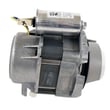
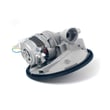
- Dishwasher pump and motor assembly W10782773 (weak circulation can leave soil behind)
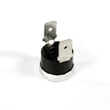
- Dishwasher thermostat WP661566 (can affect water heating and wash results)
Why it matters
Poor cleaning is usually a system issue: water temperature, detergent chemistry, and unobstructed spray all work together. Fixing the root cause prevents repeat rewashes, detergent buildup, and unnecessary part replacements.
Last updated: February 2026
What are the commonly replaced parts in a dishwasher?
For the KitchenAid KUDR01TJWH0 dishwasher, the most commonly replaced parts are the ones that affect sealing, filling, draining, and washing performance, such as door seals, drain hoses, inlet valves, spray components, and the detergent dispenser. These parts typically wear from heat, detergent, and normal use.
Common parts that get replaced most often
These are frequent “fix-it” parts because they directly impact leaks, poor cleaning, or no-start symptoms:
- Door seal or door gasket (stops leaks around the door): dishwasher door seal W10542314
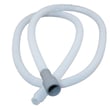
- Drain hose (fixes slow or no draining, or leaks under the unit): dishwasher drain hose 8269144A
- Water inlet valve (fixes no fill, underfill, or fill-related errors): inlet valve WP8531669
- Detergent dispenser (fixes detergent door not opening or not dispensing): dishwasher dispenser WP8558129
- Door switch (fixes “won’t start” when the door is closed): dishwasher door switch WP8269209
- Door spring and linkage (fixes a door that drops open or won’t stay balanced): dishwasher door spring WP8270020
What your manual highlights (and why it matters)
Your KUDR01TJWH0 uses a multi-level filtration and soil collection system; the manual specifically calls out periodically checking the coarse strainer for objects that can restrict flow and strain the pump. Keeping filters clear helps prevent drain and wash performance problems that can lead to part replacement. See the owner's manual for the cleaning and troubleshooting sections.
Quick symptom-to-part guide
| Symptom | Most likely part area | Example part on this model |
|---|---|---|
| Water leaking at the door | Door sealing | W10542314 door seal |
| Not draining or draining slowly | Drain path | 8269144A drain hose |
| Not filling or fills too little | Fill system | WP8531669 inlet valve |
| Detergent not dispensing | Dispenser | WP8558129 dispenser |
Why it matters
Replacing the right part early prevents secondary damage (like water leaks into the toe-kick area or pump strain) and restores normal wash results. Regular maintenance, especially filter checks and proper detergent use, reduces repeat failures.
Last updated: February 2026